





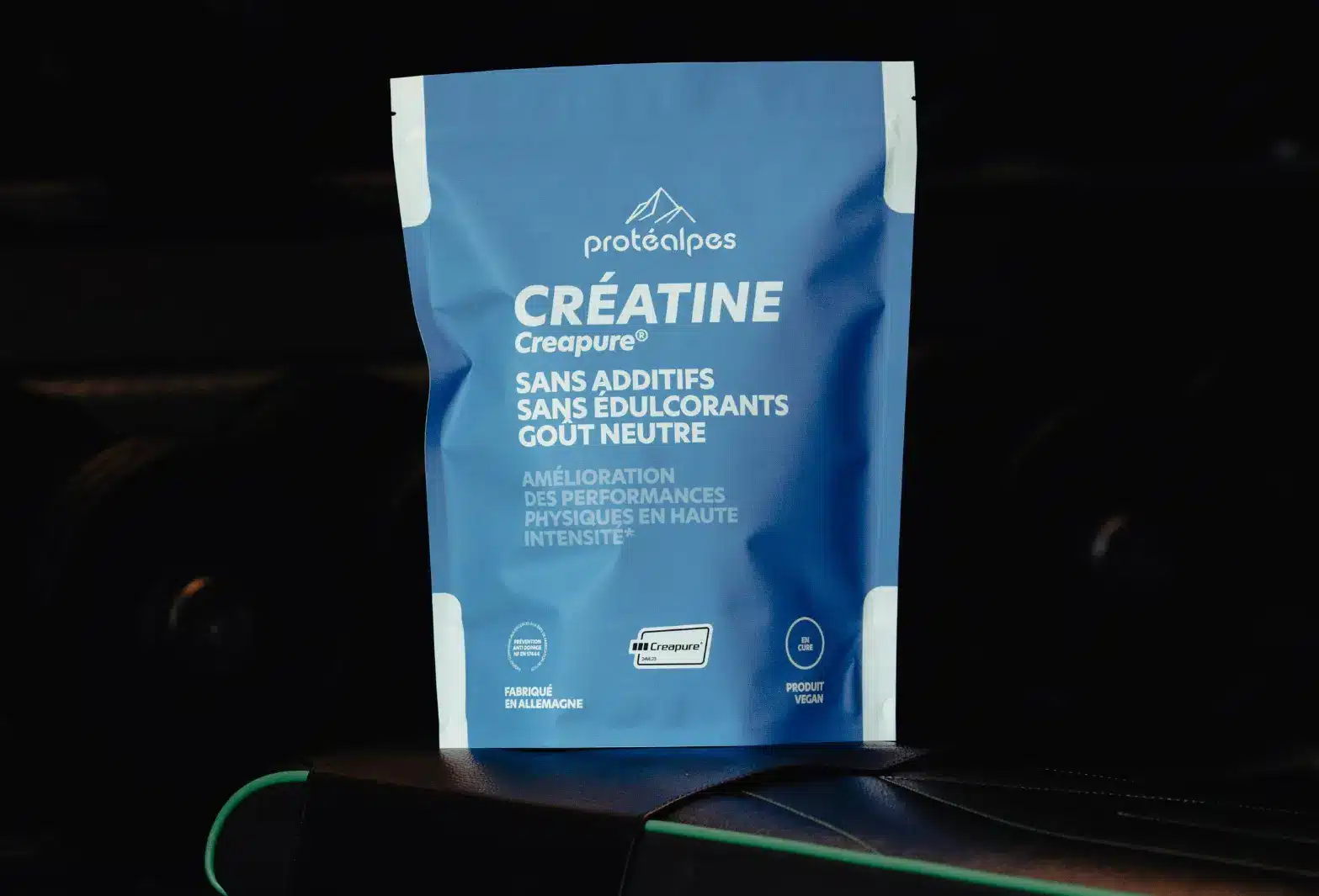
After an intense workout, recovery is the phase during which muscle mass is partly built. Yet many athletes neglect or underestimate it. They focus entirely on their workouts, their diet, whey protein, BCAAs, and so on. They forget the importance of ATP and phosphocreatine resynthesis, as well as managing muscle and mental fatigue.
Creatine monohydrate is a popular supplement among athletes. It is known to increase strength, power, and muscle mass, but its role goes beyond muscle gain. Creatine affects cellular energy, glycogen, and hydration, and aids in recovery after high-intensity exercise.
Scientific studies show that appropriate supplementation, ranging from 3 to 5 grams per day, promotes better recovery. This daily dose reduces muscle damage and improves the ability to perform repeated sets of intense exercise.
This article explains how creatine helps improve recovery and, through this, enhances performance.
In a nutshell
- Creatine monohydrate supports energy recovery. It accelerates ATP resynthesis by increasing phosphocreatine stores. The result: an improved ability to perform repeated high-intensity efforts.
- It reduces post-workout muscle damage. It lowers creatine kinase (CK) levels and supports protein synthesis, which improves muscle recovery and limits catabolism.
- Creatine improves intracellular hydration and glycogen storage. These two factors are essential for optimizing recovery, maintaining muscle mass, and supporting performance.
- Its effectiveness varies depending on the athlete's profile. Whether for muscle gain, high-intensity interval training (HIIT), soccer, muscle definition, or recovery in women, creatine works differently.
Contents
The 3 Dimensions of Sports Recovery
Sports recovery isn’t just about getting rid of muscle soreness. It’s a broad process defined as a period during which the body and its systems rebuild themselves. You can begin your recovery immediately after intense physical exertion or schedule it for a later time. In any case, we’ll break it down into three complementary aspects and explore howcreatine helps improve recovery.
Energy recovery
First, the body needs to replenish its energy reserves after exercise. This is known as energy recovery.
Physical exertion requires varying levels of energy depending on its intensity. Whether sprinting, doing interval training, or weight training, the body needs adenosine triphosphate (ATP), which it must replenish.
- During an exercise that is both intense and brief, available ATP is depleted very quickly. The faster it is replenished, the quicker recovery occurs between sets.
Phosphocreatine acts as an energy source here, as it is used toreplenish ATP. - During longer workouts, the body draws on its stores of muscle glycogen. The recovery phase is when the body replenishes these stores through diet and carbohydrate intake.
Without recovered energy, there can be no renewed performance.
Muscle recovery
Exercise causes microtears in muscle fibers, which is completely normal. By creating these tears, resistance training triggersan inflammatory responsein the body to repair them. Proper recovery quickly reduces the soreness associated with this process and prepares the muscles for future workouts.
This repair process leads to an increase inprotein synthesis. It is this process that enables the body, with an adequate protein intake, to rebuild muscle fibers and develop stronger muscles.
The body triggersmuscle catabolismduring and after physical activity. When optimized, structural recovery reduces this tissue breakdown, thereby preserving muscle mass.
Proper recovery helps restore structures, making them even stronger.
Nerve recovery
We don’t often think about it, but fatigue is not just physical—it’s also mental. After physical exertion, theneural connectionsin the muscle fibers are affected. This fatigue reduces strength and also impairs an athlete’s ability to recruit motor units or coordinate movements.
Intense exercise also causesoxidative stress, which results in an increase in free radicals in the body. This increase leads to an imbalance between free radicals (in excess) and antioxidant defenses (in insufficient quantities). Cramps, muscle pain, and sometimes digestive issues may then occur.
Finally, recovery involves the cognitive aspect.Concentration and motivationare also factors that influence performance.
A fatigued nervous system cannot function at its best.
How does creatine affect recovery?
Creatine monohydrate has ergogenic benefits because it speeds up recovery and helps improve athletic performance.
It accelerates ATP resynthesis
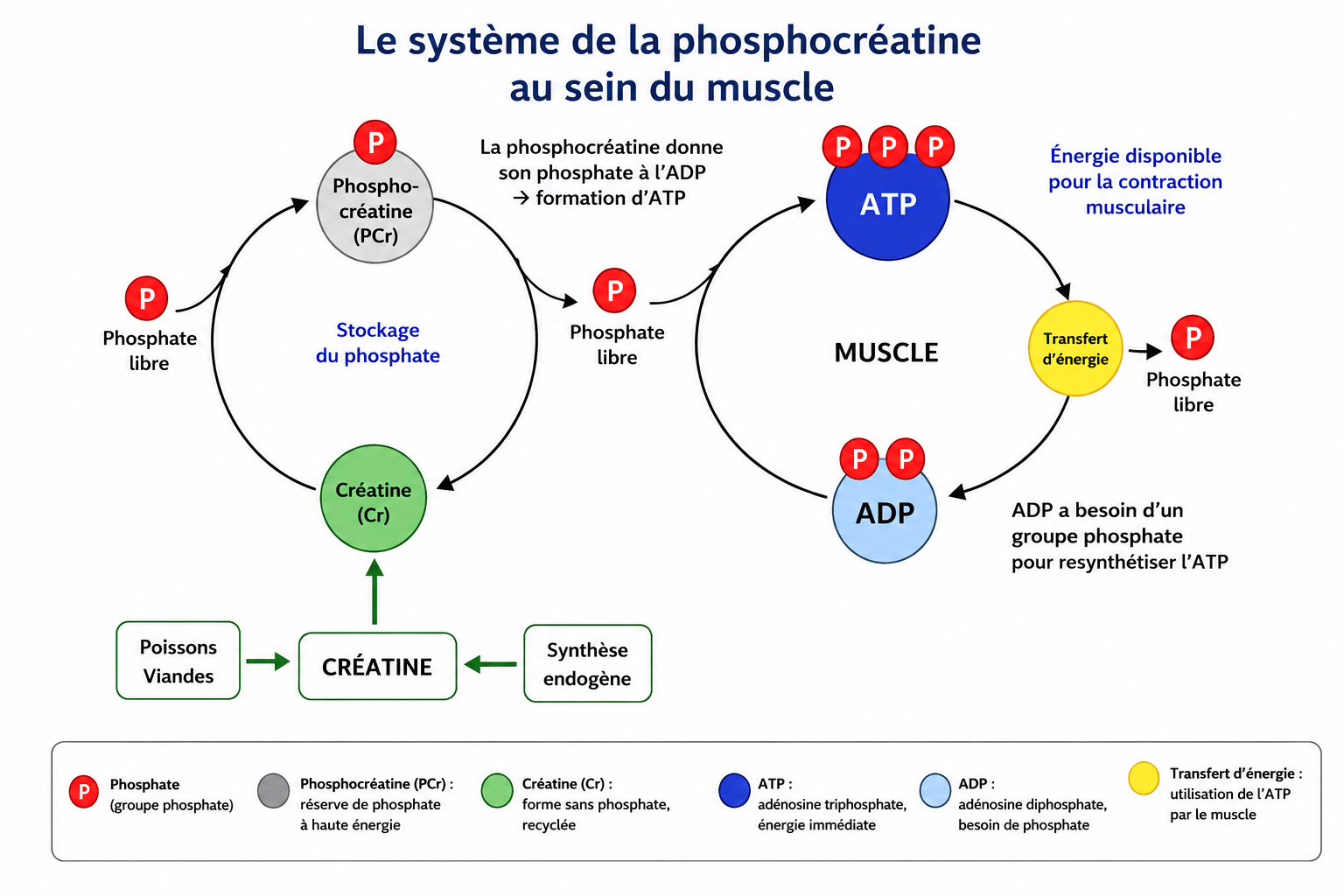
Most creatine is stored in the muscles. It binds to a phosphate group to formphosphocreatine (PCr). PCr acts as a buffer reservoir that helps the body replenish its ATP. In fact, during very short, intense bursts of exercise, the body breaks down ATP into ADP. PCr acts by donating a phosphate group to ADP, which then quickly reforms into usable ATP.
This phosphagen system is anaerobic and alactic, meaning it does not require oxygen and does not produce lactate. As a result, it enablesvery rapid energy production for explosive efforts lasting 0 to 10 seconds, such as a sprint. After that, other metabolic pathways take over.
Creatine supplementation increases PCr stores, which enhances the body's ability toperform repeated bursts of intense exercise.
One of the main benefits of creatine is that it helps maintain high intensity for longer.
Here is a simplified, idealized explanation of how creatine works within the muscle:
It reduces muscle damage
Creatine kinase is a blood marker of muscle damage caused by physical activity. Research has shown that creatine supplementation leads to a decrease in creatine kinase levels 2, 3, 4, and even 7 days after physical exertion (Cooke et al., 2009)¹.
Creatine is believed to have a natural ability to act as an antioxidant against free radicals. It reduces post-workout muscle damage and mitigates the body’s inflammatory response to exercise.
In sports that require repeated bursts of intense effort, such as soccer, CrossFit, or combat sports, creatine is a valuable supplement. It improves tolerance for repeated workouts by accelerating recovery after exercise.
It improves intracellular hydration
Creatine’s effectiveness is also linked tocellular hydration. When creatine enters the muscle, it uses a sodium-dependent transporter, which causes water to flow into the cell².
Some athletes wantto avoid intracellular water retention, even though it has health benefits:
- more efficient protein synthesis;
- improved glycogen storage;
- temperature regulation during physical activity;
- less risk of dehydration;
- fewer muscle cramps.
Creatine supplementation optimizes the physiological environment for recovery.
It affects muscle glycogen
The interaction between creatine and carbohydrates—or its combinationwith carbohydrates and protein—promotes the retention of creatine within the muscle². In intermittent sports such as rugby, basketball, or track and field, this rapid replenishment of energy stores is essential for sustained performance.
This acceleration of the recovery process is a notable benefit of creatine for better recovery.
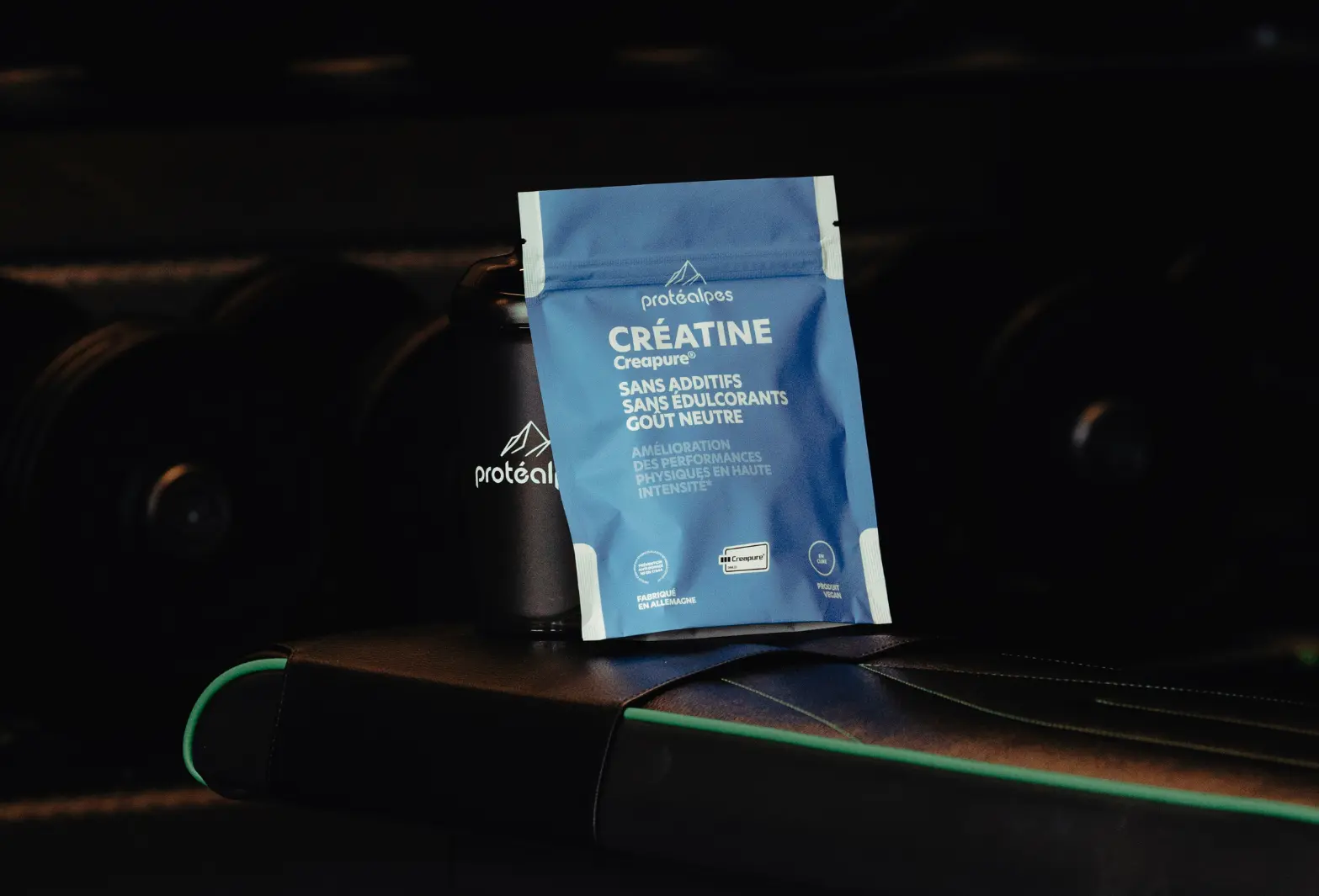
Creatine Creapure®
- Standardised without doping substances
- No additives, no sweeteners
- Made in Germany, packaged by Protéalpes in Albertville
- The best for maximizing muscle power in a healthy way and optimizing intensive performance
The Effects of Creatine on Recovery by Profile
The benefits of creatine differ depending on whether it is used for muscle building or endurance sports. The training context, the individual’s goals, and their profile all influence how it works.
Creatine for weight gain
Thegoalof bulkingis musclehypertrophy. Building muscle mass requires a specific high-protein diet combined with an appropriate exercise regimen. A bulking phase can last anywhere from 3 to 6 months, depending on the goal, and must be sustained over time.
Creatine enhances workout performance, which indirectly contributes to the desired increases in muscle strength and hypertrophy. It accelerates ATP regeneration, allowing the athlete to lift heavier weights or perform a greater number of repetitions.
Creatine in Intermittent Endurance Sports
Creatine can be taken for both strength trainingand endurance sports, as this amino acid derivative is effective for all athletes. The use of creatine in endurance sports is particularly beneficial for disciplines that alternate between explosive bursts of effort and active recovery phases. In these types of sports, the ability to repeat intense efforts is crucial. However, endurance athletes who do not incorporate explosive phases during or at the end of their workouts have less reason to use creatine.
Track and swimming sprinters, as well as cyclists and short-track skaters competing in pursuit events, therefore benefit from increased phosphocreatine stores. Rapid energy resynthesis is also beneficial in basketball, American football, and volleyball.
Creatine during a cutting phase or calorie deficit
During muscle-building, the body experiences a drop in energy, slower recovery, and a significant risk of muscle catabolism.
By supporting the phosphagen system, creatine helps maintain intensity and reduce the sensation of muscle fatigue. In this way, it is a valuable aid for recovery and preserving muscle mass, thanks to intracellular hydration and the stimulation of protein synthesis.
Creatine in Women
There is still a widespread belief that creatine causes bloating. That’s why manywomen wronglyoverlook creatine.
Naturally, women have, on average, slightly lower creatine stores than men, even though they need it just as much. This makes their potential response to creatine supplementation all the more promising. As a result, they can reap the benefits in terms of recovery and increase the intensity of their physical activity.
Creatine also helps women reduce feelings of mental fatigue. It provides real support for brain function, which can help mitigate the effects of declining estrogen levels.
Finally, during menopause, women can help slow the progression of sarcopenia by taking creatine. These benefits are only effective if creatine is combined with an appropriate strength training program.
Here is a summary table of the effects of creatine in different sports contexts:
| Athletic Profile | Effects of creatine |
|---|---|
| Gaining weight | Better recovery between sessions and increased training volume, leading to faster adaptation |
| In endurance | Recovery between sprints and maintaining power |
| During muscle-building | Reducing fatigue and preserving muscle mass |
| For women | Compensation for lower levels, benefits during specific life stages (menopause), and support for cognitive function |

The Effects of Creatine on Subject Behavior
When we talk about recovery, we tend to think of muscles, energy, and signs of fatigue. But there’s one aspect that’s often overlooked: perceived recovery and its effects. Yet creatine and its loading phase play a role in this.
Perceived vs. actual recovery
The perception of exertion, exercise-related fatigue, and muscle soreness determines whether or not we will continue training, at what intensity, and in what frame of mind. In this sense, an athlete who feels they have recovered sufficiently will push themselves harder.
The decision to act, to persevere, and to commit to training is a behavioral one. It takes place in the brain and goes beyond mere biological markers.
However, creatine affects the physiological mechanisms associated with the sensation of fatigue:
- it uses available energy;
- it reduces muscle damage;
- It increases exercise tolerance.
Under these circumstances, it can be argued that creatine helps prevent post-workout fatigue. And we know that perception influences performance.
Creatine and Motivation
One of the biggest obstacles to progress in sports is giving up. Many athletes quit because they feel exhausted, lose motivation, or start to doubt themselves.
When taken with a loading phase, creatine allows usersto see benefits as early as the first week. As strength, training volume, and performance increase, athletes notice effects that boost their motivation. In fact, a scientific study shows that a motivated person is more responsive to perceived feedback, which enhances their ability to learn³. In this way, creatine contributes to a virtuous cycle.
The Limits of Creatine
Digestive or kidney problems?
We often hear about problems with the kidneys, liver, or digestive system associated with creatine. However, no health issues have been observed in healthy individuals. The ISSN even refers to creatine monohydrate as the most effective ergogenic nutritional supplement currently available to athletes⁴.
Water retention and weight gain
There is no significantwater retention, and there is little risk of dehydration or weight gain when taking creatine supplements. In reality, this is a form of intracellular water retention that varies from person to person and is reversible once supplementation is stopped.
Research indicates that the total volume of water remains unchanged. It is the intracellular and extracellular levels that shift as a result of creatine².
Is creatine suitable for everyone?
The ISSN states that creatine monohydrate supplementation offers therapeutic benefits for people of all ages, from infants to the elderly, whether they are healthy or ill⁴.
Taking creatine to optimize recovery
What is the right dosage for effective recovery?
The optimal dose of creatineis 3 to 5 grams per day, with a loading phase recommended in certain athletic contexts.
When should you take creatine?
The timing of the regimenis secondary. What matters most isconsistency in taking it, even on rest days. However,taking it after a workoutseems like a good idea.
What should you eat it with?
When combined with carbohydrates or a mix of carbohydrates and whey protein,creatine is easy to consumein a shaker.
How long before I see results?
With a loading phase,the first effectsappear after 5 to 7 days. Without this step, you’ll need to wait 2 to 3 weeks to see them.
Conclusion
Creatine isn’t just for lifting heavier weights. It influences the mechanisms that drive progress: rapid ATP resynthesis, reduced muscle damage, improved intracellular hydration, and glycogen support. In other words, it enhances the ability to repeat explosive efforts. Its impact goes even further. By reducing the sensation of fatigue, it provides a clearer picture of your results, thereby influencing perceived recovery and the ability to keep going. And we know that for sustainable performance, consistency trumps occasional intensity.
While it isn’t essential, it’s safe to say that creatine is effective. This is especially true in explosive and intermittent sports, regardless of whether you’re bulking up or in a calorie deficit.
When taken in the right dose—between 3 and 5 grams per day—and combined with a proper diet, creatine monohydrate is one of the safest, scientifically validated supplements available.
Creatine isn't a substitute for good sleep or proper nutrition, but it significantly enhances recovery, thereby accelerating progress.