




Creatine is a very populardietary supplementamong athletes. Its effects on physical performance, particularly strength, explosiveness, and muscle recovery, have been widely demonstrated.
Despite nearly 500 publications on creatine, negative misconceptions still persist. Itseffectiveness, safety, and impact on kidney health are frequently questioned.
Is creatine dangerous for the kidneys? Does it cause kidney failure? Does consuming it put too much strain on the kidneys?
This natural substance does affect kidney function in our bodies, but it issafeas long as it is taken correctly.
Furthermore, creatine is authorized, recognized as a non-doping product, and approved by European authorities. So let's take a look at how to avoid confusion between creatine, creatinine, kidney function, and kidney failure.
Warning: this article is not a substitute formedical advice. Anyone with a medical history (kidney disease, metabolic disorders) should consult a professional to establish a medical follow-up plan.
In a nutshell
- Creatine is not harmful to the kidneys in healthy individuals. Short-, medium-, and long-term scientific studies show no adverse effects on kidney function.
- The confusion between creatine and creatinine remains. An increase in creatinine levels in the blood or urine reflects muscle mass, physical activity, or diet. It does not indicate kidney failure in healthy athletes.
- The kidneys filter creatinine produced by the muscles. Without pre-existing kidney disease, renal clearance remains intact, even with intense and repeated exercise.
- The rare cases of kidney problems reported involve specific situations. They involve pre-existing kidney disease, severe dehydration, or inappropriate use of creatine.
- Creatine supplementation is safe if properly supervised. A daily dose of 3 g, sufficient water intake, and a high-quality product ensure safe use.
Contents
Creatine and its metabolism
Creatine: its use in bodybuilding
Creatine isnaturally presentin the body. It is also found in the form ofcreatine monohydrate, a dietary supplement that is useful for bodybuilding.
In medicine, creatine is an endogenous substancederived from amino acids(arginine, glycine, methionine). It is produced by the kidneys, liver, and pancreas, but it also comes fromfood.
In nutrition, animal proteins (mainly meat and fish) provide creatine to the muscles. This is where it is found and where it is used to improve physical performance during maximum intensity exercise. In fact, the European Commission recognizesits effects"in cases of successive seriesof very intense, short-duration exercise."¹
During intense exercise, creatine is converted intophosphocreatine (CrP)by the enzymecreatine kinase. This CrP (creatine phosphate) rapidly regenerates adenosine triphosphate (ATP), our energy supplier.
However, itsreservesarelimited. After 4 to 10 seconds of intense, maximum effort, phosphocreatine is depleted and performance declines. Supplementation therefore increases muscle reserves, which has a positive effect on short, intense bursts of exercise ².
The link between the kidneys and creatine
Inside the muscle, phosphocreatine becomes:
- creatinine, which is then eliminated by the kidneys;
- recycled creatine to replenish energy reserves.
On average, between 1.7% and 2.5% oftotal creatineis converted into creatinine in the muscles themselves. It is then eliminated in urine after passing through the plasma².
There are differences between individuals. Creatinine levels depend on muscle mass and dietary creatine intake.
Men and women will therefore have different levels, as will people on vegetarian or vegan diets.
Physical activity moderately increases creatinine concentration in urine, in healthy subjects.
In the absence of disease, healthy kidneysfilter creatinine³. Otherwise, its levels would increase in the blood. In fact, changes in creatinine levels are partly an indicator of kidney function.

The risks of creatine on renal health
Myths and facts about creatine and kidneys
Creatine has been authorized in France since 2007, but its previous ban still tarnishes its image.
The concerns about creatine and the kidneysstem from an article dating back to 1998. The study by Pritchard and Kalra blamed creatine for exacerbating existing kidney failure and causing the deaths of athletes who took supplements.
In the first case, the patient had a pre-existingkidney dysfunction and the protocol neglected certain important aspects. As for the deaths, an investigation proved that they were linked to severe dehydration.
Twenty years of scientific research have shown no danger from creatine on kidney function.
Is creatine harmful to the kidneys?
There is no scientific evidence of adverse side effects on athletes' kidneys. Among the studies conducted, some have focused on intake:
- in the short term, on the order of a few days ;
- medium-term, over two months ;
- over five years.
Creatinine clearance, urea, and albumin levels in urine indicate no renal dysfunction ².
Creatine and kidney problems: what's the link?
During a detox, high levels of creatine may be found in urine. However, only creatinine is supposed to be present.
This is the origin of a widespread misconception: that treatment causes the kidneys to become overloaded . This would force them to excrete higher than normal levels. However, no temporary increase in creatine has been shown to cause any disruption to the kidneys.
Approximately 60% of creatine intake is eliminated daily in urine. Exogenous creatine supplementation therefore often remains significant in relation to the levels absorbed by the muscles. It is advisable to consume it with carbohydrates to increase its absorption by the muscles.
Creatine and kidney health in athletes
The scientific community agrees that supplementation is safe for the kidneys. If in doubt, consult a doctor for an assessment.
Caution should always be exercised when taking any dietary supplement or medication. This applies to creatine as much as to any other supplement. The danger is not related to creatine itself, but rather to the compounds that may be present in the finished product. Therefore, be careful to only consume creatine whose production, packaging, and testing are completely transparent and reliable.
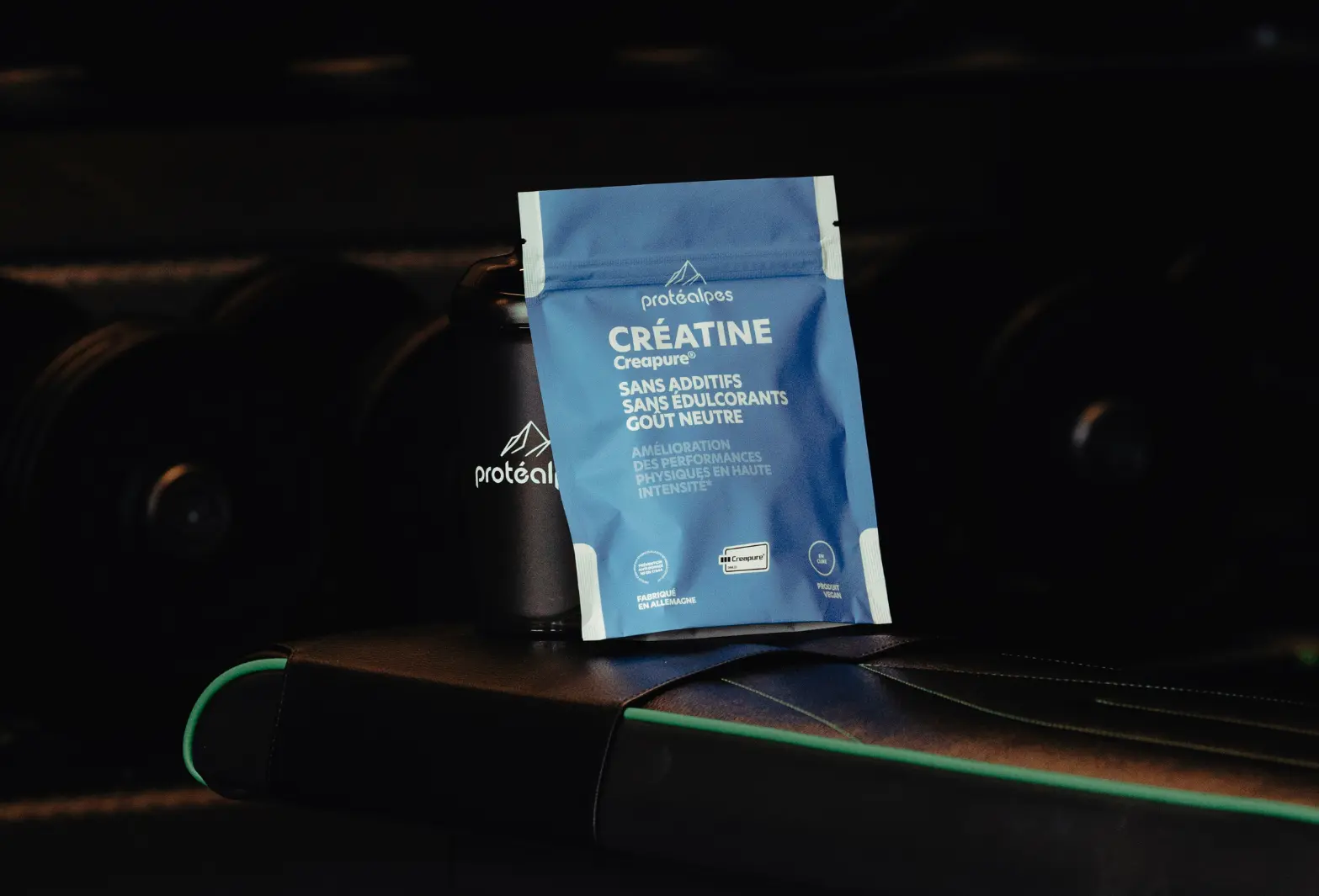
Creatine Creapure®
The best for maximizing muscle power in a healthy way and optimizing intensive performance
- Standardised without doping substances
- No additives, no sweeteners
- Made in Germany, packaged by Protéalpes in Albertville

Our tips for successful creatine supplementation
The recommended treatment
There isno benefit forathletestotakemore creatinethan recommended. The effects will not be increased tenfold, and this is where potential health risks may arise.
The recommendations suggestmixing 3 g of creatinewith carbohydrates. Adding them to a whey shake or a weight gainer is a good way to ensure optimal absorption. This mixture is particularly beneficialafter a workoutto take advantage of a potential anabolic window, but the most important thing is to follow the regimen consistently, every day, even on days when you don’t work out.
The3 g doseis usually taken all at once, but it can be divided into2 or 3 daily dosesto reduce the risk of intestinal upset. A loading dose can be taken (20 g/day for 5 days, divided into 3 to 4 doses). However, this is not mandatory, but it is a healthy and quick way to reach the desired muscle levels.
Treatments can last between one and one and a half months, with breaks of equal length between each treatment.
Taking creatine safely
Taking creatine temporarily alters the amounts of creatine found in urine. However, no link has been shown with any potential danger to the body. The main parameter to consider is the formulation of the finished product, with clear traceability of creatine monohydrate, its production and packaging methods, and the absence of by-products.
It is recommended to take creatine from a guaranteed safe source. The Creapure® label is currently recognized as a guarantee of the best creatine available, manufactured in-house by Creapure® in Germany.
Conclusion
Creatine posesno toxic risk or risk of kidney dysfunction in healthy individuals. It remains safe when used at a dose of 3 grams per day or 20 grams over 5 days only (followed by 3 g for the remainder of the treatment).
Serious kidney symptoms, mentioned in a 1998 study, only appeared in one very specific case. This study, along with a partial understanding of how the kidneys work, led to its ban in France until 2007. Since its authorization, false preconceptions continue to circulate about it.
For athletes, creatine remains a safe supplement, especially when combined with proper hydration. Hydration plays a central role in the elimination of metabolic waste.
The Australian Institute of Sport (AIS), the European Food Safety Authority (EFSA), and the scientific and medical community as a whole consider creatine to be safe. However, the precautionary principle applies: if in doubt, consult a doctor to avoid any problems.
With a few good practices, creatine continues to support athletic performance safely.