




Healthy muscle gain without accumulating unnecessary body fat is possible, andprotein powders play a key role in achieving this. They are supplements that should be viewed as tools for building muscle tissue, improving recovery, andpromoting a caloric surplus, depending on the formulation of the final product. However, if used incorrectly, they can lead to fat gain or become ineffective.
So, how do you choose and consume your protein (whey, mass gainer, plant-based protein) to maximize muscle gains? Here’s when and how to incorporate them into your day—between breakfast, snacks, and post-workout—to get the most out of theiranabolic effects. From the right dosage to choosing the right product (purewhey isolate, hydrolysate, mass gainer…), let’s see how protein powders fit into different lifestyles and needs.
Athletes, bodybuilders, or anyone looking for a high-protein diet cantransform their physiquethanks to this nutrient. Protein isessentialfor building muscle mass. However, its effectiveness depends on the type of supplement chosen, the timing of intake, and its combination with a balanced diet. It is therefore advisable to follow some science-backed tips presented here when choosing a mass gainer, or when using whey or plant-based proteins.
In a nutshell
- Protein powderspromote muscle synthesis. Depending on their formulation, they can provide a controlled caloric surplus (300 to 500 kcal/day).
- Whey or mass gainer—it all depends on your needs. Whey is ideal for post-workout recovery. Mass gainers provide a mix of carbs and protein, perfect for those who struggle to meet their daily calorie needs.
- Plant-based proteins(peas, rice, hemp, etc.) are a good lactose-free alternative and are rich in nutrients.
- Be carefulto avoid common mistakes: eating too much protein (>2.2 g/kg), neglecting food quality, or skipping solid meals are counterproductive habits.
Contents
- Why do protein powders help you gain muscle mass?
- Does protein powder make you gain weight?
- The Benefits of Protein Powder for Gaining Weight
Why do protein powders help you gain muscle mass?
What are protein powders used for?
Protein powders are used tosupplement astandarddietand provide the body with additional protein.
While everyday foods do contain protein, some are richer in protein than others, such as red meat and eggs. Some athletes, who have increasedprotein needs, therefore take protein powder supplements, particularlywhey protein.
This protein comes fromwhey(commonly known as cow’s milk whey). It is therefore an animal-based protein derived from cow’s milk and may contain lactose depending on the filtration process; however, there are also plant-based protein powders (made from hemp, peas, rice, soy, etc.).
Does protein powder make you gain weight?
Yes, whileprotein powderscan help with weight loss, they can also help you gain weight, even if that seems counterintuitive.
The benefit of protein lies in itsamino acid composition. These amino acids make up protein just as a set of bricks forms a wall. And these amino acids stimulate protein synthesis, which is essential for muscle building. It is particularly thanks to leucine that this muscle synthesis is activated, hence the importance of an amino acid profile that is ideally rich in leucine for buildingmuscle1.
Protein powders can also lead to weight gain because, depending on their formulation, they can contribute to acaloric surplus. In fact, this surplus is necessary for weight gain. It should be in the range of 300 to 500 kcal per day, witha protein intake ofapproximately1.8 to 2.0 g per kilogram of body weight per day formuscle hypertrophy.
On the other hand, poorly managed weight gain can lead to fat gain. And often, people are actually looking for gain lean mass, hence the importance of combining the right foods and carefully selecting the formulation of your protein powders. For example, combining protein with complex carbohydrates (sweet potatoes, brown rice) and healthy fats (avocado, nuts) allows for a healthy caloric surplus. Similarly, mass gainers are very useful forbuilding muscle mass in ectomorphs, but they carry a risk of fat gain if not dosed correctly.
The Benefits of Protein Powder for Gaining Weight
Protein powders play a role in bodybuilding by supportingmuscle growth,muscle recovery, and the body’s response to inflammation.
Protein synthesis, through an adequate intake of leucine and other essential amino acids (EAAs), will first and foremost increase strength. It also influences collagen levels, and increased collagen production contributes to improved muscle elasticity. Finally, it stimulates enzymes that boost energy production.
The post-workout period is also a crucial phase in sports nutrition, as part of therecovery process. Consuming a dietary supplement (such as a whey shake) after exercise promotes muscle repair, particularly following high-intensity workouts and in cases of significantenergy deficit.² Amino acids thenreduceexercise-related proteinbreakdownandaccelerate the repairof muscle fibers damaged by exercise, which contributes to muscle growth and adaptation.
Which formula should I choose to gain weight?
Does whey make you gain weight?
No, it’sapoorly managedcalorie surplusthat causes weight gain through fat accumulation.
Whey is a high-protein supplementbut provides very few caloriesto the body. In this regard, protein powders like whey with few added carbohydrates can aid in fat loss.
However, anenergy surplus—consuming too many proteinsand carbohydrates relative to energy expenditure—can lead to weight gain. It’s important to consider training load and physical activity levels to adjust protein intake to the individual’s actual needs.
How do you choose between a mass gainer and whey?
Both mass gainers and regular whey protein contribute to muscle growth, but in different ways.
Wheyhas ahigh protein content(70 to 85% depending on the formulation of the final product) and is generallylow in sugar. Its role is to provide the body with amino acids, particularly after a workout, thanks to its rapid absorption. It is available as an isolate, concentrated or hydrolyzed whey, clear whey, in native or non-native forms, etc.
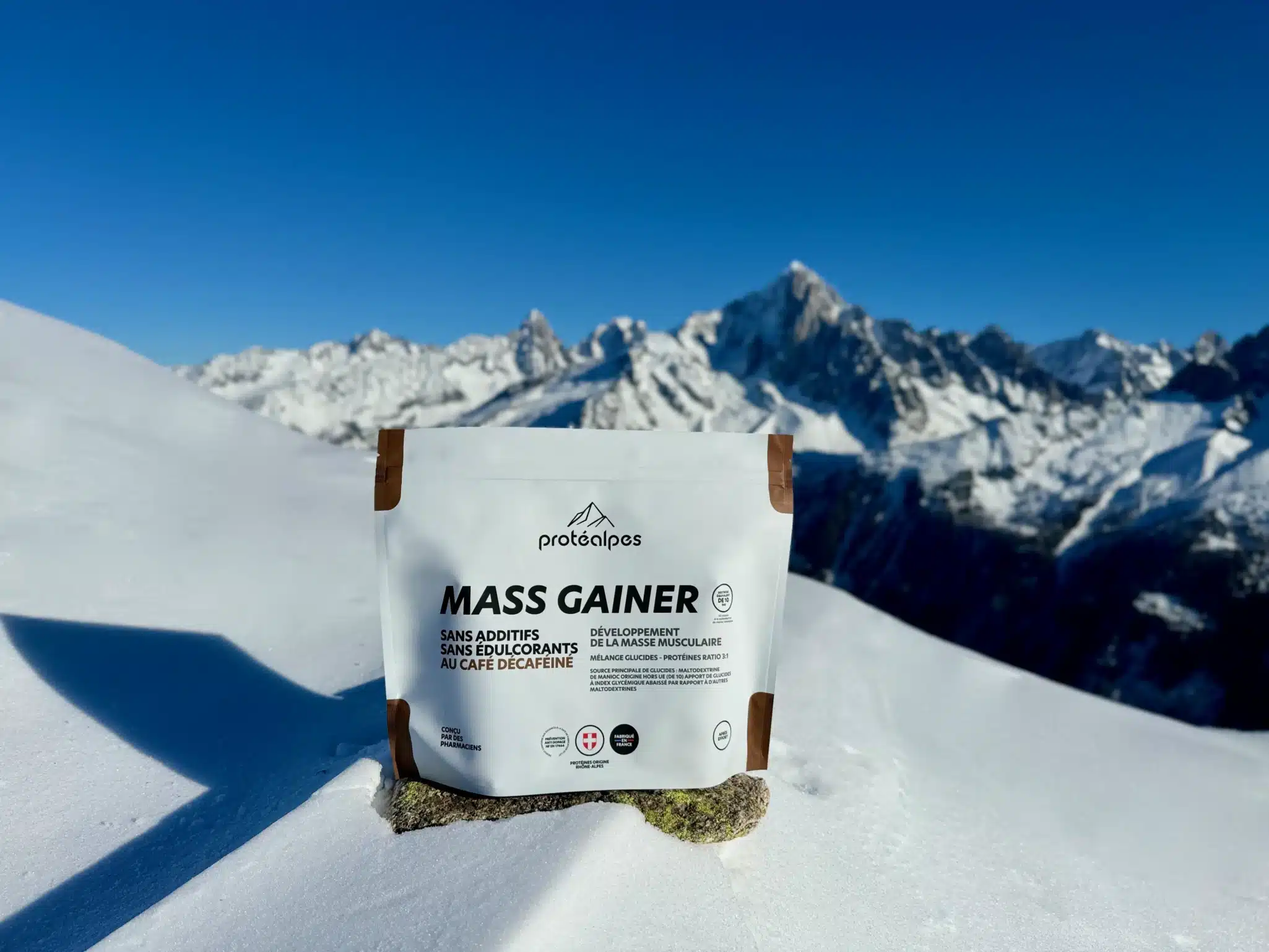
The main difference betweenthis product and a mass gaineris that it contains little to no carbohydrates. A mass gainer, on the other hand, is ablend of carbohydrates (and/or fats) and protein, with a ratio of 3:1 (3 parts carbohydrates to 1 part protein). For a Protéalpes mass gainer, this amounts to approximately 70 g of carbohydrates (including 20 g of sugars) and 23 g of protein (including 5 to 6 g of BCAAs). It is particularly beneficial for ectomorphs or athletes who lose weight at the end of the sports season, for example.
| Objective | Composition | Benefits | Disadvantages | |
| Whey | Increase daily protein intake, or specifically after exercise | 70% to 85% protein (depending on whether it is the standard formula or the no-added-sugar version) | ✔️ High protein content ✔️ Helps maintain and build lean muscle mass ✔️ Versatile—can be mixed with carbohydrates or taken on its own | ⚠️ Low-calorie intake for muscle gain |
| Mass gainer | Increase protein and calorie intake | 1/4 protein + 3/4 carbohydrates (maltodextrin in the current Protéalpes recipe) | ✔️ Ideal for creating a calorie surplus ✔️ Optimizes muscle growth ✔️ High calorie content (+/- 400 kcal per shaker) | ⚠️ Weight gain due to overeating or insufficient physical activity |
What types of protein powder are available?
To incorporate a protein-rich component into your daily diet, you need to know which protein powders to choose.
Amonganimal-based proteins, the best known is undoubtedlywhey, which can be produced:
- based on an isolate, offering high purity (very low levels of lactose and fat residues);
- made from a concentrate, which is a lower-quality option due to less advanced filtration.
Casein is also available on the market; it is found invarious natural sourcessuch as dairy products:
- cow's milk, sheep's milk, goat's milk;
- cheeses, in varying amounts depending on the type;
- cottage cheese, faisselle, etc.
The choice between casein and whey largely comes down tohow quickly they are digested. While whey is absorbed quickly, casein is digested more slowly. In fact, it is often taken at bedtime because it releases amino acids at a more steady rate throughout the night.
100 grams of whey contains more BCAAs and essential amino acids than 100 grams of salmon or egg protein, for example.
Alternatives are available from plant-based sources, which are preferred by people seeking a completely lactose-free option or by vegans. Protein powders can be derived from hemp, peas, brown rice, or soy. The amino acid profiles differ from those of whey, but combining multiple plant-based sources or selecting rare, high-quality single sources ensures that all necessary amino acids are present.

Mass gainer
- High in protein, no additives, gluten-free
- Organic cassava maltodextrin
- Doping substance-free
- Carbohydrate:protein ratio 3:1
When and how should you consume protein powder?
When it comes to building muscle, the daily amount of protein powder is more important than thetime of day it is consumed, which is ultimately a secondary consideration.
For optimal dosage, aim for between1.8 and 2.0 g/kg/day, withaleucineintakeof 700 to 3,000 mg andall essential amino acids.1As for the ideal timing, this is a matter of debate. The most important thing is to spread your intake evenly throughout the day to ensure the most consistent possible supply of amino acids:
- in the morning at breakfast, with, for example, a protein-rich meal (whey + oatmeal + banana);
- as a snack in the morning and/or afternoon, along with a mass gainer or flavored whey;
- after a workout, by drinking a whey and carbohydrate shake to replenish glycogen stores;
- before bedtime, using casein or a blend of whey and fiber, to slow down digestion and benefit from a sustained release of amino acids throughout the night.
These are all ways tomaximize muscle growthand achieve a controlled caloric surplus without gaining unnecessary fat.
5 Common Mistakes in Building Muscle Mass
Togain muscle effectivelywhile minimizing fat gain, here are a few mistakes to avoid.
Too much protein
Focusing solely on protein isn’t enough. Some athletes believe that the more protein they consume, the better the results. This is false, and there’sno benefitto consuming more than 2.0 to 2.2 g/kg/day.
Your diet should be balanced, with roughly 40% carbohydrates, 30% protein, and 30% fat, which allows for a healthy surplus.
A lack of carbohydrates
Carbohydrates are often associated with weight gain.
Cutting back on carbohydrates out of fear of gaining fat risks causing a significant energy deficit. For example,during running or other endurance activities, the risk is that the body will draw on its muscle reserves if glycogen stores are too low. By triggering muscle catabolism, muscle loss is guaranteed—not the muscle gain you’re seeking.
Skipping meals in favor of supplements
The idea of havinga whey shakeinstead of a balanced meal can sometimes be tempting. We think we’re getting the right amount of protein, but what we forget is that we’re missing out on the vitamins, minerals, and fats found in food.
Protein powdersare not a substitute, but a supplement. You should therefore make sure to include lean meats, fish, eggs, vegetables, and whole grains in your meals. The goal is to ensure awell-rounded nutritional intake.
The shake is perfect as a snack or as a supplement to a meal. It is also recommended to spread your intake over 3 to 4 meals a day to ensure optimal coverage throughout the day.
Neglecting quality
Quality is key—whether in food choices or when selectingan additive-free whey protein—for healthy muscle gain. It’s therefore important to pay attention to yourprotein sources to ensureyou’re consuming nutrient-dense calories (such as avocados, nuts, and olive oil) andcomplete proteins, whether plant-based or not.
Conversely, avoidempty-caloriefoods, such as the refined sugars found in many ultra-processed products or fried foods.
Skip the workout
Believing thateating more is enoughto gain weight without exercising is wrong. Or at least, it doesn’t lead to healthy weight gain.
Insufficient or poorly managed training is like an unbalanced meal—it’s counterproductive. It’s recommended to prioritize strength training 3 to 5 times a week if you want to achieve significant results with leanmuscle gain.
Successful muscle gainrelies on abalancebetween high-quality nutrition, a controlled caloric surplus, and structured training.
Conclusion
Tobuild muscleand avoid gaining body fat,protein powdersoffer a definite advantage—provided they are used correctly. Whey isolate, mass gainers, plant-based proteins… their inclusionin a nutrition planmust be tailored to your actual needs. While raw whey isolate can provide a significant amount of amino acids, mass gainers are ideal for adding calories. This is particularly important for so-called ectomorphs. Indeed, ectomorphs generally struggle to meet theirdaily protein intake. This therefore requires a carbohydrate-to-protein ratio tailored to the targeted caloric surplus.
There are many mistakes to avoid:excessive protein intake(more than 2.0 g per kg of body weight),insufficient carbohydrates(essential for supporting muscle repair and creating a caloric surplus), or neglecting thequalityof nutrients. We recommend choosing products rich in essential amino acids and free of additives to ensure a complete, high-quality protein. Moreover, depending on your goal (strength, endurance, better muscle definition, etc.) and dietary philosophy, the protein source can be adjusted (whey, casein, plant-based proteins, etc.).
When it comes to building lean muscle mass, there’s no secret. You needto combine a balanced dietwith a structuredworkout routine. Above all, keep in mind that protein powders are not a substitute for a balanced diet. They are there to complement it and maximize the desired results.
Scientific references and sources
To find out more :
Best Whey Protein for Building Glute Muscles
Side effects of whey