





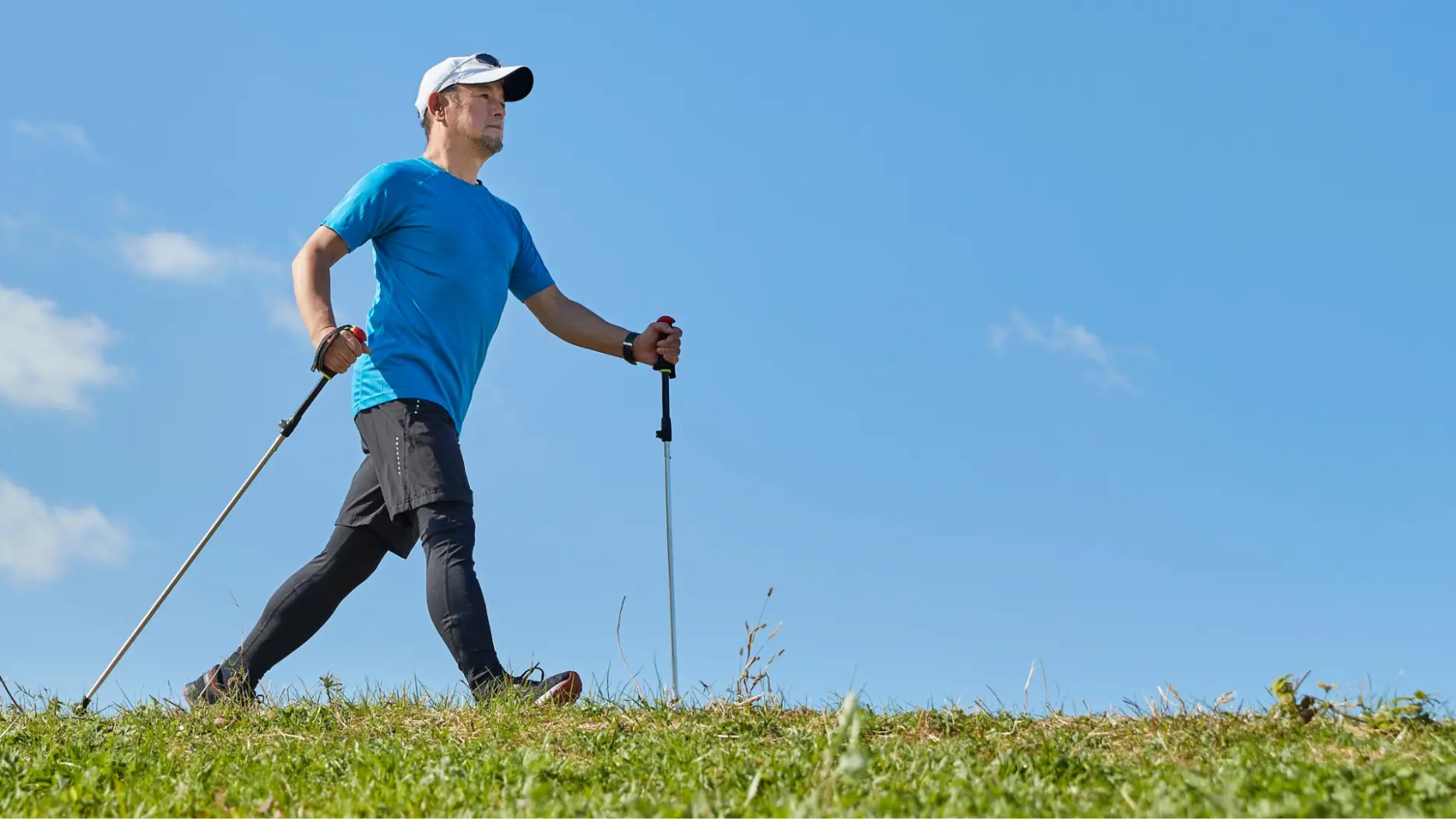
For many people, counting their steps has become second nature thanks to smartwatches and pedometers. But converting the number of steps into calories burned isn’t as simple as a rule of three.
On average, 10,000 steps burn between 300 and 500 kcal, depending on weight, height, and walking speed, using a calculation method that takes into account the distance covered, the walking time, and a MET formula based on ACSM recommendations.
The Protéalpes calculator uses this scientifically validated anthropometric and kinematic model, rather than an approximate “calories per step” constant.
Step and Distance to Calories Converter
| Not | Calories | Distance | Time |
|---|---|---|---|
| 1000 | 39 calories | 0.72 km | 9 min |
| 2000 | 78 calories | 1.45 km | 18 min |
| 3000 | 116 calories | 2.17 km | 27 min |
| 4000 | 155 kcal | 2.90 km | 36 min |
| 5000 | 194 calories | 3.62 km | 45 min |
| 6000 | 233 calories | 4.35 km | 54 min |
| 7000 | 272 calories | 5.07 km | 63 min |
| 8000 | 311 calories | 5.80 km | 72 min |
| 9000 | 349 calories | 6.52 km | 82 min |
| 10000 | 388 calories | 7.25 km | 91 min |
| 11000 | 427 calories | 7.97 km | 100 min |
| 12000 | 466 calories | 8.69 km | 109 min |
| 13000 | 505 calories | 9.42 km | 118 min |
| 14000 | 544 calories | 10.14 km | 127 min |
| 15000 | 582 calories | 10.87 km | 136 min |
| 16000 | 621 kcal | 11.59 km | 145 min |
| 17000 | 660 calories | 12.32 km | 154 min |
| 18000 | 699 calories | 13.04 km | 163 min |
| 19000 | 738 kcal | 13.77 km | 172 min |
| 20000 | 777 kcal | 14.49 km | 181 min |
| 21000 | 815 calories | 15.21 km | 190 min |
| 22000 | 854 kcal | 15.94 km | 199 min |
| 23000 | 893 kcal | 16.66 km | 208 min |
| 24000 | 932 kcal | 17.39 km | 217 min |
| 25000 | 971 kcal | 18.11 km | 226 min |
| 26000 | 1,010 kcal | 18.84 km | 235 min |
| 27000 | 1,048 kcal | 19.56 km | 245 min |
| 28000 | 1,087 kcal | 20.29 km | 254 min |
| 29000 | 1,126 calories | 21.01 km | 263 min |
| 30000 | 1,165 calories | 21.74 km | 272 min |
| Calories | Not | Distance | Time |
|---|---|---|---|
| 100 kcal | 2,575 steps | 1.87 km | 23 min |
| 200 kcal | 5,151 steps | 3.73 km | 47 min |
| 300 calories | 7,726 steps | 5.60 km | 70 min |
| 400 calories | 10,302 steps | 7.46 km | 93 min |
| 500 kcal | 12,877 steps | 9.33 km | 117 min |
| 600 calories | 15,452 steps | 11.20 km | 140 min |
| 700 calories | 18,028 steps | 13.06 km | 163 min |
| 800 kcal | 20,603 steps | 14.93 km | 187 min |
| 900 kcal | 23,179 steps | 16.79 km | 210 min |
| 1,000 kcal | 25,754 steps | 18.66 km | 233 min |
How can you scientifically convert steps into calories?
The current best practice involves carrying out four successive steps rather than multiplying a single coefficient by the number of steps:
- estimating stride length based on height;
- conversion of steps to distance traveled;
- calculating travel time based on average speed;
- application of the MET formula to calculate caloric expenditure.
This design takes into account body weight, body type, and stride length—three factors that can cause the result to vary by up to three times for the same number of steps.
⚠️ Be careful with the rule of thumb “1 step = 0.04 kcal”: this widely used approximation does not take into account height, speed, or body composition. It remains useful as a rough estimate, but it is no substitute for a comprehensive physiological model.
What formula can be used to estimate the number of calories burned while walking?
The standard formula in exercise physiology comes from theAmerican College of Sports Medicine 1:
kcal = MET × 3.5 × weight (kg) ÷ 200 × time (min)
The MET (metabolic equivalent of task) measures the energy expenditure of an activity relative to basal metabolic rate. Walking at 3.5 METs consumes 3.5 times more energy than sitting at rest.
Stride length and MET values
The average stride length is estimated as follows: stride length (m) = height (m) × 0.414. For a person who is 1.75 m tall, this results in a stride length of 72 cm.
| Type of walk | Speed | MET | kcal/min (70 kg) |
|---|---|---|---|
| Slow walk / leisurely stroll | ~3.2 km/h | 2,8 | ≈ 3,4 |
| Moderate walking | ~4.8 mph | 3,5 | ≈ 4,3 |
| Brisk walking / power walking | ~6.4 mph | 5,0 | ≈ 6,1 |
| Very fast walking | ~7.2 km/h | 6,3 | ≈ 7,7 |
These values are taken from the 2024 Compendium ofPhysical Activities², an international reference that compiles energy expenditure data measured in laboratory settings.
How many calories are burned for 5,000, 10,000, or 15,000 steps?
The following table shows the complete formula for moderate walking (3.5 METs, 1.34 m/s) based on body weight:
| Number of steps | 60 kg | 70 kg | 80 kg | 90 kg |
|---|---|---|---|---|
| 5,000 steps | ≈ 165 kcal | ≈ 193 kcal | ≈ 221 kcal | ≈ 248 kcal |
| 7,500 steps | ≈ 248 kcal | ≈ 289 kcal | ≈ 331 kcal | ≈ 372 kcal |
| 10,000 steps | ≈ 331 kcal | ≈ 386 kcal | ≈ 441 kcal | ≈ 496 kcal |
| 15,000 steps | ≈ 496 kcal | ≈ 579 kcal | ≈ 662 kcal | ≈ 744 kcal |
Detailed calculation example for 70 kg, 1.75 m, 10,000 steps at 1.34 m/s:
- stride length: 1.75 × 0.414 = 0.725 m;
- distance traveled: 10,000 × 0.725 ≈ 7.25 km;
- walking time: 7,250 ÷ 1.34 ≈ 90 minutes (5,410 s);
- Energy expenditure: (3.5 × 3.5 × 70 ÷ 200) × 90 ≈ 386 kcal.
Additional information: The energy expenditure shown includes resting metabolic rate during the walking period. To calculate net active calories, use the formula: (MET − 1) × weight × hours.
What factors influence the number of calories burned while walking?
The variation between two walkers taking the same number of steps can be as high as 50%. The main factors are:
- body weight, which is a direct input in the MET formula;
- walking speed, which causes the MET to increase from 2.8 to over 6;
- stride length, which is related to height and technique;
- the slope of the terrain: a 5–6% incline increases energy expenditure by 20–30%;
- soil type: soft sand increases energy costs by 40 to 60 percent;
- physical fitness and individual walking efficiency;
Walking uphill engages the quadriceps and glutes more, making the energy expenditure similar to that seen during slow-paced running.
How many steps a day are needed to promote weight loss?
The WHO recommends at least 150 minutes of moderate physical activity per week, which is equivalent to 7,000–10,000 steps per day for most adults.
Walking 10,000 steps a day burns approximately 2,700 calories a week for a person weighing 70 kg. Combined with a balanced diet, this can create a calorie deficit sufficient for gradual fat loss without compromising daily energy balance.
To preserve muscle mass during a calorie deficit, a protein intake of 1.6 to 2 g/kg remains essential.
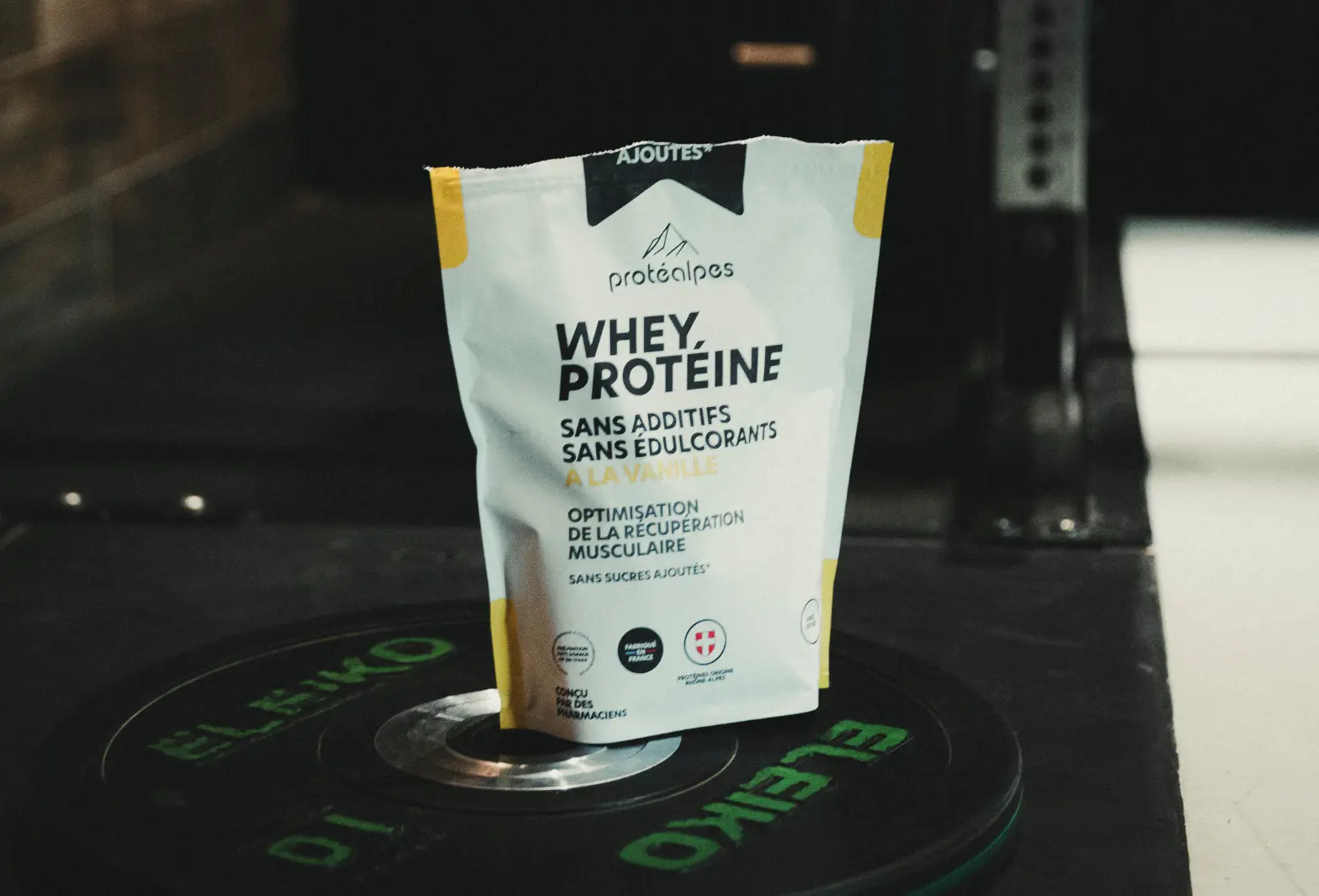
High-quality sugar-free proteins
- Cold microfiltration
- Optimal digestibility
- Unsweetened flavor
- Without performance-enhancing substances
- Gluten-free
⚠️ Key takeaway: Walking alone is not enough to achieve lasting weight loss. It must be part of a program that combines a balanced diet with physical activity or strength training. You can start by quickly calculating your BMI.
What are the benefits of walking beyond just burning calories?
It would be simplistic to view walking solely in terms of its calorie-burning benefits. This accessible, low-impact activity has a positive effect on several aspects of health.
Regular walking improves cardiovascular health, lowers blood pressure, and promotes insulin sensitivity. Studies show that walking as few as 4,000 steps a day has a protective effect against mortality, with increasing benefits up to 10,000 steps.
Mentally, walking outdoors lowers cortisol levels and improves sleep. It can be incorporated into a regular cardio routine, alongsidebasic endurance training for more advanced exercisers. To compare it with other activities that burn calories, the “calories burned while cycling” tool provides a useful point of reference.
How can I use this converter on a daily basis?
The Protéalpes calculator requires four pieces of information: weight, height, number of steps, and walking speed. It then displays the distance traveled, estimated time, total calories, and active calories.
There is still one estimation tool: actual energy expenditure depends on heart rate, body composition, and unmeasurable factors such as temperature. Smartwatches also provide estimated figures, which can sometimes vary. The important thing is to have a consistent ballpark figure to help you adjust your diet and maintain a regular exercise routine.
Scientific references and sources
22024 Adult Compendium of Physical Activities: A third update of the energy costs of human activities by S.D. Herrmann et al.
3Energy cost of walking on an inclined treadmill by R. Margaria et al.
Our other calculators

Does the sauna really burn calories?

How many calories do burpees burn?
How many squats do you need to do to burn 100 calories?

Calories Burned While Walking: Calculator

Calories burned while swimming freestyle, breaststroke, backstroke, or butterfly

How many jumping jacks do you need to do to burn 100 calories?

Jump rope: Calories burned by duration or number of jumps

How many push-ups do you need to do to burn 100 calories?