




Are protein powders dangerous to your health? The scientific answer is clear: no. For a healthy person, consuming whey protein or vegan protein poses no risk. However, there is one condition that must be met: you must have a healthy, varied, and balanced diet overall.
Nevertheless, concerns remain, including kidney overload, digestive problems, acne, cardiovascular health, doping, and other preconceived notions about taking dietary supplements in general. The sports nutrition community is asking: can consuming protein powder pose potential long-term risks?
This article discusses the real dangers, documented side effects, and precautions to take. It provides information on how to choose a safe source of protein powder that is appropriate for your body weight and goals (muscle recovery, weight loss, weight gain).
In a nutshell
- Protein powders (whey isolate or concentrate, casein, plant proteins)pose no health risk to healthy individuals, provided that intake is appropriate for their weight and physical activity level.
- The most common side effectsare digestive (bloating, gas, diarrhea). They mainly affect people who are sensitive to lactose or who consume poor-quality protein products.
- Concerns regardingkidney or liver functionmainly affect people with pre-existing conditions, or in cases of prolonged excessive consumption.
- The potential risks are related to thequality of the finished product, rarely to the protein itself (additives, sweeteners, heavy metals).
- When used correctly, protein powders are aneffective nutritional supplementfor muscle gain, recovery, or weight loss, provided that the recommended doses are followed.
Contents
- Protein powder: a danger?
- Misinformation about protein powders
- What you need to know about amino acids
- The quality of a protein according to scientific criteria
- Why are they perceived as dangerous?
Protein powder: a danger?
Before identifying the real risks and side effects of protein powder, let's take a look at what it is.
Whey, casein, plant proteins: origin and manufacturing process
Protein powders are primarily proteins, i.e., anatural macronutrient.
The best known is whey, which is produced bymechanically filtering milk or whey. The manufacturing process involves microfiltration and ultrafiltration to isolate the whey proteins. These are then dried, resulting in a white powder with a high protein content and an excellent amino acid profile.
There are different forms of whey, includingwhey isolate or concentrate, nativeor non-native.
| Whey | Concentrated | Isolate |
|---|---|---|
| Native | Native whey concentrate= less filtration, contains a significant amount of fat and lactose, derived from whole milk | Native whey isolate= more thorough milk filtration, trace amounts of fat and lactose |
| Non-native or cheese-making | Non-native whey concentrate= less filtration, contains a significant amount of fat and lactose from whey | Non-native whey isolate= more thorough whey filtration, trace amounts of fat and lactose remaining |
Finally, there areplant-based protein powders made from peas, rice, or soybeans. Their manufacturing process is also based on extraction and drying in powder form. Below are the key facts to remember about these protein sources:
| Protein source | Current protein content | Strengths | Limits |
|---|---|---|---|
| Soybeans | 90% | Complete protein, rich in AAE, easily digestible | Variable quality, allergies, texture |
| Peas | 80 to 85% | High digestibility, rich in lysine, hypoallergenic, satiety | Deficiency in methionine and cysteine, taste |
| Rice | 80% | Highly digestible, absorption, price, hypoallergenic | Incomplete profile, taste |
| Hemp | 50% | Digestibility, absorption | Low protein content, taste, allergy risk (rare) |
Misinformation about protein powders
The top three common misconceptions about protein powder in sports nutrition are:
- Plant proteins are significantly lower in quality than animal proteins.
This is partly false.
Animal protein has a more complete amino acid profile, with more leucine and superior digestibility. However, aplant-based combinationof peas and rice, for example, achieves a similar profile. In addition, some modern isolates have high digestibility scores, and certain sources tend to gradually improve their aminogram through plant selection over generations, meaning that in practice the difference is small if the intake is sufficient.
- Animal proteins are less healthy than plant proteins.
This is false.
People confuse food sources (such as cold cuts, red meat, etc.) consumed in excess with protein itself. The cardiovascular risks underlying this issue are mainly related to excess calories, lifestyle, and the ultra-processing of certain modern food sources. - BCAAs are essential for building muscle.
Yes, in part.
BCAAs, or Branched Chain Amino Acids, are a group of three amino acids among the 22 proteinogenic amino acids. Leucine,isoleucine, and valine are responsible for protein synthesis and contribute to recovery. Their usefulness in athletic performance is well known.1However, when consumed alone, they are not sufficient for building muscle. Allnine essential amino acids are needed, so a complete protein source is preferable to isolated BCAAs.
What you need to know about amino acids
Some brands excessively promote BCAAs. Others criticize the classification of amino acids as essential or non-essential. Let's separate fact from fiction.
Amino acids are like tiny building blocks that make up proteins.
There are more than 500 amino acids in the living world, but the ones that are usually mentioned are the 22 proteinogenic amino acids. These are the ones that form the proteins in the human body.
Among them, there are nine essential amino acids, which are indispensable because the body does not synthesize them or does not synthesize them in sufficient quantities. They must therefore be obtained through diet.2
These are histidine, isoleucine, leucine, lysine, methionine, phenylalanine, threonine, tryptophan, and valine.
Almost all of them are present in all proteins, whether plant or animal, but in varying amounts.
Leucine is one of the most important, as this amino acid triggers the body's response to exercise. It induces muscle regeneration and reduces muscle catabolism. Isoleucine is involved in many metabolic reactions and, like valine, can serve as an energy substrate for the body.
This is why BCAAs are particularly highlighted in bodybuilding.
The quality of a protein according to scientific criteria
Thequality of proteinis assessed in scientific literature using several criteria:
- bioavailability, or the protein's ability to provide amino acids for the body's growth;
- theamino acid profileto measurenutritional quality;
- digestibility orthe measurement of proteins in the digestive tract;
- theprotein valuecorresponding to the total protein content;
- thebiological value orthe amount retained by the body after absorption;
- PDCAAS, orthe analysis of a protein's ability to meet amino acid requirements.
In short, it is a combination of many indicators, each of which has its limitations, so beware of very strong opinions on the subject. The reality is often more nuanced and encompasses many parameters: raw materials, farming or growing conditions, manufacturing, additional ingredients, etc.
Why are they perceived as dangerous?
Despite their popularity in the bodybuilding world,protein powders still sometimes get bad press. What tarnishes their image are misconceptions and industrial abuses.
First, they are likened to chemicals because they are a processed product. The white powder resembles a chemical powder. However, protein powder comes from a natural food source that has been filtered and dehydrated. The manufacturing process isolates the proteins, but is not intended to denature them in any harmful way.
Secondly, mistrust stems from commercial formulations and the addition of additives, sweeteners, thickeners, and colorants. The problem with these ingredients is that they fuel the idea that the product is chemical. This creates confusion between nutritional quality and formulation quality.
Finally, this negative perception of protein powders stems from the manufacturing process. Some factories produce several dietary supplements on their production lines. In some cases, cross-contamination can occur. One study even showed that traces of anabolic steroids could be found in poor-quality powders. While these situations are rare, they still fuel the confusion betweenprotein powders and doping.
That's why it's essential to choose a transparent brand and check for certifications and labels, such as AFNOR.
So it's not the protein that's the problem, but the quality of the final product, particularly in relation to the additional ingredients.
Side effects of protein powder
Now that we know what we're talking about, we can identify the realside effects of wheyand protein powders.
Digestive problems: how to avoid discomfort?
Some consumersreport intestinal problems when consuming whey. Bloating, gas, and diarrhea are discomforts that may be linked to the quality of the protein powder, particularly due to thepresence of additives.
In addition, some people are lactose intolerant and may experience these symptoms when consuming whey. In this case, it is advisable to opt for low-lactose protein powders (whey isolate) or plant-based proteins.
What are the risks of protein on the kidneys and liver?
No studies have shown an increased risk of kidney or liver disease associated with protein intake.
However, if a person has kidney or liver failure, it is generally advisableto avoid overloading the body with protein. In this case, it is recommended to seek advice from a medical specialist.
Protein and the heart: is there a cardiovascular risk?
Today, there is no evidence of an increased cardiovascular risk with protein powders.
Rather, they tend to improve the ratio of lean mass to fat mass when combined with physical activity. Exercise improves cardiovascular capacity. In this respect, protein powders such as whey will boost the effects of training on the muscles.
The combination of protein powder and physical activity will therefore contribute toimproving body composition and, indirectly, to better cardiovascular health.
The risk of acne on the skin
Some scientific studies have reported correlations between whey protein intake and acne, but without conclusive evidence. The emerging hypothesis is that there may be a link between dairy consumption and acne. However, as whey is a protein source derived from milk, it could cause acne to appear or worsen.
It should be noted, however, that acne, and more broadly hormonal problems, are sensitive to other factors. Genetics play a role, but so do sleep quality and diet.
Is the risk of allergy real?
When talking about protein powders derived from milk, two cases must be distinguished:
- people who are lactose intolerant;
- people who are strictly allergic to milk proteins.
For people who are sensitive to lactose, which is more of an intolerance, it is possible to ask suppliers about the amount of lactose in the product. A healthcare professional can then recommend the right dietary supplement.
In case of allergies, it is advisable to take vegetable proteins.
Can proteins be addictive?
No, protein powder shakers are not addictive. If the product is free of additives and manufactured under conditions that guarantee no contamination, there is no risk of addiction.
Overconsumption of protein powder
The "risk" with protein powders is exceeding therecommended daily dosage.
It should be noted that above 2.5g/kg/day, additional protein intake provides no further benefits. On the contrary, it could tend to tire the body, which would be forced to eliminate this surplus. Furthermore, such an overdose would be a waste of resources and money.

whey isolate
- No added sugar option
- Still without additives or sweeteners
- Whey isolate made in France!
- Ideal for recovery
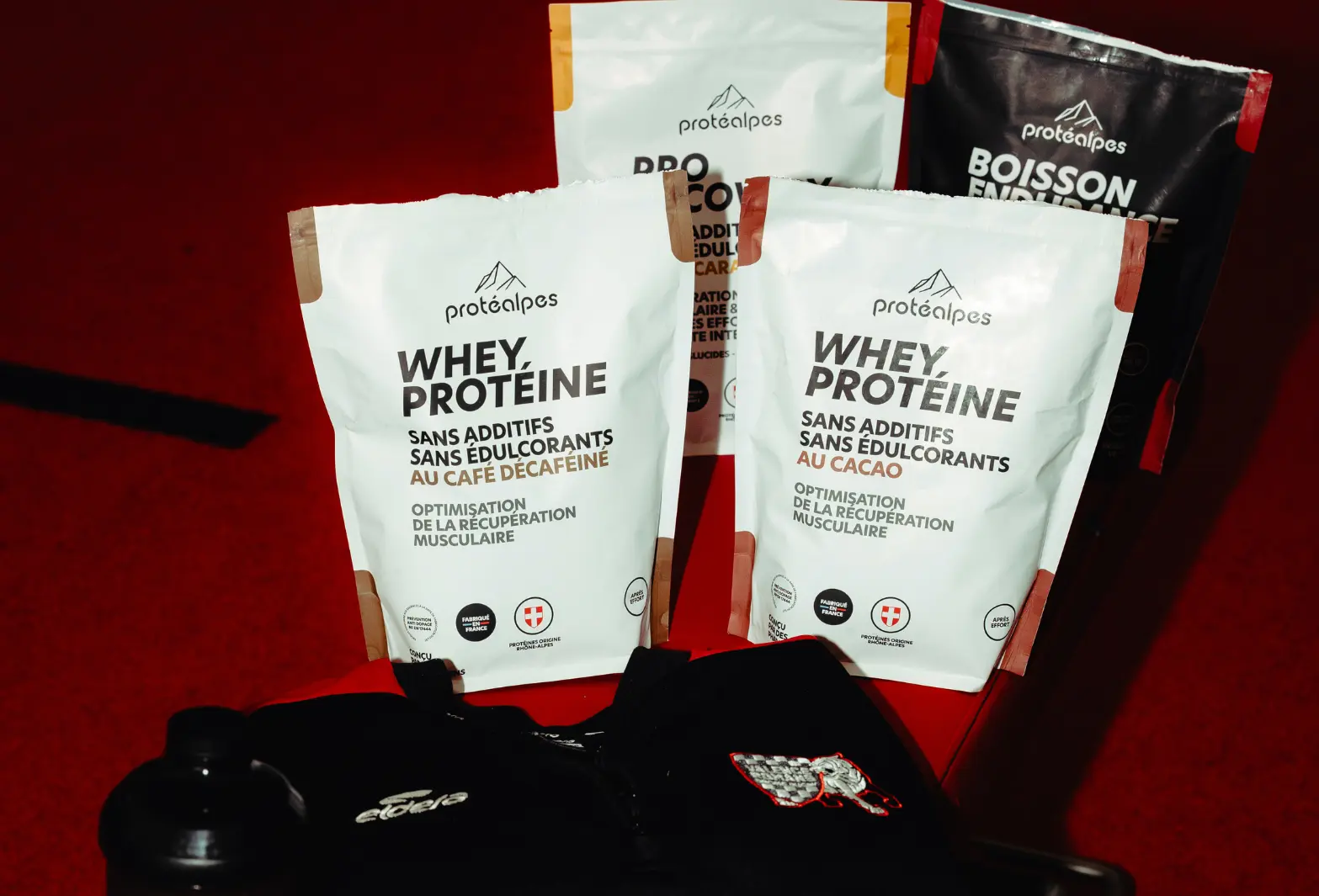
- Certified free of doping substances and gluten
The danger: poor-quality protein
It is clear that the problem is not the protein, but rather the quality of the additional ingredients consumed.
Through additives and sweeteners
The main problem is the addition of additives and processed substances to modify the taste or texture of the finished product.
For example, sweeteners such as aspartame or sucralose are several hundred times sweeter than traditional sucrose (sugar). This type of additive can cause the brain to become accustomed to consuming sweet products by reducing its perception of taste.
This can lead to a generally sweeter diet, which can cause health problems.
Due to the presence of heavy metals
It is the production line that is targeted here.
Proteins, whether plant or animal-based, are made from agricultural raw materials. However, some soils sometimes contain traces of heavy metals (lead,cadmium, arsenic, mercury). Plants and animals pass these on in minute quantities through certain dietary supplements of which they are the source.
However, there is no need to panic, as traces of these metals are found in many everyday foods. Moreover, European standards impose strict limits in this regard. The risk is mainly present in cases of insufficient control or dubious supplies whose traceability is not guaranteed.
It is therefore the manufacturer's level of requirements that is paramount in this regard.
Through cross-contamination
Some protein powder manufacturing plants also produce pre-workout supplements or fat burners, for example, on the same production lines. If their cleaning protocols are not rigorous enough, there is a risk of cross-contamination.
Fortunately, these situations are rare, but it is important to be aware of them in order to protect yourself. The brands concerned usually list the potential allergens associated with this type of situation.
The advantage of certifications
Safety in the manufacture of dietary supplements is based on several points:
- control of raw materials;
- laboratory analyses;
- traceability;
- external audits.
This is why reputable manufacturers carry out systematic testing. They check for the absence of contaminants, verify that protein content is compliant, and ensure that health standards are met.
The more transparent the manufacturing chain, the lower the risk.
Who should avoid or adjust their consumption?
Healthy individuals do not take any risks by consuming protein powder. However, certain situations require medical advice.
People with kidney or liver disease
The kidneys and liver are involved in protein metabolism and the elimination of nitrogenous waste. In cases of renal failure or chronic kidney or liver disease, increasing protein intake is not recommended. Such a practice must be supervised by a healthcare professional.
In such situations, the total protein load may cause discomfort, but not the protein powder itself.
In case of lactose intolerance or allergies
Whey concentrate, or other forms of milk-based protein powder, contain at least trace amounts of lactose.
People who are intolerant may experience digestive discomfort (bloating, intestinal discomfort). To avoid this, there are alternatives such as plant-based proteins (pea, rice, soy).
In this category, it is the choice of protein type that matters, rather than avoiding it altogether.
Pregnant or breastfeeding women
Pregnancy and breastfeeding are two specific periods in life when protein requirements increase. However, the authorities recommend prioritizing a varied and balanced diet.
Protein powders arenot prohibited for women; on the contrary, they can help them achieve the recommended daily protein intake if their diet is not sufficient to meet their needs.
Among adolescents
Some ages are more conducive than others fortaking whey.
A teenager who trains very regularly will have greater protein requirements as they grow. In some cases, an appropriate diet may not be sufficient. In any case, supplementation is not intended to compensate for an unbalanced diet.
The challenge at this ageis more educational. It's about knowing when to consume whey or protein powder.
Protein powders are not dangerous by nature. However, like any dietary supplement, they must be tailored to the individual and used according to actual needs. Finally, it is essential to choose them carefully.
How can you consume protein powder safely?
Protein powders are safe when consumed properly. To do so, there are a few rules to follow.
Measure according to weight and activity level
The daily protein intake is calculated based on the person's weight in kilograms, which is multiplied by a coefficient. The average recommendations are:
- 0.8 to 1 g ofprotein per kilogram of body weight for a sedentary person;
- 1.4 to 2.2 g/kgfor athletes, depending on intensity, goal (weight gain, maintenance, weight loss), and training volume.
Protein powder is used to supplement the diet when it does not provide the recommended daily intake. It does not replace dietary sources of protein.
Choosing protein based on your profile
The choice of protein powder depends on digestive tolerance, but also on the desired goal:
- Whey isolateis an attractive option for people who are sensitive to lactose, as it has a very low lactose content.
- Aplant-based protein (peas, rice, soy)is recommended in cases of milk protein allergy or for those following a vegan diet.
- Casein, which is slowto digest, is effective as a snack or in the evening to take advantage of the prolonged supply of protein over time.
Spread your intake throughout the day
It is strongly recommended to spread your protein powder intake throughout the day. The body does not utilize large amounts of protein as effectively when consumed in a single dose. To optimize protein synthesis, the ISSN recommends dividing your intake into 3 to 4 doses per day, particularly with meals.
This distribution may include a snack after training to support recovery.
Ideal assimilation respects the principle of regularity and adequacy to individual needs.
Conclusion
When used strategically, protein powders are a valuable aid in achieving athletic goals, rather than a source of concern. Current scientific data on whey protein, whey isolate, and plant-based proteins show no health risks for people without specific medical conditions.
As for their side effects, it should be noted that these are mainly linked to poor-quality proteins or inappropriate use, such as excessive consumption. Use that is unsuitable for the individual's profile (lactose intolerance, milk protein allergy, pre-existing medical condition) can also cause problems.
Protein remains a nutritional supplement that is useful for supporting muscle mass gain, muscle recovery, or weight loss. It is used when the general diet does not meet protein requirements. When used properly, protein powder is not a risk. It is a performance aid. And it is how it is used that makes the difference.
Scientific references and sources
2 Proteins: role, sources, and recommended intake by ANSES