





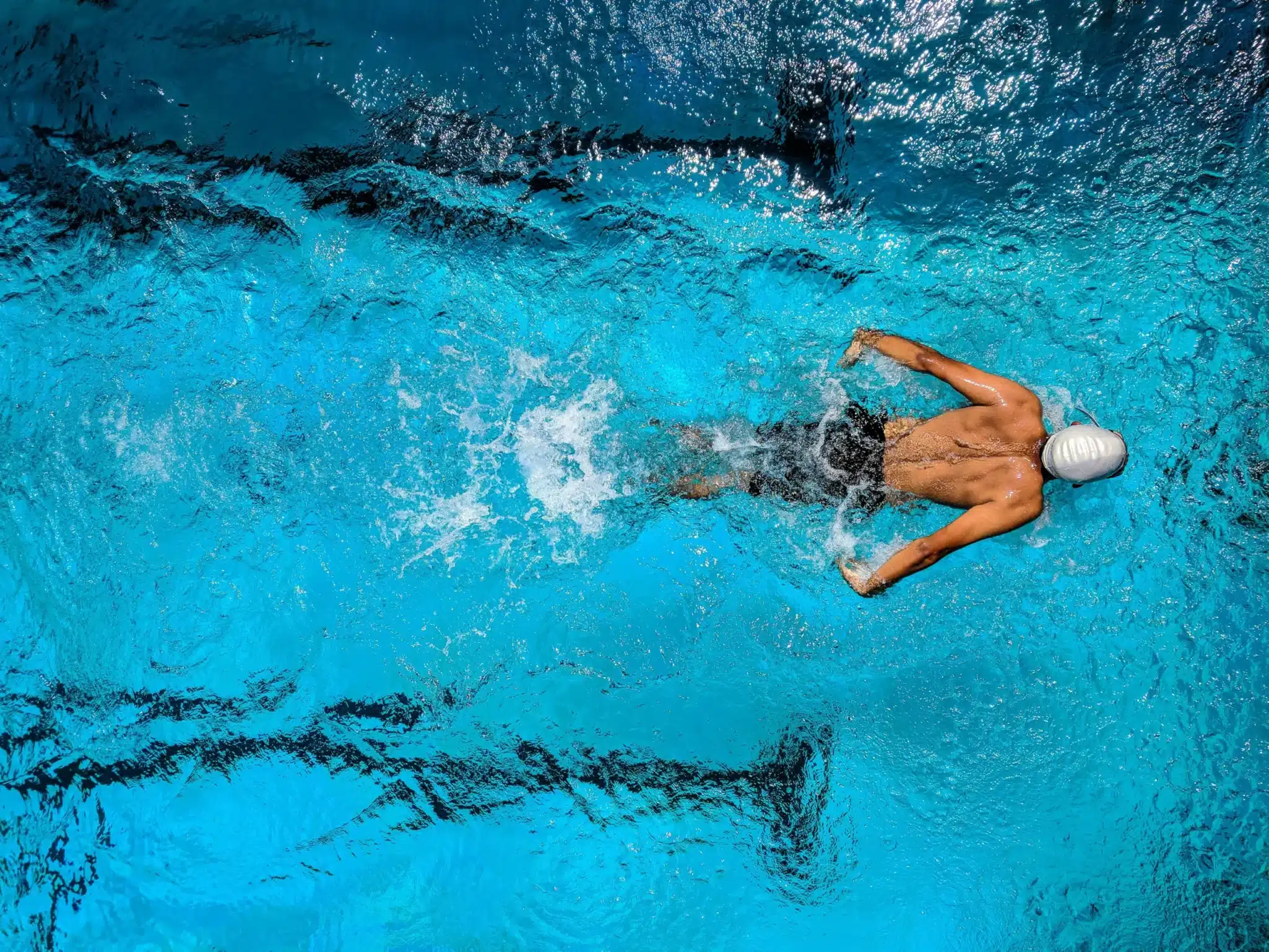
Swimming is the ultimate water-based sport, combining hydrodynamic resistance, multi-joint engagement, and enhanced thermoregulation. These three mechanisms explain why it ranks among the most energy-intensive physical activities with low joint impact.
For a person weighing 70 kg, one hour of swimming burns between 350 and 840 kcal, depending on the stroke and intensity: approximately 490 kcal/h for moderate front crawl, 580 kcal/h for breaststroke, and up to 840 kcal/h for vigorous butterfly.
The Protéalpes calculator uses the MET values from the20241 Compendium of Physical Activities and the ACSM reference equations to estimate your calorie expenditure based on your weight, the duration of the session, and the type of activity.
Swimming Calorie Calculator
1 km breaststroke
1,300 meters in 1 hour
500-meter breaststroke
1 km crawl
500-meter butterfly
30 minutes of freestyle
20 laps
30 minutes of breaststroke
1 hour of freestyle
| Duration | Calories | Distance |
|---|---|---|
| 15 min | 153 calories | 0.60 km |
| 30 min | 305 kcal | 1.20 km |
| 45 min | 458 calories | 1.80 km |
| 60 min | 610 calories | 2.40 km |
| 75 min | 763 kcal | 3.00 km |
| 90 min | 915 kcal | 3.60 km |
| 105 min | 1,068 kcal | 4.20 km |
| 120 min | 1,220 kcal | 4.80 km |
| Calories | Duration | Distance |
|---|---|---|
| 100 kcal | 10 min | 0.39 km |
| 200 kcal | 20 min | 0.79 km |
| 300 calories | 30 min | 1.18 km |
| 400 calories | 39 min | 1.57 km |
| 500 kcal | 49 min | 1.97 km |
| 600 calories | 59 min | 2.36 km |
| 700 calories | 69 min | 2.75 km |
| 800 kcal | 79 min | 3.15 km |
| 900 kcal | 89 min | 3.54 km |
| 1,000 kcal | 98 min | 3.93 km |
| Distance | Calories | Duration |
|---|---|---|
| 250 m | 64 calories | 6 min |
| 500 m | 127 calories | 13 min |
| 750 m | 191 kcal | 19 min |
| 1000 m | 254 calories | 25 min |
| 1250 m | 318 calories | 31 min |
| 1500 m | 381 kcal | 38 min |
| 1750 m | 445 calories | 44 min |
| 2000 m | 508 kcal | 50 min |
| 2250 m | 572 kcal | 56 min |
| 2500 m | 635 calories | 63 min |
| 2750 m | 699 calories | 69 min |
| 3000 m | 763 kcal | 75 min |
| 3250 m | 826 calories | 81 min |
| 3500 m | 890 calories | 88 min |
| 3750 m | 953 kcal | 94 min |
| 4000 m | 1,017 kcal | 100 min |
| 4250 m | 1,080 calories | 106 min |
| 4500 m | 1,144 kcal | 113 min |
| 4750 m | 1,207 kcal | 119 min |
| 5000 m | 1,271 kcal | 125 min |
How does the calculator estimate the number of calories you burn while swimming?
The tool applies the ACSM formula, which is universally recognized in exercise physiology:
kcal = MET × weight (kg) × duration (h)
All you need are three pieces of information: your body weight, the duration of your session (or the distance swum along with your pace), and the type of stroke combined with its intensity. The calculator automatically selects the corresponding MET value and then displays the total energy expenditure in kilocalories.
Additional information: The calculator distinguishes between total calories (MET × weight × duration) and active calories ((MET − 1) × weight × duration), which exclude the fixed portion associated with resting metabolism. This second value more accurately reflects the energy expended in addition to what your basal metabolic rate consumes on a daily basis.
What MET value corresponds to your swim?
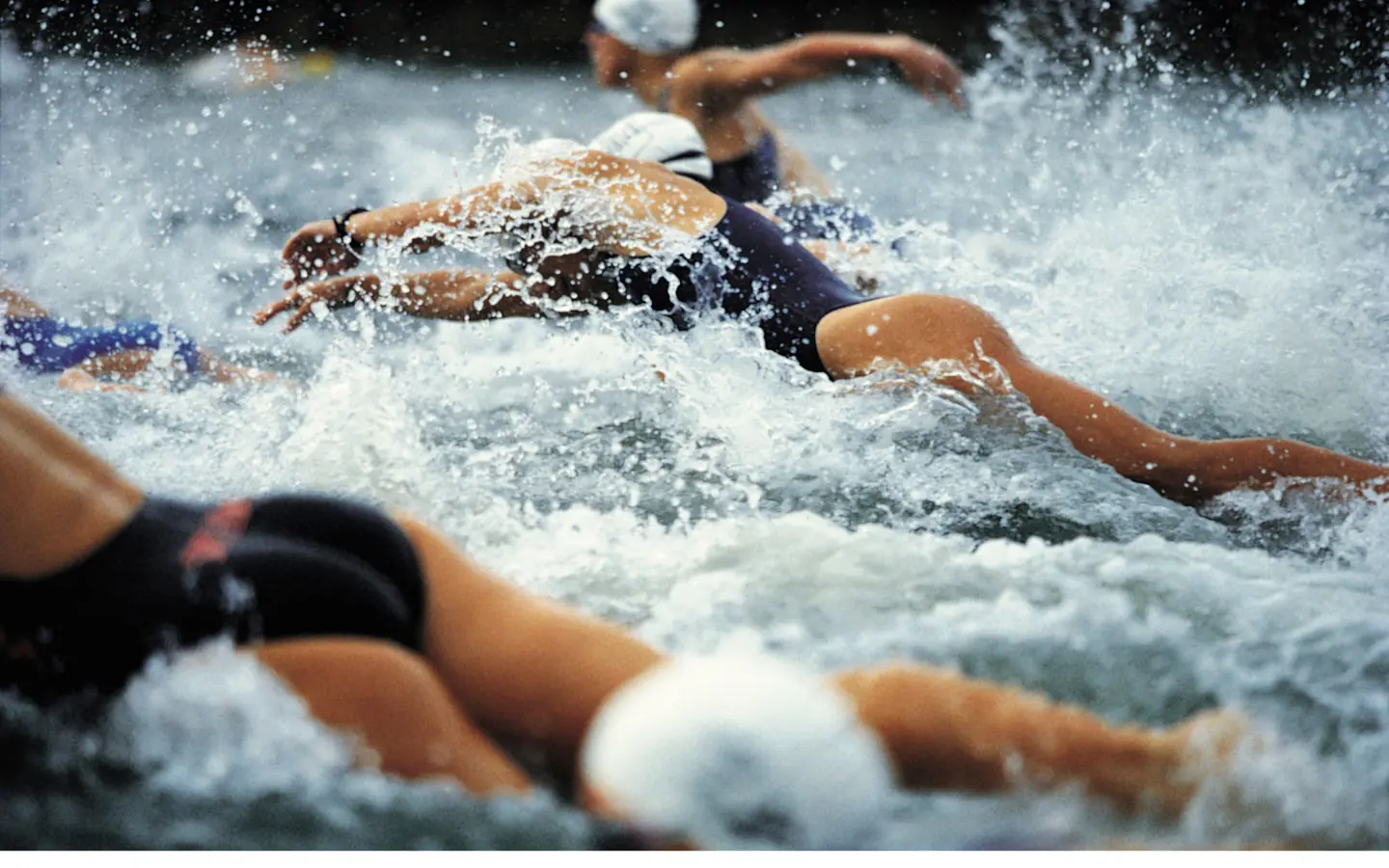
The MET (Metabolic Equivalent of Task) quantifies the energy expenditure of an activity relative to rest: 1 MET is equivalent to approximately 1 kcal/kg/hour. The higher the MET value, the greater the demand on the cardiovascular system and muscles during swimming. This unit is closely linked to the swimmer’s maximum aerobic capacity.
The following are the reference values from Compendium20242, based on a 70-kg person:
| Swimming and intensity | MET | kcal/min | kcal/h |
|---|---|---|---|
| Relaxed swimming / Gentle water aerobics | 6,0 | ≈ 5,8 | ≈ 350 |
| Moderate crawl | 8,0 | ≈ 8,2 | ≈ 490 |
| Backstroke | 8,0 | ≈ 8,2 | ≈ 490 |
| Moderate breaststroke | 9,3 | ≈ 9,7 | ≈ 580 |
| Fast/Intense Crawl | 10,0 | ≈ 10,5 | ≈ 630 |
| Sustained flutter | 13,0 | ≈ 14,0 | ≈ 840 |
Disclaimer: These values are population averages measured in a laboratory setting using limited samples. Actual energy expenditure depends on swimming technique, individual buoyancy, body composition, and water temperature. The figures shown are approximate.
Why does swimming burn so many calories?
Hydrodynamic resistance is the primary factor: since water is about 800 times denser than air, every movement requires more propulsive force than in an air environment. Nearly all major muscle groups are engaged, involving the back, chest, deltoids, triceps, quadriceps, and core muscles in a single coordinated movement.
Added to this is aquatic thermoregulation: water dissipates body heat 25 times faster than air, forcing the body to produce more metabolic heat to maintain its internal temperature.
This combination explains why swimming has MET values comparable to the energy expenditure of cycling or the calories burned while running at an equivalent intensity.
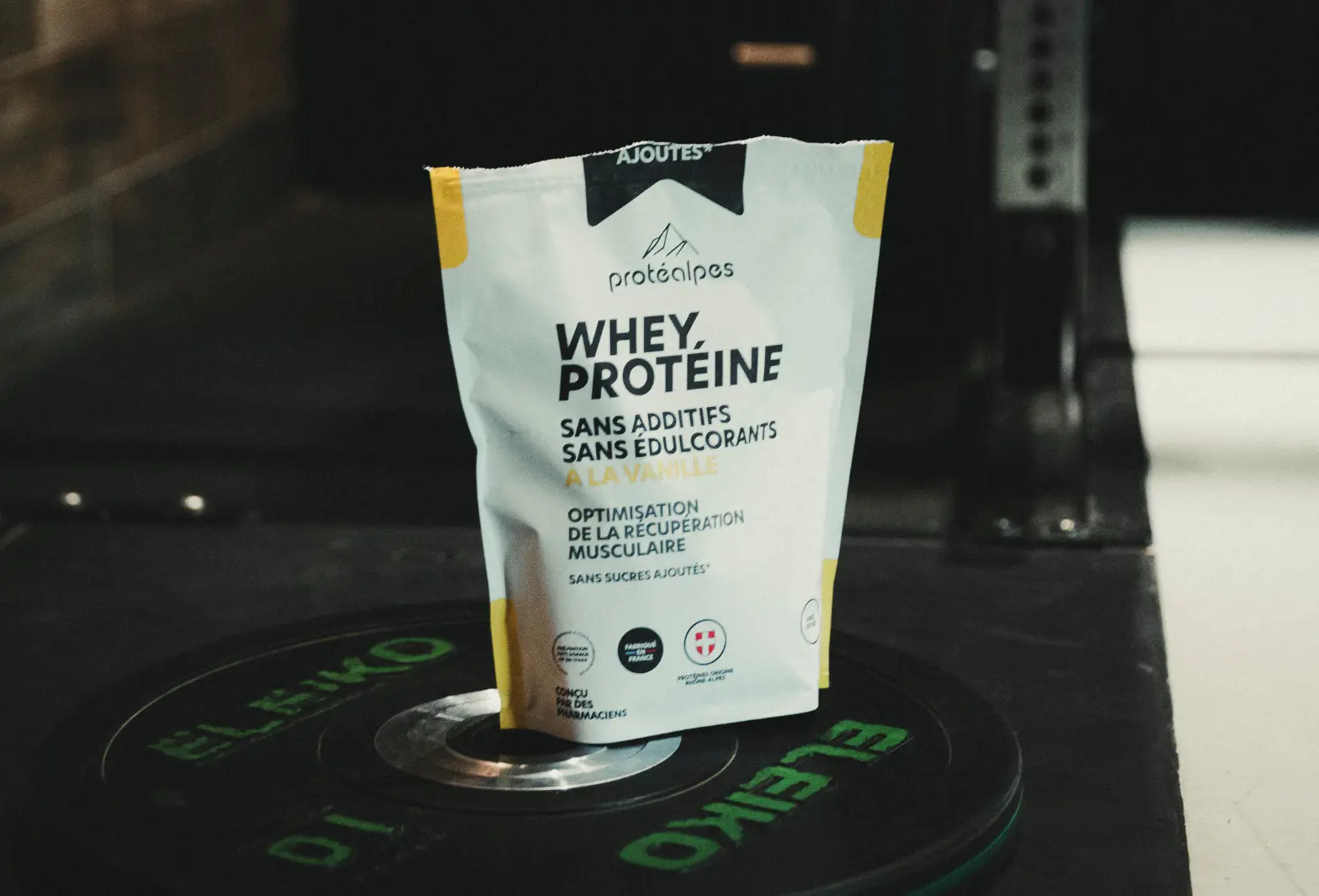
High-quality sugar-free proteins
- Cold microfiltration
- Optimal digestibility
- Unsweetened flavor
- Without performance-enhancing substances
- Gluten-free
Is swimming effective for weight loss?
Because swimming is a low-impact activity, it is an ideal choice for people who are overweight or have joint problems. The lack of impact on the ground protects the knees, ankles, and hips, allowing for longer workouts without the risk of mechanical injury.
However, for regular exercise to truly promote fat loss, it must be part of a controlled calorie deficit. Monitoring your body mass index and daily energy balance allows you to adjust your diet accordingly, without neglecting a sufficient daily protein intake to preserve muscle mass.
Key takeaway: Swimming alone does not lead to weight loss. Consistent weekly exercise, increasing intensity, and a healthy diet are more important for body composition than the sheer number of calories burned during a single session.

How can you maximize calorie burn during your workouts?
To maximize energy expenditure per unit of time, several strategies can be combined:
- Structure the session into intervals alternating between high-intensity bursts (25 to 50 m at a fast pace) and active recovery (slow swimming)
- alternate between the four strokes during a single session to vary the muscular stimulus and delay local fatigue
- Aim for 3 to 4 sessions per week, each lasting 30 to 45 minutes, to achieve a significant weekly calorie deficit
- incorporate additional strength training to increase propulsive power
Muscle recovery and post-workout nutrition for endurance sports are just as important as the workout itself. Consuming 20 to 25 grams of protein within two hours of training supports protein synthesis and limits muscle breakdown.
Whey made in France
- High in protein, no stimulants, no sucralose, gluten-free
- Contributes to muscle maintenance and growth
- Optimal recovery thanks to post-workout carbohydrates
- Cold-microfiltered whey isolate, without heat treatment
- Milk from Rhône-Alpes pastures, produced in Albertville
Scientific references and sources
22024 Adult Compendium of Physical Activities: A third update of the energy costs of human activities by S. D. Herrmann et al.
3ACSM metabolic equations for walking and running on a treadmill by American College of Sports Medicine
Our other calculators

Saunas and Weight Loss: Calories Burned and Limitations

Calories burned with 50, 100, or 200 burpees
Calories per squat: Rep-based calculator

Slow, brisk, or brisk walking: how many calories are burned?

Calories burned based on the number of steps and weight

Jumping jacks: Calorie burn based on pace and weight
How many calories does jumping rope burn?

Workouts: Calculator by duration, repetitions, or calorie goal