





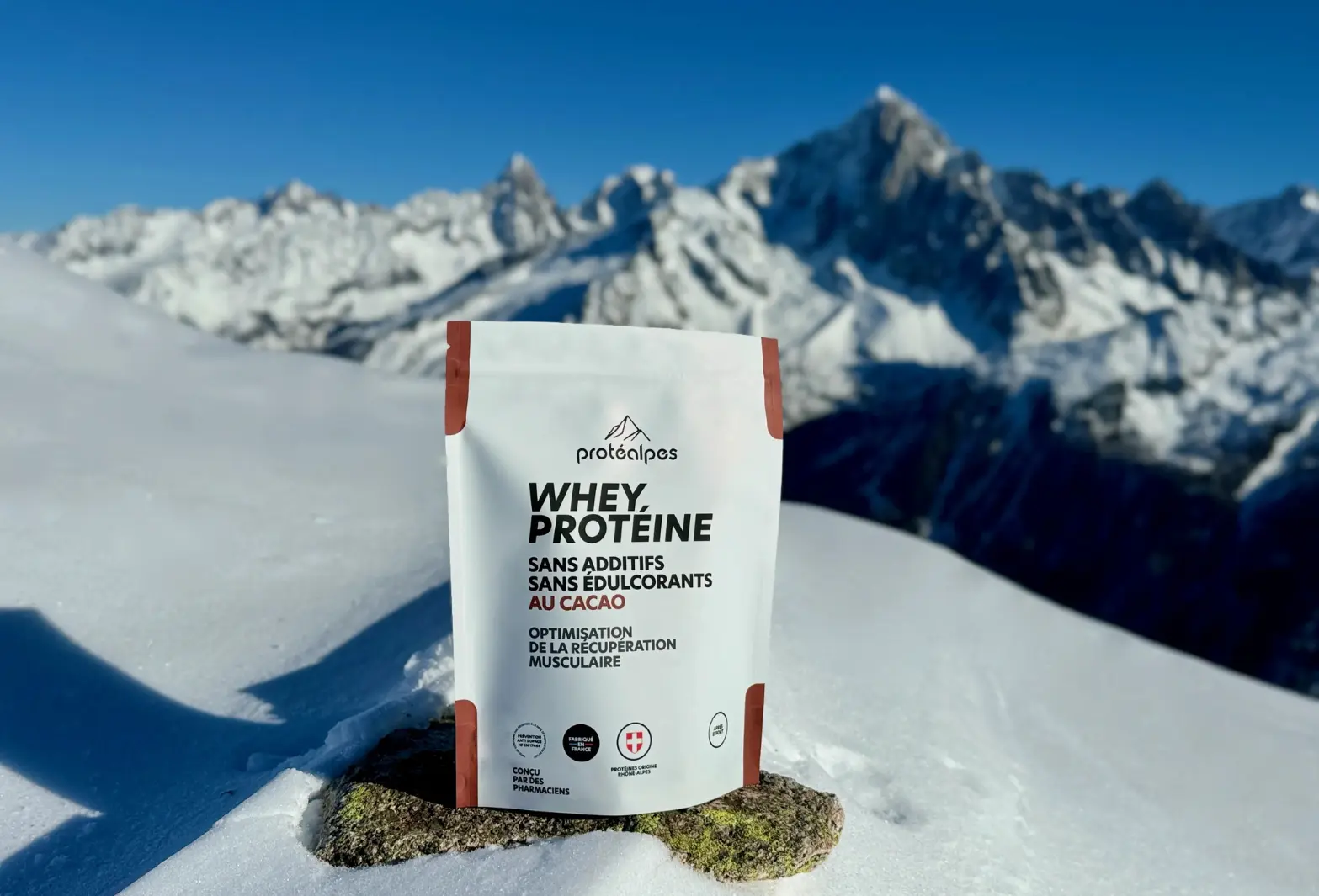
A popular supplement in the world of bodybuilding and sports in general, what are the benefits of protein powder for the human body? Beyond their role in muscle gain and recovery, they also serve as a strategic tool for weight management.
Depending on an individual’s lifestyle and needs, protein powders are incorporated into the diet in different ways. They can be mixed with water or milk to create a homemade shake, or added to meals to boost their protein content.
While whey protein is one of the most well-known types, other forms of protein—such as pea protein and rice protein—are also available. They are generally less well-known or less popular, but in reality, they can also be effective.
From a scientific perspective, let’s explore in this article how to reap the benefits of protein powder.
In a nutshell
- Boost protein synthesis and muscle recovery: protein powders (whey protein derived from milk, casein, pea protein, rice protein, or soy protein) provide essential amino acids, particularly leucine. These are essential for protein synthesis, tissue repair, and muscle growth.
- A convenientdietary supplement: Meeting your daily protein needs through diet alone (meat, eggs, cottage cheese, legumes) can be challenging depending on your lifestyle. Protein powders offer a convenient solution: whether in a shaker, smoothie, snack, or added to breakfast, they help control portion size, calorie intake, and energy intake, while fitting into a balanced diet. They complement a meal, without replacing it.
- A tool for both gaining and losing weight: protein powders offer the benefit of preserving lean body mass, promoting satiety (appetite-suppressing effect), supporting metabolism, and helping to control body weight. Adequate intake limits muscle loss during a calorie deficit, aids in weight management, and helps reduce body fat.
- Forms tailored to every individual: whey protein, casein, vegan protein (pea, rice, soy)—each type offers unique benefits depending on your goals, digestion time, and digestive tolerance. People with lactose intolerance should opt for a pure isolate that is gluten- and lactose-free. High-quality, well-formulated plant-based proteins are now an excellent alternative to animal-based sources.
- Quality and professional guidance come first: ingredients, manufacturing process, absence of sweeteners, purity, origin of raw materials, and safety (certification, risk of contamination) are essential criteria. For a healthy person, appropriate consumption poses no risk to the kidneys or liver. In cases of kidney disease, it is essential to consult a healthcare professional. The right choice is the one that aligns with the individual’s actual needs, athletic goals, and specific nutritional context.
Contents
- The Benefits of Protein Powder, According to Science
- Speed up muscle recovery
- Maintaining muscle mass
- Supporting Muscle Health as We Age
The Benefits of Protein Powder, According to Science
Supplementation is common in the sports world. It’s worth noting that protein powders play arole in athletic performanceby helping tobuildandrepair muscle. So, what are the health benefits of protein powders?
Boost muscle protein synthesis
Consuming protein powder primarily provides the body with ahigh-quality, concentratedsourceof protein. This protein is necessary to stimulate what is known as anabolism. Anabolism is one of the components of metabolism, characterized by a series of biochemical reactions through which the body builds muscle.
Proteins form chains of amino acids, includingleucine. Leucine is the primary amino acid responsible for triggering protein metabolism¹.
According to scientific literature, protein intake should include:
- 700 to 3,000 mg of leucine;
- a balanced intake of essential amino acids (EAAs)².
Speed up muscle recovery
A workout—whether strength or endurance training—causes micro-tears in muscle fibers. This is why consuming protein powder is beneficial: it provides the amino acids neededfor muscle repair and growth. The body then adapts positively to the exercise.
Scientific studies also show that consuming protein immediately after exercise limits muscle soreness and reduces muscle damage. In this regard, whey protein, derived from whey, is highly effective. Its rapid absorption makes it an ideal protein source within the hour following a workout. This ensures that muscle tissue receives a supply of essential amino acids exactly when it needs them most.
Even inendurance sports, muscle fiber repair justifies a high protein intake.Protein powdersare a practical solution. They can be consumed as a post-workout shake or a nutrient-rich snack without weighing down digestion.
Maintaining muscle mass
Beyond muscle building and recovery, protein powder also offers benefits forweight loss.
Losingweight without losing muscle mass is a challenge for most athletes and active individuals. During a calorie deficit or cutting phase, the body tends to draw on muscle reserves to produce energy. This is known asmuscle catabolism. Consuming protein powder helps limit this process. With sufficient protein intake throughout the day, the body will redirect fat breakdown toward fat stores. Lean mass can therefore be maintained, even with reduced calorie intake.
For athletes concerned with weight management, protein intake should ideally be spread across3 to 5 daily meals. This can be distributed, for example, across breakfast, a post-workout snack, lunch, and dinner.
Finally, protein promotes a feeling offullness. It regulates ghrelin, known as the hunger hormone, and reduces the urge to snack between meals. This indirect benefit contributes to long-termweightmaintenance.
Supporting Muscle Health as We Age
Protein powders are also used for their benefits in combatingsarcopenia. Muscles continue to develop metabolically until the age of 20–30. After that, muscle mass tends to decrease by 1% per year, and this loss accelerates between the ages of 50 and 60. This natural age-related loss of muscle mass is calledsarcopenia.
This is explained byanabolic resistance. Over the years, the body responds less effectively and experiences an imbalance between the synthesis and breakdown of muscle proteins. Other factors also play a role:
- a disturbance in muscle contraction at the level of nerve control;
- a decrease in anabolic hormone levels;
- insufficient protein intake;
- treatments, some of which contribute to muscle wasting.
This means that the same amount of protein results in less protein synthesis in a 55-year-old than in a 25-year-old. For this reason, and to help maintain muscle mass,protein requirementsincrease with age. For a 60-year-old man weighing 70 kg who does not engage in any specific sports activities and wishes to maintain his health, the minimum recommendations are around 1.0 to 1.2 g/kg/day, or between 70 and 84 g.
Protein powderis therefore a good option for older athletes. It provides a way to meet higher daily intake goals without increasing the number or size of meals. With a serving ofwheyat breakfast or as a snack, the gap between actual intake and nutritional needs is more easily bridged.
Supplements are not a substitute for a balanced diet, but they are astrategic dietary supplementto support the body.
Why take protein powder?
The practical solution for meeting your nutritional needs
When you’re an athlete and training intensely, it’s not easy to get1.6 to 2.0 gramsof proteinper kilogram of body weight per day¹. Diet alone is sometimes insufficient, as it may require consuming large daily amounts of meat, eggs, cottage cheese, or legumes.
Protein powderssimplify the equation. Ashakeprepared right after your workout or aprotein smoothiefor breakfast makes it easier to meet your needs. Protein powders offer flexibility, precise dosing, and convenience. Spreading your protein intake throughout the day is more effective and optimizesprotein synthesis.
A precise nutritional reference
In traditional food sources, protein content varies depending on the product, cooking method, or brand. In contrast, protein powders helpensure a consistent protein concentrationwith every serving. A single serving of protein provides a precise nutritional intake, making it easier to plan your intake.
| Product | Protein content |
|---|---|
| 1 serving (40 g) of Protéalpes whey (classic line) | ± 23 g |
| 100 g chicken | ± 30 g |
| 2 hard-boiled eggs | ± 13 g |
For example, to get the same amount of protein as in 40 g of whey, you would need to eat about 80 g of grilled or pan-fried chicken breast, or 4 hard-boiled eggs. With eggs, the fat and calorie content would also be higher.
An appropriate absorption rate
Protein powders have different absorption rates, which make them well-suited to athletic goals.
The most well-known dietary supplement iswhey. This wheyproteinis rapidly absorbed. Its peptides and amino acids enter the bloodstream quickly, which is why it’s beneficial after a workout to stimulate muscle repair and growth.
Casein isdigested more slowly. It forms clots in the stomach, which slows digestion¹. The gradual release of essential amino acids over several hours makes it a good source of protein before bedtime. It thus helps limit nighttime catabolism.
Finally,plant-based proteins,derivedfrom peas, rice, or soy, have varied absorption profiles. Pea protein is highly digestible, while rice protein needs to be combined with other sources to provide a complete profile of essential amino acids (EAAs). For athletes who are lactose intolerant or follow a vegan diet, they represent an attractive alternative to dairy protein. It should be noted, however, that the protein isolate used in Protéalpes formulations is very low in lactose and is suitable for most people, even those who claim to be lactose intolerant.

whey isolate
- No added sugar option
- Still without additives or sweeteners
- Whey isolate made in France!
- Ideal for recovery
- Certified free of doping substances and gluten
Other indirect benefits of protein
An appetite-suppressing effect
One of the benefits of protein powder, particularly whey protein, isits appetite-suppressing effect³.Byregulating the secretion of the hormone responsible for feelings of hunger, protein intake reduces the urge to snack between meals. It therefore contributes to a balanced and controlled diet.
During periods of calorie restriction, this effect on satiety is very helpful. That’s why maintaining a high protein intake helps control appetite and, ultimately, aids inweight loss. It also makes it easier to sustain a calorie deficit over the long term.
The activation of thermogenesis
Proteins are one of the macronutrients, along with carbohydrates and fats. What is less well known is that proteins haveagreaterthermic effecton the body. Digesting and metabolizing them causes the body to burn more calories.
The body burns more energy to digest a high-protein meal than a meal with the same number of calories but high in fat or sugar.
This thermic effect slightly increasesresting metabolism. This supports long-term weight management, which is another benefit of protein powder.
Blood sugar stability
Eating protein with a meal slows down the absorption of carbohydrates. This helps prevent blood sugar spikes and promotes a more steady release of energy. By avoiding sudden changes in blood sugar levels, fat storage is minimized. Another benefit of protein powder is that it helpsmaintain a steady energy supplythroughout the day.
Including a source of protein at every meal—whether as part of your diet or in the form of a supplement—is a good nutritional strategy for optimizing your body composition.
And this applies just as much to building muscle as it does to reducing body fat.
How should you use protein powder?
To be beneficial, the consumption of protein products should follow a few guidelines.
Not meant to replace a meal
Protein powder is adietary supplement. It is intended to complement a meal, not replace it.
Whole foods remain the foundation of sports nutrition. Protein products are meant to be added to a balanced and varied diet rich in essentialnutrients. Shaker recipes contain a wide range of vitamins, minerals, fiber,fatty acids, antioxidants, and more.
Getting the right amount of protein
The effectiveness of protein powder depends on the right dosage. The scientific sources we cite recommend an intake of:
- 1.2 to 1.6 gramsof proteinper kilogram of body weight per day for athletes who train intensively;
- 1.6 to 2.4 grams of proteinper kilogram of body weight per day for athletes following a high-quality weight loss program, i.e., a program aimed at losing body fat.¹
Ideally, your total daily protein intake should be spread out over3 to 5 meals throughoutthe day.
Beyond the recommended intake, excess protein is not used for protein synthesis and does not provide any additional benefits.
There is therefore no point in increasing the dosage without a real need to do so. A healthcare professional or sports nutrition expert can help individuals determine the optimaldaily intakebased on their goals, physical activity level, and body weight.
Product quality comes first
When it comes to safety, not all dietary supplements are created equal. There’s a huge difference between awhey concentrate—whichsometimescontainssweeteners and additives—and acertified wheyisolate manufactured in France using a rigorous process.The quality of the powderaffects its purity and howwell it’s absorbed. And the problem is that poor-quality powder can be a health hazard.
So, when choosing a pure powder, it’s best to check:
- thetype of protein—concentrate, isolate, or hydrolysate—bearing in mind that isolate has a higher protein content and is suitable for people with lactose intolerance;
- thelist of ingredients, which is better when it's short;
- transparency regarding themanufacturing processand the origin of raw materials;
- anti-doping certification, particularly for competitive athletes.
We must therefore dispel the misconception that a good product needs a long list of additives to haveflavor. That’s not true. Quality lies in theingredients,notinartificialflavors.

Everything You Need to Know About Protein Powder
Protein powders: Are they helpful or not?
Should you avoid them or increase your intake of protein powder? It depends on how they are incorporated into your diet and the nutritional approach you take.
They areunnecessaryif a regular diet already meets all daily protein needs. This is often the case for people who are sedentary or not very active.
However, they provide astrategic boost duringthe cutting phase or when training volume is higher. They thus make it possible to meet higher recommended intake levels.
Finally, they areessentialfor people with specific needs, such as those whose schedules make it difficult to eat sufficiently complete and balanced meals.
Are protein powders dangerous?
No, protein powder isnot dangerous for healthy people with normal kidney function. The idea that a high protein intake is harmful tokidney functionis false. In healthy individuals, even high protein intakes do not pose a risk to the kidneys or liver.
However, individuals withkidneyor liverdiseaseshould consult a healthcare professional. Medical advice takes precedence over any general nutritional advice.
Finally, while certainside effectsmay occur when large amounts of protein are introduced into the diet (bloating, discomfort, digestive issues), these may be caused by lactose, additives, or sweeteners—all of which are excluded from Protéalpes formulations by design.
A wheyisolateor a high-qualityplant-based protein, such as pea protein, is better tolerated by people with sensitivities.
Should you take protein powder every day?
Again, how often you consume it should be based on your actual protein needs. If your dietalready provides therecommendeddaily intakethrough your meals, protein powder isn’t necessary on that day.
On the other hand, on days of intense training, when meals are hard to plan, or when there are logistical constraints, aprotein shakeor a fortifiedsmoothieis a practical alternative. And here, the advantage of protein powder is that it fills the gap without throwing off your overall calorie intake.
Can you take it without doing strength training?
Yes, becauseprotein powderisn’t just for gym-goers. It’s useful for anyone with highprotein needswho struggles to meet them through their daily diet. This includes endurance athletes, older adults, or people recovering from an injury, for example.
Proteins play arolein the body that goes beyond muscle. They accountfor 15 to 20% oftotalbody mass, and half of that is found in skeletal muscle. The rest makes up body tissues (bones, cartilage, skin, blood) and helps produce enzymes and hormones.
Are protein powders performance-enhancing substances?
No, protein powders aredietary supplements, not performance-enhancing substances. They are not included on the World Anti-Doping Agency’s (WADA) Prohibited List.
However, some products may become contaminated with prohibited substances duringmanufacturing. That is why WADA recommends choosinganti-doping certified products, especially for competitive athletes.
Animal or plant-based protein: what's the difference?
Animal-based proteins, such as whey and casein, have a more complete profile of essential amino acids and are highly digestible. They remain the gold standard for muscle building.
Plant-based proteins, such as soy, pea, or rice proteins—or even protein blends—have long been considered less effective. Recent research shows that high-qualitypea proteincan achievecomparable effectiveness formuscle gain if it is properly dosed and sourced from high-quality crops. These plant-based alternatives are appealing to vegan athletes, people with lactose intolerance, or those seeking gluten-free protein (depending on the formulation).
The choice between animal and plant-based proteindepends on one’s fitness goals, as well as personal beliefs, any food intolerances, and the quality of the product. Price and taste are, of course, not the only factors to consider.
Conclusion
Protein powders, whether derived from milk or plant-based sources, are neither miracle products nor a potential health hazard. They should be viewed as an effective nutritional and strategic tool to support a balanced diet.
They offer numerous benefits for the body, provided they are consumed according to specific guidelines. They play a role in both muscle building and muscle repair. Additionally, they help individuals meet the recommended protein intake levels based on age and/or physical activity. Their effectiveness depends on the specific athletic context, the dosage, and the quality of the finished product.
To gain a deeper understanding of the mechanisms involved before incorporating this dietary supplement into your workout routine, it may be helpful to consult a healthcare professional or a sports nutrition expert. Everyone is different, and the best strategy is the one that meets your specific needs.