





Maltodextrin is sometimes seen as essential for performance, sometimes as dangerous. What is this powder made from corn, wheat, or potato starch? Used in sports nutrition, "malto" (as it is commonly known) promises quick energy and stable blood sugar levels during exercise. It also offers better recovery and an easily absorbed source of glucose.
Some see it as a practical solution for replenishing glycogen stores. Others warn of bloating or the risk of blood sugar spikes in people with diabetes.
It is important to be aware of its potential side effects before consuming it. Behind its neutral taste, glycemic index, and presence in certain processed products, is it really safe for your health?
Between (in)tolerance, assimilation, and intestinal disorders, how can you make sense of it all?
Yes, taking maltodextrin is beneficial for optimizing athletic performance and improving muscle recovery. It is especially useful forendurance sports, but also sometimes for weight training. To avoid side effects, it is important to choose the right maltodextrin, adjust your consumption and dosage, and consume it as part of a varied and balanced diet.
Before considering it as a drink and training supplement, here is an article to read before deciding to consume it.
In a nutshell
- Maltodextrin is a fast-acting carbohydrate widely used in sports nutrition. It improves available energy, but can cause fluctuations in blood sugar levels if consumed in excess.
- Its main side effects are digestive: bloating, cramps, flatulence, or diarrhea. They occur mainly when the dose is high or poorly distributed.
- Maltodextrin can also trigger allergic reactions (skin irritation, breathing difficulties). People who are sensitive to corn, wheat, or gluten are advised to check the ingredients list.
- To limit side effects, it is essentialto adjust the dosage, choose high-quality maltodextrin, and incorporate it into a consistent nutritional strategy based on the intensity of the sport.
Contents
- Maltodextrin: beneficial or harmful to health?
- The mechanism behind side effects
- The problem with maltodextrin
Maltodextrin: beneficial or harmful to health?
What is maltodextrin?
Maltodextrin is acomplex carbohydrateused in the pharmaceutical and food industries. This white powder should not be confused with an additive (which it obviously is not) or with simple sugar. It is a carbohydrate composed of several glucose chains. Its role? To improve the texture of certain foods.
Its reputation is not always good. However, athletes consume "malto" because it is a quick source of energy.
So, is there any danger in consuming maltodextrin as a performance aid?
The mechanism behind side effects
Maltodextrin is produced bythe hydrolysis of starch(from potatoes, corn, wheat, cassava, etc.). During cooking or digestion of starch, hydrolysis makes the starch more digestible and easier to absorb in the form of glucose.
This process aims to shorten the polysaccharide chains present in starch. The degree of hydrolysis is measured by an index called DE for Dextrose Equivalent.
Ranging from 0 to 20, the higher the DE, the closer the powder is to glucose. Above 20, it is referred to as glucose syrup. Conversely, the lower the DE, the closer it is to starch.
Maltodextrin is therefore a fast-acting glucose that is quickly absorbed by the body, hence its appeal in sports, halfway between simple sugar and starch.
The problem with maltodextrin
It is singled out because it is found in many processed products. However, highly processed carbohydrates may alter the gut microbiota. Studies suggest that this alteration may influence digestive tolerance, blood sugar regulation, and inflammation¹.
It is therefore important to distinguish between itsindustrial formand the form used in sports nutrition. In sports, maltodextrin is normally consumed in its raw form, without processed products.
Why do athletes use maltodextrin?
When do athletes use maltodextrin?
Endurance athletes use maltodextrin at different times:
- as a warm-up, a few days before a trail run, a soccer game, or other important sporting event;
- during a long and intense effort lasting more than an hour;
- after exercise, combined with protein, to aid recovery.
In weight training, maltodextrin is only useful for long, intense workouts (such as CrossFit competitions).
It easily supplements dietary carbohydrate intake. Maltodextrin is therefore useful for providing the body with quickly assimilated energy during all phases of exercise.
Benefits of maltodextrin in sports nutrition
- Thanks to its high molecular weight, maltodextrin has low isotonicity. How is this an advantage? Larger molecules create less concentrated solutions. This low isotonicity allows the stomach and digestive tract to tolerate this substance well.
The result:better hydration andimproved digestive tolerance. This makes it an attractive source of carbohydrates that dissolves easily in water. Its neutral, non-cloying taste makes it an ideal sports drink.
- Maltodextrin helps maintain energy levels during prolonged exercise. It maximizes glycogen stores when consumed before a major event. This helps athletes avoid hitting "the wall" when their glycogen stores are depleted.
- The degree of polymerization varies depending on the starch used (corn, cassava, wheat, etc.). Depending on the DE, the release of energy will be more or less gradual. For example, during prolonged exercise, cassava maltodextrin allows for a more gradual increase in blood sugar levels. This is the most beneficial form of maltodextrin in this case.
- Finally, like all carbohydrates, maltodextrin stimulates insulin secretion. Insulin helps transport nutrients into muscle cells. This is why maltodextrin is beneficial for recovery, especially when combined with protein.
Disadvantages of maltodextrin
- Consuming maltodextrin is not a problem in itself when practicing sports. The problem lies in the quality and quantity of maltodextrin ingested.
High and inappropriate consumption can cause digestive problems, as with any substance concentrated in macronutrients.
- The glycemic index, which can be high or low, plays a role. A high glycemic index causes a rapid rise in blood glucose levels, leading to energy spikes followed by crashes. For this reason, it is important to monitor the composition of the maltodextrin used.
- Finally, quality varies depending on the brand and manufacturing processes. That is why it is preferable to choose certified organic products.
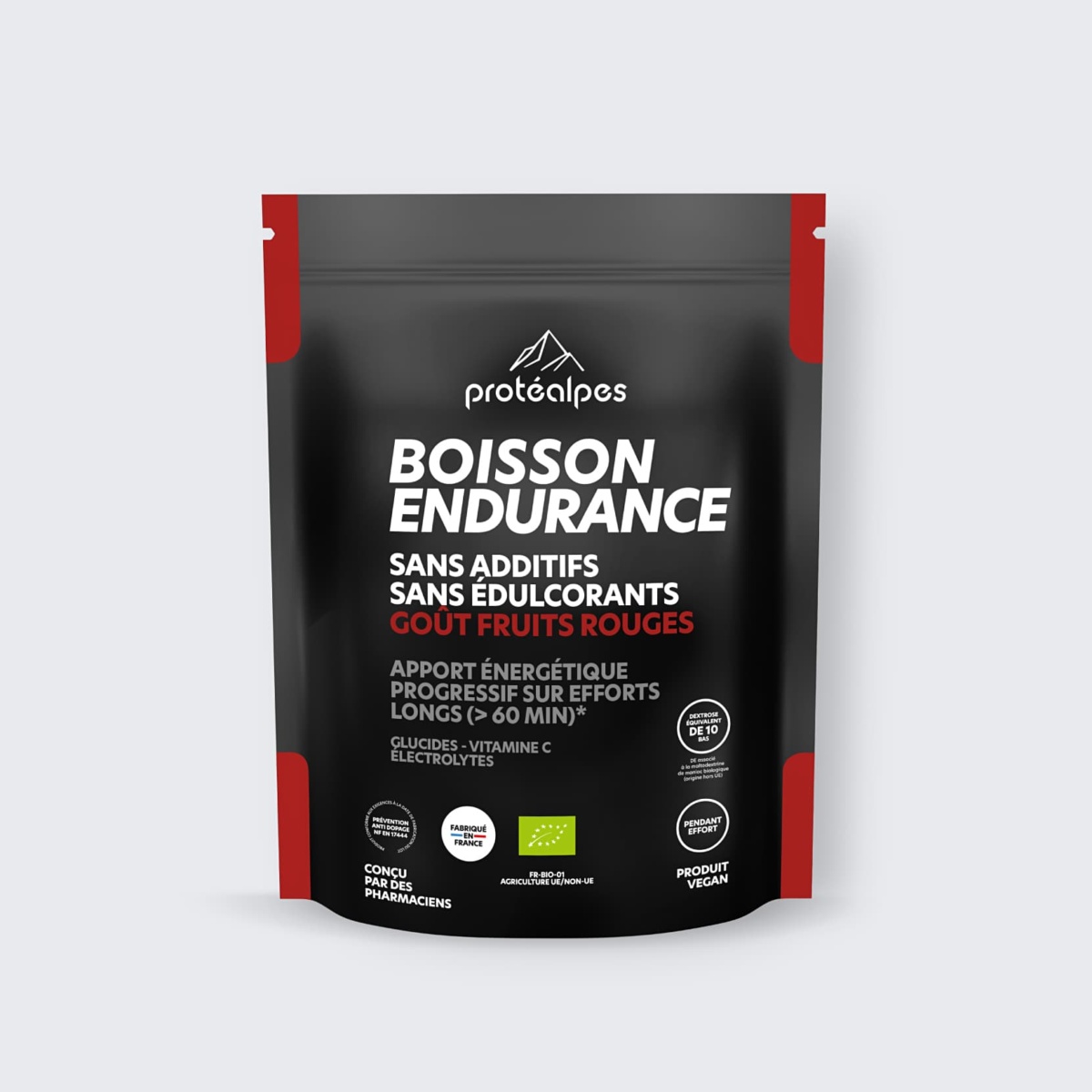
The origin of the starch (corn, wheat, cassava, etc.) will have an impact on the DE (Dextrose Equivalent) of the substance. For example, Protéalpes organic cassava maltodextrin is a solution with a DE of 10. It offers a more even release of carbohydrates than maltodextrin with a higher DE.

The side effect of maltodextrin: digestive problems
We know that hypertonic drinks cause dehydration, as well as digestive and intestinal problems. In fact, the higher the osmolarity of a liquid, the longer it takes for the body to absorb it. This is why a sports drink containing maltodextrin has the advantage of low osmolarity, meaning it is easily absorbed.
However, some individuals complain of bloating, flatulence, cramps, or diarrhea, which are signs of digestive tract sensitivity. Research shows that consuming maltodextrin significantly increases stool volume and frequency compared to a placebo².
It is therefore important to adapt the amount of carbohydrates to specific needs and activity. Above all, it is advisable to test your tolerance to the substance, in the desired quantities, before the day of the event.
Training your body to absorb carbohydrates during exercise is just as important as training your muscles for that exercise.
Effects on everyday health
Maltodextrin: allergies ahead?
Possible skin problems are among the side effects of maltodextrin. Like any substance, an overdose or allergy can cause allergic reactions, although this is uncommon.
If any of these symptoms appear, it is recommended that you seek advice from a healthcare professional.
Is it possible to have maldextrin and gluten?
Some maltodextrins contain gluten. Ifyou are gluten intolerant, it is essential to check the list of ingredients for any traces of allergens. For people who are sensitive to even tiny traces, it is advisable to consult a healthcare professional and choose other sources of starch.
However, maltodextrin is considered a gluten-free product, even though it comes from wheat starch.
Wheat-derived maltodextrin must have a content of less than 20 parts per million (ppm) to be labeled as gluten-free. All maltodextrins used at Protéalpes are certified gluten-free.
Increased blood sugar levels
Maltodextrin is often associated with diabetes.
It must be said that this form of carbohydrate, once consumed, provides the body with glucose. The problem with regard to diabetes is that it often has a high glycemic index .
It should be noted that the DE, depending on the type of plant used as a base, influences this glycemic index. Cassava maltodextrin, such as that produced by Protéalpes, provides a prolonged release compared to corn maltodextrin.
So even though it has no direct link to diabetes, like any carbohydrate compound, diabetics will need to adapt and monitor their blood sugar levels if they take it during or outside of exercise.
Metabolic and cardiovascular effects
No particular metabolic and/or cardiovascular effects have been observed in relation to the consumption of maltodextrin.
However, as with other dietary supplements intended for athletes, its use should be moderate. It should be taken in the context of athletic training and as a supplement to a varied and balanced diet.
As with any supplement, individuals with specific medical conditions should seek advice from a specialist doctor. The dosage of maltodextrin and the types of use vary depending on the individual and the sport practiced.
Long-term effects on weight
Maltodextrin can have a negative impact if consumed in excess or as a substitute for a normal diet. This product is high in carbohydrates and calories. Excessive consumption, combined with insufficient physical exercise, can lead to weight gain.
In bodybuilding, some athletes use maltodextrin to gain weight.
The solution is interesting, but muscle mass development is due to
- appropriate training;
- muscle stimulation through strength training exercises.
- comprehensive nutrition tailored to calorie and protein requirements
Ultimately, endurance athletes have nothing to worry about in terms of potential weight gain from maltodextrin.
Organic cassava maltodextrin
Natural, organic carbohydrate and vitamin C solution. Standardized without doping substances. Additive-free and gluten-free.
"(...) Very well tolerated for me, even with increased doses."
Cyril B. (guaranteed review)
⭐⭐⭐⭐⭐
How to consume maltodextrin properly?
Choosing the right malt to reduce risks
Maltodextrin is well tolerated by most individuals and is recognized as a safe nutrient. However, as with whey protein, it is best to choose high-quality, traceable, organic maltodextrin without additives.
Adjust your consumption as needed
In sports, the use of maltodextrin increases blood sugar levels. This provides the body with the energy it needs during prolonged exercise by:
- maximizing glycogen stores in preparation for exercise;
- enabling target blood sugar levels to be maintained during exercise;
- Recovery from high-intensity endurance exercise, in addition to protein.
Depending on the source of the maltodextrin, the rise in blood sugar can be smoothed out to a greater or lesser extent.

After a cycling race, marathon, ultra-trail, or endurance race, it is best to opt for DE19 corn maltodextrin. Its high GI (Glycemic Index) quickly replenishes glycogen stores over a short period after exercise.
In addition, a sports drink should provide carbohydrates without causing a rapid rise in blood sugar levels. In this case, the ideal choice is a maltodextrin with a low DE, such as cassava DE10, which releases energy gradually. To optimize your drink, add:
- a natural glucose-fructose blend;
- electrolytes;
- vitamin C.
This type of low DE maltodextrin is also suitable for carbohydrate intake in the days leading up to an endurance event. It then supplements the diet, which is the main source of carbohydrates.
Measuring out the right amount of maltodextrin
Ultimately, the best way to enjoy the benefits of maltodextrin without side effects is to measure your intake carefully. The right dosage therefore depends on:
- objectives;
- sports.
Remember that maltodextrin helps with weight gain in bodybuilding, but as with protein, itdoes not causeweight gain in endurance sports.
It is basic muscle stimulation, in the case of strength exercises, that determines muscle gain. Without this specific stimulation,thereis no lean muscle gain, even with a maltodextrin-protein combo after exercise. This is good news for runners and cyclists looking to control their weight.
Here is a summary of the correct dosage of maltodextrin depending on the situation:
| Moment | Endurance sports | Bodybuilding |
|---|---|---|
| Before exertion | On previous days (target of 8 to 12 g of carbohydrates/kg – all sources combined) | No nutritional value |
| During exercise | 50 g of carbohydrates per hour of exercise minimum | 50 g per hour of exercise, only for very intense training > 90 min |
| After exercise | 50 g of carbohydrates, combined with 25 g of protein in a post-workout dose | 70 g of carbohydrates and 25 g of protein for muscle mass gain |
Conclusion
Using maltodextrin for the body is a real help from an energy point of view. It is an essential part of nutrition for endurance athletes, provided that a precise dose is taken that is adapted to the physical activity. Even though "malto" is a powder produced by the hydrolysis of starch, it remains safe and healthy in the long term. It is also known for being easily absorbed, having a neutral taste, and providing a quick energy boost. It is therefore used for intense physical activity, weight training, trail running, and running.
Like all simple carbohydrates, it causes an increase in blood glucose levels. It should therefore be consumed in moderation, especially by people who are sensitive, intolerant, or in specific situations (type 2 diabetes, celiac disease, etc.). Some consumers experience bloating, flatulence, cramps, or diarrhea. These symptoms indicate that the intestinal flora is reacting to an excessively high concentration. The reason is simple: excess amounts overload the intestine and exceed its capacity for assimilation.
Maltodextrin is therefore neither dangerous nor a magic potion. It is an effective energy source. It cannot be compared to refined sugar or a food additive, but it also has its limitations. The best advice is to choose the right maltodextrin formula and adjust the duration and dose. It is also advisable to test your tolerance several months before a race and consult a professional if in doubt.
This is how you can enjoy its benefits without any side effects. When consumed correctly, it supports muscle glycogen stores, digestive comfort, and performance.
To find out more :
Scientific opinions on maltodextrin
Maltodextrin: the complete guide
Carbohydrates and performance: instructions for use
Scientific references and sources
2 Effects of resistant maltodextrin on bowel movements: a systematic review and meta-analysis by Norikazu Watanabe et al.