




The APE index is an anthropometric index that quantifies the ratio between an individual’s arm span and height.
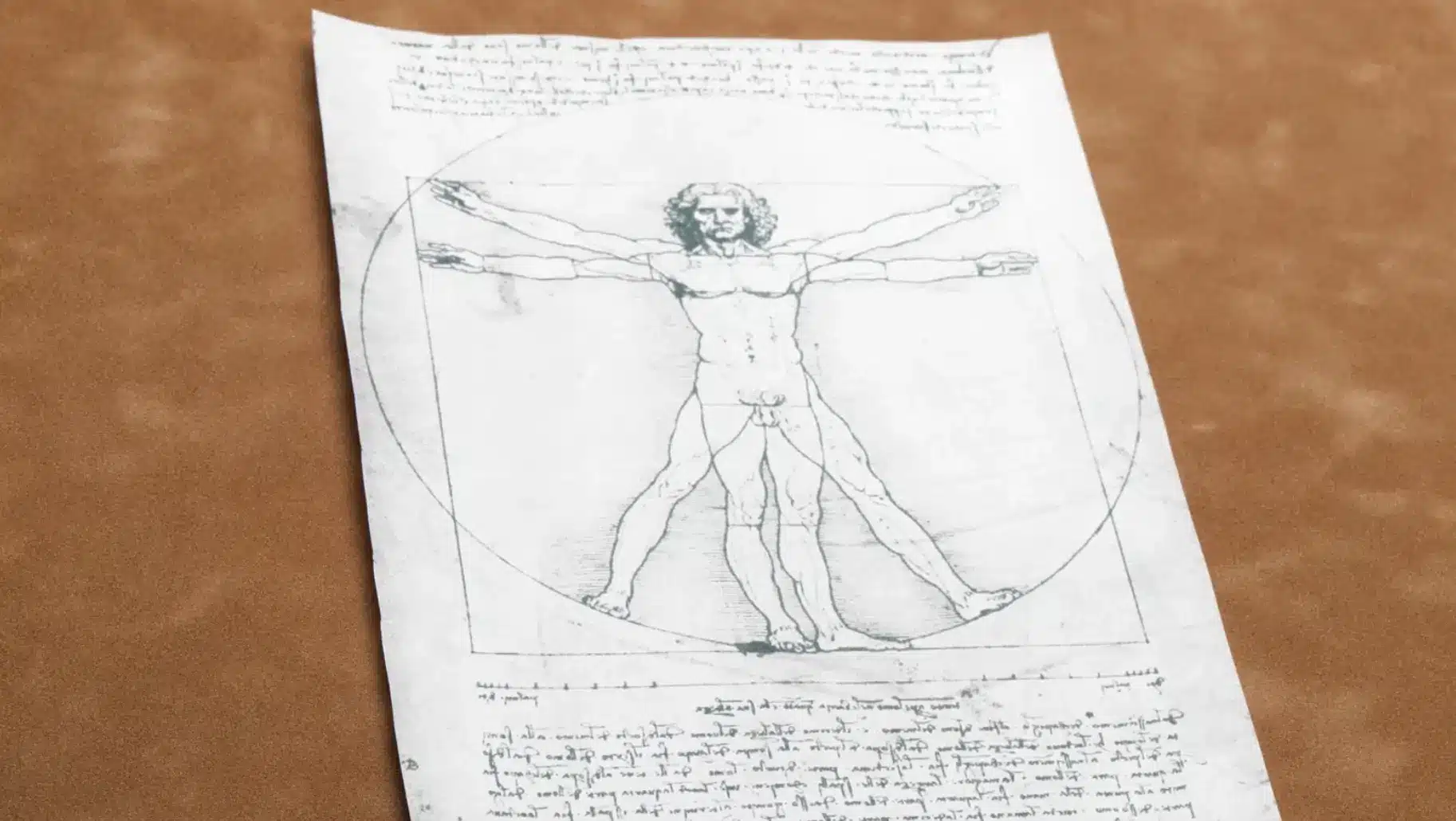
Two scientific formulas are used: the ratio (wingspan ÷ height), which is dimensionless and has a neutral value of 1.0, and the difference (wingspan – height), expressed in centimeters, which has a neutral value of 0 cm. This reference value corresponds to the Vitruvian proportions illustrated by Leonardo da Vinci.
The Protéalpes calculator uses these two standards to provide a reliable measurement, which is particularly common in climbing, swimming, and basketball.
How is the APE index calculated?
Two mathematical conventions are recognized in the anthropometric literature.
The ratio formula
Ape index (ratio) = wingspan ÷ height
A ratio greater than 1.0 indicates arms that are proportionally longer than the torso; a ratio of 1.0 indicates Vitruvian proportions; a ratio less than 1.0 indicates short arms.
This dimensionless form is preferred in anthropometric research because it is scale-invariant: two individuals of different heights with the same ratio have identical body proportions, something that measurements in centimeters cannot capture.
The difference formula
Ape index (difference) = wingspan – height (cm)
The result is positive, neutral, or negative. Example: a height of 177 cm and a wingspan of 180 cm yield an APE index of +3 cm. This format is easier to understand for the general public.
The neutral value of 1.0 (or 0 cm) corresponds tothe Vitruvian Man described by Marcus Vitruvius Pollio and illustrated by Leonardo da Vinci, according to whom a person’s wingspan is theoretically equal to their height.
How do you measure your wingspan correctly?
The standardized protocol requires strict adherence:
- Stand with your back against a flat wall;
- hold your arms out horizontally at shoulder height;
- point your palms forward, with your fingers spread apart;
- measure with a tape measure from the tip of one middle finger to the tip of the other middle finger;
- Stand with your feet together, without shoes, and keep your back straight.
Common mistakes include slouching, holding the arms at an angle, or taking the measurement alone without a mirror. A margin of error of ±2 cm is common.
How should the results be interpreted?
| Ratio | Difference | Morphological profile |
|---|---|---|
| < 0,97 | < -5 cm | Short arms (negative APE index) |
| 0.98–1.02 | -2 to +2 cm | Neutral (Vitruvian) proportions |
| 1.03 – 1.05 | +3 to +8 cm | Long arms (positive APE index) |
| > 1,05 | > +8 cm | Exceptional wingspan |
Among iconic athletes: Adam Ondra has a +4 cm APE, Michael Phelps around +10 cm, and Kawhi Leonard a ratio close to 1.10. In contrast, Lynn Hill, a legend of free climbing, has a nearly neutral APE. This clearly illustrates that wingspan does not directly determine performance.
Additional information: The APE index remains a descriptive morphological marker. Its correlation with athletic success is much weaker than popular belief suggests.

What are the benefits for rock climbing and other sports?
A high APE provides a mechanical advantage for reaching distant holds while climbing, increasing propulsive leverage while swimming, or dominating the rebound in basketball (hence the routine measurement of wingspan at the NBA Combine and NFL Draft).
The scientific reality, however, is more nuanced. An analysis conducted by Project Direct Coaching on more than 600 climbers 1 showed that height, weight, arm span, and the APE index have no statistical significance in predicting peak performance in sport climbing or bouldering.
David Epstein, in *The Sports Gene 2*, confirms that anthropometry is just one variable among many.
In many sports, there is a clear anthropometric correlation. For example, having an APE index below 1 is extremely rare in the NBA (only two players throughout the 2010–2011 season). However, there is no evidence of a causal link to individual performance.
In bodybuilding and weightlifting, a low APE can even be an advantage during the bench press or squat, thanks to shorter lever arms.
High-quality sugar-free proteins
- Cold microfiltration
- Optimal digestibility
- Unsweetened flavor
- Without performance-enhancing substances
- Gluten-free
What scientific criteria should be used?
The APE index has several methodological limitations:
- no validated predictive threshold in the peer-reviewed literature;
- agenetically determined trait, unlike muscle strength or mass;
- typical measurement uncertainty of ±2 cm;
- It is even more useful when combined with other indicators such asBMI,lean body mass index, or a body type test.
Scientific references and sources
2The Sports Gene: Inside the Science of Extraordinary Athletic Performance by David Epstein