





Jumping rope is a full-body cardiovascular exercise that works the calves, quadriceps, core, shoulders, and forearms all at once. Used for decades by boxers and elite athletes, it is now one of the most effective tools in cross-training and HIIT.
In a nutshell
- On average, jumping rope burns between 11 and 13.5 calories per minute, depending on intensity and body weight—the equivalent of a brisk jog or a burpee workout.
- That amounts to 0.10 to 0.13 kcal per jump, or nearly 100 to 130 kcal for 1,000 jumps.
- On average, jumping rope burns between 110 and 135 calories in 10 minutes, or about 330 to 405 calories during a 30-minute session.
Skip Rope Calorie Burner Calculator
The Protéalpes calculator uses the MET values from the20241 Compendium of Physical Activities and theACSM2 formula to accurately estimate your energy expenditure.
| Duration | Calories (range) |
|---|---|
| 5 min | 46–59 kcal |
| 10 min | 92–118 kcal |
| 15 min | 139–176 kcal |
| 20 min | 185–235 kcal |
| 25 min | 231–294 kcal |
| 30 min | 277–353 kcal |
| 35 min | 323–412 kcal |
| 40 min | 370–471 kcal |
| 45 min | 416–529 kcal |
| 50 min | 462–588 kcal |
| 55 min | 508–647 kcal |
| 60 min | 555–706 kcal |
| Calories | Duration (range) |
|---|---|
| 50 kcal | 4–5 min |
| 100 kcal | 9–11 min |
| 150 calories | 13–16 min |
| 200 kcal | 17–22 min |
| 250 calories | 21–27 min |
| 300 calories | 26–32 min |
| 350 calories | 30–38 min |
| 400 calories | 34–43 min |
| 450 calories | 38–49 min |
| 500 kcal | 43–54 min |
| Jumps | Calories (range) |
|---|---|
| 250 | 22–28 kcal |
| 500 | 44–56 kcal |
| 750 | 66–84 kcal |
| 1000 | 88–111 kcal |
| 1250 | 109–139 kcal |
| 1500 | 131–167 kcal |
| 1750 | 153–195 kcal |
| 2000 | 175–223 kcal |
| 2250 | 197–251 kcal |
| 2500 | 219–278 kcal |
| 2750 | 241–306 kcal |
| 3000 | 263–334 kcal |
| 3250 | 284–362 kcal |
| 3500 | 306–390 kcal |
| 3750 | 328–418 kcal |
| 4000 | 350–446 kcal |
| 4250 | 372–473 kcal |
| 4500 | 394–501 kcal |
| 4750 | 416–529 kcal |
| 5000 | 438–557 kcal |
How many calories do you actually burn when jumping rope?
Calorie expenditure depends on three factors:
- Body weight,
- The duration of the effort,
- Intensity (jumping rhythm and technique).
The standard formula in exercise physiology is as follows:
kcal/min = MET × 3.5 × weight (kg) ÷ 200
MET (metabolic equivalent) measures the energy expenditure of an activity relative to rest. For a 70-kg person jumping rope at a sustained intensity (11 MET), energy expenditure is approximately 13.5 kcal/min, or 135 kcal for 10 minutes of continuous exercise.
Note: Jumping rope is one of the most calorie-intensive activities per minute. By comparison, brisk walking burns about 5 kcal/min for the same person, which is nearly three times less. It is therefore an excellent component of a muscle-toning program.

Which MET value best describes your practice?
The 2024 Compendium of Physical Activities distinguishes several levels based on pace and the equipment used.
| Type of practice | MET | kcal/min (70 kg) | Typical profile |
|---|---|---|---|
| Moderate pace (~100 jumps per minute) | 9,0 | ≈ 11,0 | Beginner, active recovery |
| General rope skipping, at a brisk pace | 11,0 | ≈ 13,5 | Regular exerciser, HIIT |
| High intensity (double unders, weighted rope) | 12,3+ | ≈ 15,0+ | Experienced athlete, boxing, CrossFit |
These figures reflect physiological reality: a slow pace with long breaks does not result in the same energy expenditure as a structured, high-intensity session.
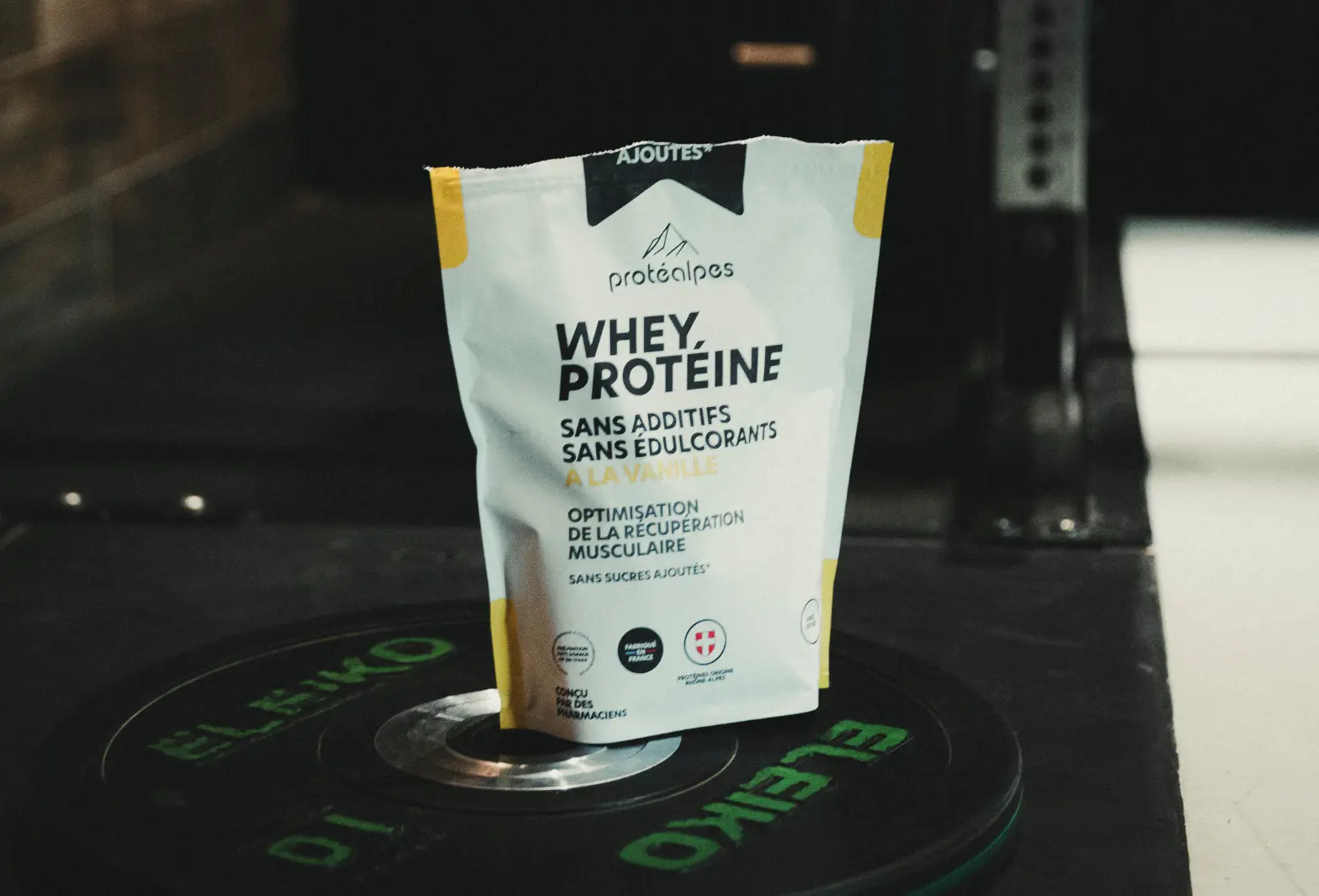
High-quality sugar-free proteins
- Cold microfiltration
- Optimal digestibility
- Unsweetened flavor
- Without performance-enhancing substances
- Gluten-free
How many calories are burned for X skips?
The calculator offers a second mode based on the number of jumps, converted to duration using cadence:
duration (min) = number of jumps ÷ jumps per minute
Here are the estimates for a 70-kg person at an average rate of 120 jumps per minute (11 METs):
| Number of jumps | Duration | Calories burned |
|---|---|---|
| 500 jumps | ≈ 4 min | ≈ 54 kcal |
| 1,000 jumps | ≈ 8 min | ≈ 108 kcal |
| 2,000 jumps | ≈ 17 min | ≈ 225 calories |
| 5,000 jumps | ≈ 42 min | ≈ 563 kcal |
For different body weights, a proportional factor must be applied: a 90-kg person will burn about 29% more calories than a 70-kg person, assuming the same pace and duration.

How many minutes of jumping rope does it take to burn 100, 300, or 500 calories?
The inverse formula allows you to calculate based on calorie intake:
minutes = (target calories × 200) ÷ (MET × 3.5 × weight)
| Objective | 60 kg | 75 kg | 90 kg |
|---|---|---|---|
| 100 kcal | ≈ 8.7 min | ≈ 7.0 min | ≈ 5.8 min |
| 300 calories | ≈ 26 min | ≈ 21 min | ≈ 17 min |
| 500 kcal | ≈ 43 min | ≈ 35 min | ≈ 29 min |
Note: These durations assume continuous effort at 11 METs, which is difficult for most athletes to sustain. In practice, structuring the session into intervals (30 seconds of effort / 15 seconds of rest) allows you to approach these volumes while maintaining proper technique.
Does jumping rope burn more calories than other sports?
For a 70-kg user, here is the comparison at comparable intensity:
| Exercise | MET | kcal/min | 10 min |
|---|---|---|---|
| Jump rope (at a brisk pace) | 11,0 | 13,5 | 135 calories |
| HIIT Burpees3 | 11,0 | 13,5 | 135 calories |
| Running (10 mph) | 10,0 | 12,3 | 123 kcal |
| Swimming (moderate front crawl) | 8,0 | 9,8 | 98 calories |
| Jumping jacks | 7,5 | 9,2 | 92 calories |
Skipping is thus on par with the most demanding multi-joint exercises. Its main benefit lies inthe EPOC (excess post-exercise oxygen consumption)effect: when performed as HIIT, it keeps the metabolism elevated for several hours after the workout, promoting long-term weight loss.

How does the calculator estimate your calories burned?
The tool applies the ACSM formula in three steps:
- Enter your body weight in kilograms;
- choose between session duration (minutes) or number of jumps (with cadence);
- Select the intensity level (moderate, vigorous, high intensity).
Additional information: The calorie count shown is an estimate. It varies depending on technique (toe-tips or heavy jump), physical condition, individual heart rate, and the work-to-rest ratio.
The MET values in the Compendium are based on laboratory measurements of healthy adults and do not cover all variations (weighted rope, double unders).
Whey protein
- Manufactured in-house by Protéalpes
- No additives, no sweeteners
- Protein isolate from Rhône-Alpes

These professional clubs put their trust in us:












How can you maximize calorie burn during your workouts?
Here are a few tips for maximizing the effectiveness of rope training:
- Structure the workout into HIIT intervals: 30 seconds of high-intensity effort, followed by 15 seconds of active recovery;
- Aim for 120 to 140 beats per minute to maintain your heart rate in the active endurance zone;
- vary your techniques: alternating left and right foot jumps, high knees, double unders;
- use a weighted rope to increase the workload on the upper body and boost the effective MET;
- Combine with other exercises (squats, burpees, sit-ups) in a cross-training circuit.
Three to four 10- to 20-minute sessions per week are enough to create a significant calorie deficit, provided you combine them with a healthy, balanced diet. To structure your training plan, check out our guide to basic endurance.
Jump rope workouts for weight loss
Here are two jump rope workouts that can serve as a foundation for sessions aimed at losing weight or improving your cardio.
Scientific references and sources
2ACSM’s Guidelines for Exercise Testing and Prescription by American College of Sports Medicine
3Energy Expenditure Associated With Bodyweight Resistance Exercises of Various Movement Patterns Performed for Different Durations by Athanasios Poulios et al.
- 2024 Adult Compendium of Physical Activities: A third update of the energy costs of human activities — Herrmann et al., 2024
- ACSM’s Guidelines for Exercise Testing and Prescription — American College of Sports Medicine, 2006
- Energy Expenditure Associated With Bodyweight Resistance Exercises — Poulios et al., 2024
Our other calculators

Saunas and Weight Loss: Calories Burned and Limitations
Calories Burned While Cycling: Online Estimate
Calories per squat: Rep-based calculator

How many calories do you burn during a one-hour walk?

Swimming: Calorie Burn by Stroke and Intensity

Convert 5,000, 10,000, or 15,000 steps to calories

Calories Burned Doing Jumping Jacks: Calculator

How many push-ups do you need to do to burn 100 calories?