





The push-up is a fundamental multi-joint exercise that simultaneously engages the pectorals, anterior deltoids, triceps, and core muscles in a horizontal pushing motion using body weight. A staple of both weight training and functional fitness, it is one of the most accessible exercises for strengthening the upper body.
On average, a standard push-up burns between 0.3 and 0.7 kcal per repetition, depending on the pace and intensity, which amounts to approximately 30 to 70 kcal for 100 push-ups for a 70-kg adult.
This estimate is based on the ACSM formula, the MET values from the 2024 Compendium of Physical Activities, and the findings summarized in the studies by Cohen (2012) and McCall (2017). The Protéalpes calculator offers three complementary estimation methods: by session duration, by number of repetitions, or by calorie goal.
Calorie Calculator for Push-Ups
| Duration | Calories (range) |
|---|---|
| 5 min | 16–21 kcal |
| 10 min | 33–42 kcal |
| 15 min | 49–63 kcal |
| 20 min | 66–84 kcal |
| 25 min | 82–105 kcal |
| 30 min | 99–126 kcal |
| 35 min | 115–147 kcal |
| 40 min | 132–168 kcal |
| 45 min | 148–189 kcal |
| 50 min | 165–210 kcal |
| 55 min | 181–231 kcal |
| 60 min | 198–252 kcal |
| Calories | Duration (range) |
|---|---|
| 50 kcal | 12–15 min |
| 100 kcal | 24–30 min |
| 150 calories | 36–46 min |
| 200 kcal | 48–61 min |
| 250 calories | 60–76 min |
| 300 calories | 72–91 min |
| 350 calories | 83–106 min |
| 400 calories | 95–121 min |
| 450 calories | 107–137 min |
| 500 kcal | 119–152 min |
| Pumps | Calories (range) |
|---|---|
| 10 | 3–4 kcal |
| 20 | 6–8 kcal |
| 30 | 9–12 kcal |
| 40 | 12–16 kcal |
| 50 | 16–20 kcal |
| 60 | 19–24 kcal |
| 70 | 22–28 kcal |
| 80 | 25–32 kcal |
| 90 | 28–36 kcal |
| 100 | 31–40 kcal |
| 110 | 34–44 kcal |
| 120 | 37–48 kcal |
| 130 | 41–52 kcal |
| 140 | 44–56 kcal |
| 150 | 47–60 kcal |
| 160 | 50–64 kcal |
| 170 | 53–68 kcal |
| 180 | 56–72 kcal |
| 190 | 59–75 kcal |
| 200 | 62–79 kcal |
How many calories do you actually burn when doing push-ups?
The energy expenditure of a set of push-ups depends on three factors: body weight, exercise intensity, and the calculation method used (duration or repetitions). Unlike squats, for example, no large-scale indirect calorimetry study has established a single value in kcal per push-up, which means that several approaches must be considered together.
How does the session duration-based estimate work?
When the duration of the exercise is known, the calculator applies the standard ACSM formula:
kcal = MET × 3.5 × weight (kg) ÷ 200 × duration (min)
MET (metabolic equivalent) reflects the energy cost of a physical activity relative to resting metabolism. For push-ups, the values used vary depending on the workout format:
- 3.8 METs for moderate exercise (controlled pace, frequent rest breaks)
- 6.0 MET for sustained pumping (consecutive sets)
- 8.0 METs for high-intensity exercises (HIIT, circuit training, intense calisthenics)
For a 70-kg person performing 15 minutes of push-ups at moderate intensity (3.8 METs), energy expenditure is approximately 57 kcal. The same duration at vigorous intensity (8.0 METs) brings the total to nearly 147 kcal.
Note: The 2024 Compendium does not list pumps as a separate entry. The MET values used are derived from the "calisthenics" and "high-intensity gymnastics" categories, which have been validated by several physiological calculators and by FatSecret's data on intense gymnastics (≈ 294 kcal in 30 minutes for a reference profile).
How does the iterative estimation method work?
The scientific literature reports a range of 0.3 to 0.7 kcal per pump stroke, depending on the methodology. Recent studies have yielded varying results:
- A 2022 study on slow push-ups (10 repetitions per minute) found that each push-up burned approximately 0.77 kcal
- A 2024 study on explosive sets with recovery included found the energy expenditure to be around 0.5 to 0.6 kcal per rep
- The reviews by Cohen (2012) and McCall (2017) indicate an average value of 0.3 to 0.36 kcal per stroke for a standard tempo
For practical purposes, the calculator uses a median estimate of 0.5 kcal per pump, with the full range displayed:
| Number of pumps | Central estimate | Low–high range |
|---|---|---|
| 20 push-ups | ≈ 10 kcal | 6–14 kcal |
| 50 push-ups | ≈ 25 kcal | 15–35 kcal |
| 100 push-ups | ≈ 50 kcal | 30–70 kcal |
| 200 push-ups | ≈ 100 kcal | 60–140 kcal |
This variability can be explained by the influence of tempo andamplitude: a slow, sustained pump increases the cost per unit, while an explosive pump reduces the effort time per repetition.
What formula should be used to combine pace and the number of strokes?
The most scientifically rigorous method involves calculating energy expenditure based on the estimated duration and the selected MET. The formula combines both approaches:
duration (min) = number of push-ups ÷ rate (push-ups/min) kcal = MET × 3.5 × weight ÷ 200 × duration
Example for 100 push-ups at 15 push-ups per minute for a 70-kg person at sustained intensity (6.0 METs): duration ≈ 6.67 min, energy expenditure ≈ 49 kcal. This model has the advantage of reflecting the actual impact of the repetition rate on total energy expenditure.

How many calories do you burn during a "Bring Sally Up" challenge?
There are two methods for estimating the energy expenditure for this challenge.
Estimating Caloric Expenditure Based on Duration and MET
This challenge involves slow-tempo push-ups with pronounced isometric phases, placing it between the "moderate push-ups" (6.0 MET) and "vigorous push-ups" (8.0 MET) categories. The isometric component increases sustained muscle tension, bringing the energy expenditure closer to that of the vigorous category despite the apparent low cadence.
ACSM formula: kcal = MET × 3.5 × weight ÷ 200 × duration (min)
Running time: 3 minutes and 42 seconds (3 min 25 sec):
| Body weight | MET 6.0 (sustained) | MET 8.0 (vigorous) |
|---|---|---|
| 60 kg | ≈ 22 kcal | ≈ 29 kcal |
| 70 kg | ≈ 25 kcal | ≈ 34 kcal |
| 80 kg | ≈ 29 kcal | ≈ 38 kcal |
| 90 kg | ≈ 32 kcal | ≈ 43 kcal |
Estimating Calorie Expenditure Based on the Number of Repetitions
By applying the range of 0.3 to 0.7 kcal per pump (with a median value of around 0.5 kcal per rep), but increased by 20 to 30% to account for the prolonged isometric phases characteristic of the challenge:
- 38 push-ups × 0.6 kcal/rep ≈ 23 kcal (conservative estimate)
- 38 push-ups × 0.9 kcal/rep ≈ 34 kcal (high estimate, very slow pace)
Realistic range
For a 70-kg person doing the "Bring Sally Up" challenge (push-up version), the energy expenditure is approximately 25 to 35 kcal.
Here are a few points of reference depending on the variant:
- Push-up version: 25 to 35 kcal (70 kg)
- Squats: 20 to 30 kcal, with energy expenditure per repetition being slightly lower despite the high level of muscle engagement
- Plank variation (held for an extended period): 15 to 25 kcal, as isometric core exercises are less energy-intensive than dynamic movements
The total calorie burn from the challenge remains modest: it’s nowhere near the 100 kcal sometimes claimed on social media. However, the appeal of the “Bring Sally Up” challenge lies not in direct calorie burning, but in:
- muscle strength developed under continuous tension;
- the post-exercise EPOC effect associated with the local intensity reached;
- the mental challenge posed by increasing muscle fatigue.
To maximize energy expenditure during a single session, the challenge can be repeated 3 to 5 times with a 2-minute rest period, or incorporated as the final exercise in a HIIT circuit that includes burpees and mountain climbers. In this cumulative format, total energy expenditure can exceed 150 kcal, with the added benefit of prolonged muscle stimulation, which is particularly effective for improving push-up performance.
What MET value corresponds to your push-up routine?
The choice of MET directly affects the final estimate. Three intensity levels are sufficient to cover most activities, from beginners to advanced calisthenics practitioners.
| Intensity level | MET | kcal/min (70 kg) | Typical profile |
|---|---|---|---|
| Moderate pumping (controlled pace, long pauses) | 3,8 | ≈ 4,7 | Beginners, warm-up, rehabilitation |
| Push-ups (standard sets of 10–20 reps) | 6,0 | ≈ 7,4 | Regular exerciser, strength training |
| High-intensity push-ups (HIIT, AMRAP, high-intensity circuit) | 8,0 | ≈ 9,8 | CrossFit, calisthenics, experienced athlete |
The level selected should reflect the actual intensity of the session, including recovery periods. A set of high-rep push-ups performed at a fast pace without rest falls under the vigorous category, while a set of 20 repetitions followed by a 90-second break falls under the moderate to vigorous category.
Disclaimer: All values shown are estimates. Actual energy expenditure varies depending on physical condition, heart rate, the type of push-up performed (standard, diamond, decline, or archer), and the efficiency of the movement. The reference data is primarily based on samples of trained young adults; it is not universally applicable.
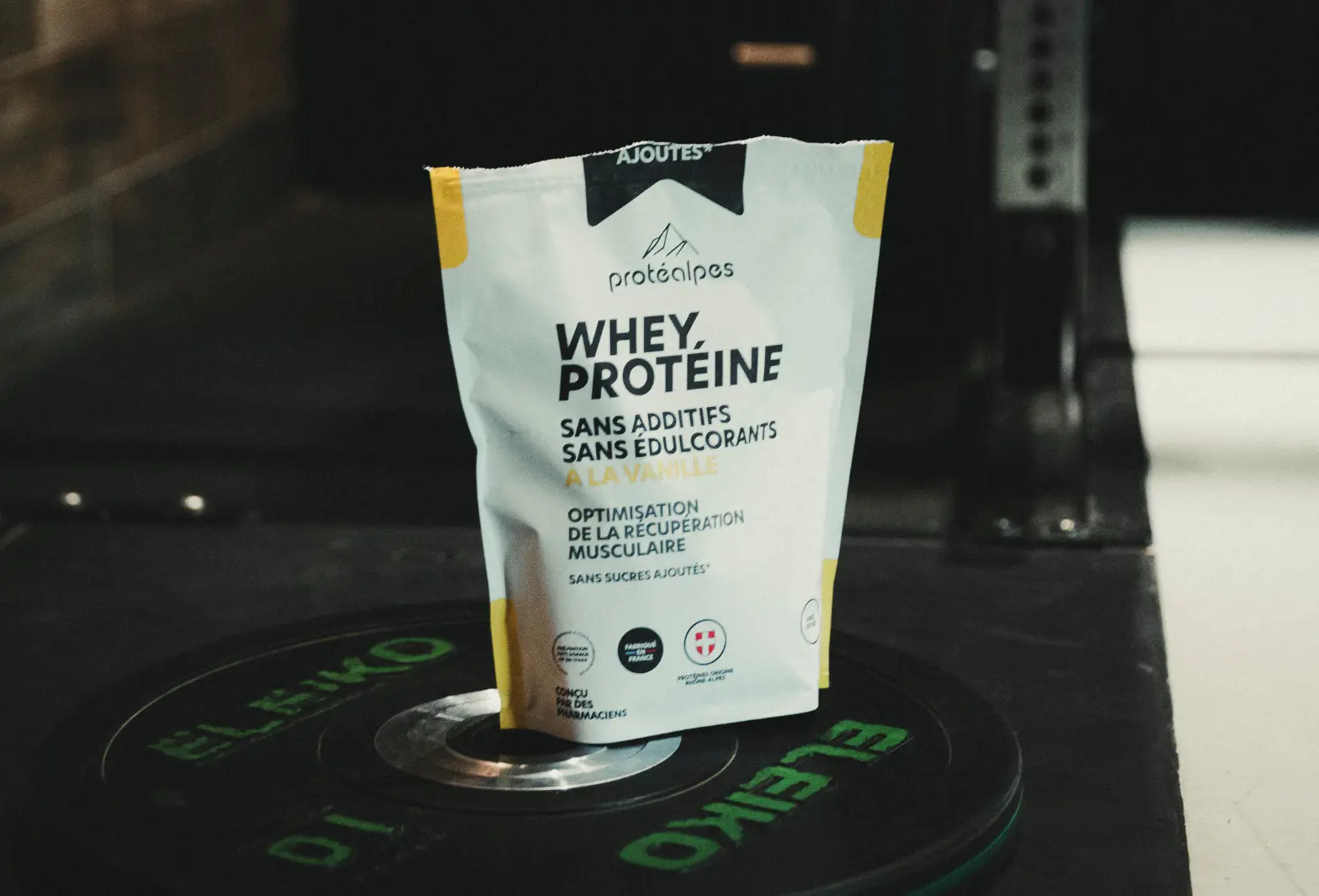
High-quality sugar-free proteins
- Cold microfiltration
- Optimal digestibility
- Unsweetened flavor
- Without performance-enhancing substances
- Gluten-free
How many push-ups does it take to burn 100, 200, or 500 calories?
The calculator allows you to work backward: start with a calorie goal and determine the number of push-ups needed. The inverse formula is written as:
Number of reps = (target calories × 200 × cadence) ÷ (MET × 3.5 × weight)
For a 70-kg person exercising at a moderate intensity (6.0 METs) at a cadence of 15 strokes per minute:
| Calorie goal | Central estimate | Low–high range |
|---|---|---|
| 50 kcal | ≈ 100 push-ups | 70–170 push-ups |
| 100 kcal | ≈ 200 push-ups | 140–330 push-ups |
| 200 kcal | ≈ 400 push-ups | 290–670 pumps |
| 500 kcal | ≈ 1,000 push-ups | 710–1,670 pumps |
These figures apply to standard bodyweight push-ups. More challenging variations (decline push-ups, diamond push-ups, archer push-ups, jump push-ups) increase the cost per rep by 15 to 40 percent, depending on the additional muscle engagement. All the details are in this video (especially at the 4-minute mark).
Additional information: Burning 500 calories through push-ups alone is an unrealistic goal for most people. In practice, it’s better to combine push-ups with exercises like burpees, mountain climbers, and bodyweight squats in a HIIT circuit to distribute the workload across the entire body.
Do push-ups burn more calories than other bodyweight exercises?
The pump exercise is characterized by muscle engagement primarily in the upper body, which mechanically limits its calorie burn per minute compared to movements that engage more of the total muscle mass.
The following table compares several exercises for a person weighing 70 kg:
| Exercise | MET | kcal/min (70 kg) | 10-minute forecast |
|---|---|---|---|
| Burpees (HIIT) | 11,0 | ≈ 13,5 | ≈ 135 kcal |
| Mountain climbers | 11,0 | ≈ 13,5 | ≈ 135 kcal |
| Jump rope (fast-paced) | 11,0 | ≈ 13,5 | ≈ 135 kcal |
| Running (10 mph) | 10,0 | ≈ 12,3 | ≈ 123 kcal |
| Jumping squats | 9,0 | ≈ 11,0 | ≈ 110 kcal |
| High-intensity interval training (HIIT) | 8,0 | ≈ 9,8 | ≈ 98 kcal |
| Assisted cycling (22 km/h) | 8,0 | ≈ 9,8 | ≈ 98 kcal |
| Jumping jacks | 7,5 | ≈ 9,2 | ≈ 92 kcal |
| Supported pumps | 6,0 | ≈ 7,4 | ≈ 74 kcal |
| Moderate pumps | 3,8 | ≈ 4,7 | ≈ 47 kcal |
The intensity of the exercise is comparable to that of jumping jacks and vigorous cycling, but lower than that of full-body compound exercises like burpees. Its main advantage lies elsewhere: the quality of the muscular stimulus it provides to the upper body, which is difficult to replicate with pure cardio.

Are squats effective for weight loss?
The calorie burn per minute from push-ups is lower than that of a vigorous cardio workout. For a 70-kg person, a set of vigorous push-ups burns around 9.8 kcal/min, compared to 12 to 14 kcal/min for burpees or brisk jogging.
However, the pump offers two key benefits for long-term fat loss:
- Building upper-body muscle mass (chest, deltoids, triceps) gradually increases your basal metabolic rate. The greater your lean body mass, the more calories your body burns at rest, day after day.
- The EPOC (excess post-exercise oxygen consumption) effect of intense strength training sessions keeps energy expenditure high for several hours after exercise, especially when push-ups are performed in a HIIT or high-intensity circuit format.
To create a sustainable calorie deficit, the most effective strategy combines strength training, cardio, and a balanced diet. The energy balance calculator helps you quantify the gap between calorie intake and expenditure, while a weight-loss program tailored to your goal structures your approach over several weeks.
Key takeaway: The number of calories burned by push-ups tells only part of the story. The most significant impact on body composition comes from muscle development and a gradual increase in resting metabolism—benefits that accumulate week after week with regular practice.
Whey protein
- Manufactured in-house by Protéalpes
- No additives, no sweeteners
- Protein isolate from Rhône-Alpes

These professional clubs put their trust in us:












How can you maximize calorie burn during push-ups?
To maximize energy expenditure while maintaining performance quality, several technical factors deserve attention:
- Reduce rest periods between sets to maintain a high heart rate and increase the metabolic demand.
- Vary the types of presses (diamond press for the triceps, decline press for the upper chest, and archer press for unilateral loading) to target different muscle groups and shift the center of load.
- Focus on a slow tempo for certain sets (3 seconds on the descent, 1-second pause at the bottom) to maximize time under tension and energy expenditure per repetition.
- Incorporate push-ups into a multi-joint circuit that combines burpees, mountain climbers, and jump squats to engage the entire body.
- Structure the session using the EMOM (Every Minute On the Minute) or AMRAP (As Many Reps As Possible) format to create a time constraint that is conducive to HIIT.
A fitness program that includes 3 to 4 weekly sessions with a variety of push-up variations is an excellent choice for promoting fat loss and building upper-body muscle. Muscle recovery after a workout is crucial for maintaining this routine without risking injury.
Protein intake after a workout plays a key role in the repair of stressed muscle fibers. The role of protein in strength training is particularly well-documented for high-frequency bodyweight exercises, where muscle protein synthesis determines long-term gains in strength and endurance.
Scientific references and sources
2ACSM’s Guidelines for Exercise Testing and Prescription by American College of Sports Medicine
3Energy Expenditure Associated With Bodyweight Resistance Exercises of Various Movement Patterns Performed for Different Durations by Athanasios Poulios et al.
4Estimating the Energy Cost of Bodyweight Resistance Exercise Using a Multistage Exercise Test by Takashi Nakagata et al.
Our other calculators