




Whey is the most popular whey protein among athletes for its anabolic properties and rapid assimilation. However, with the proliferation of different types of whey on the market, it can sometimes be difficult to know which one to choose. Between whey isolate, concentrate, hydrolyzed, and even native whey, prices can vary by as much as 100%, without any clear explanation as to why.
Which is the best whey, and what criteria should you use to make your choice? Here's why whey isolate has the best attributes to win the title, with all the details in this article.
In a nutshell
- There is no scientific evidence to show that so-called "native" whey is superior to high-quality whey isolate.
- Whey can be native AND isolate.
- Isolate is often better value for money, better tolerated, and just as effective.
- The term “native” is mainly used for marketing purposes, without any regulatory framework.
Contents
- The difference between native whey and whey isolate
- Forms of whey
- A price difference
- How is native whey produced?
- How is "non-native" whey isolate made?
The difference between native whey and whey isolate
Native and isolate: a comparison error
When talking about whey, the most common mistake is to associate the word "native" with "high quality." This implies that "non-native" isolate is of lower quality. In reality, the terms "native whey" and "whey isolate" refer to two different things:
Native ≠ isolate:
→ The term "native whey" refers only to the fact that filtration is carried out before casein coagulation.
→ The term "whey isolate" refers to the level of milk filtration.
Therefore, associating product quality with the moment of milk filtration makes no sense. It is entirely possible to create so-called native whey using milk from a farm where cows never see the light of day, or are fed flour instead of grass. In this case, quality will be compromised, even if the word "native" is printed on the packaging.
It is important to understand what we are talking about:
- “Native”is a purely marketing term with no regulatory basis. The word refers to the moment when the whey is extracted. If it is extracted from whole milk, it is called native whey. If it is extracted from whey after coagulation or separation from casein, it is called non-native whey.
- Isolate refers to the degree of purification of whey. The latter has undergone extensive filtration to achieve a protein content of over 80-85%.
The accumulation of marketing terms on a label (native, isolate, ultra-filtered, premium, pure, zero, etc.) does not guarantee the effectiveness or intrinsic quality of a whey product.
In summary, whey can be:
- ultra-pure native isolate, but derived from poor-quality, over-processed, very expensive raw material;
- non-native isolate, but with good traceability, a good amino acid profile, and a better price-quality ratio.
... or the opposite! Indeed, isolate provides an indication of technical quality, but nothing about the intrinsic quality of the product, its traceability, its primary production method, etc.
| Differences between whey proteins | Native whey | Whey isolate |
|---|---|---|
| Indicates origin (fresh milk) | ✅ Yes | ❌ No |
| Indicates the quality of the raw material | ❌ No | ❌ No |
| Indicates the protein content | ❌ No | ✅ Yes |
| Low in lactose | ⚠️ Not necessarily | ✅ Yes |
| Can be concentrated | ✅ Yes | ❌ No |
| May be native | - | ✅ Possible |
Forms of whey
To summarize the different forms of whey, we need to look at two different aspects:
- the degree of filtration: concentrated or isolated;
- the filtration stage: native or non-native.
Whey can therefore be both native and concentrated... or native and isolated. Here is a summary of the possibilities:
| Raw whey forms | Concentrated | Isolate |
|---|---|---|
| Native (derived from whole milk) | Native whey concentrate = Non-intensive filtration, presence of fats and lactose, filtered from whole milk | Native whey isolate = Highly filtered and low in lactose. Often more expensive, with no proven superior benefits compared to whey isolate. |
| Non-native (derived from whey) | Non-native whey concentrate = Non-intensive filtration, presence of fats and lactose, filtered on whey | Non-native whey isolate = Highly filtered, low in fat and lactose. |
A price difference
Prices per kilogram vary greatly in the sports nutrition market depending on the type of whey:
- For native whey + isolate, the average price across four French brands is €60/kg. Most brands are priced between €50 and €55/kg, but organic brands are much more expensive (€79/kg). They offer no additional scientific benefits proportional to this cost.
- For classic (non-native) whey isolate, the average price across four French brands is €50/kg, with a wide price range between €40 and €72/kg. It offers the best value for money.
- For native whey that is not isolated, the average price across four French brands is €45.6/kg, with prices ranging from €35 to €57/kg. If the price is lower, the protein concentration of the raw materials is also lower.
Whey protein
- Manufactured in-house by Protéalpes
- No additives, no sweeteners
- Protein isolate from Rhône-Alpes

These professional clubs put their trust in us:










The production of native whey and whey isolate
How is native whey produced?
Native whey is theoretically obtained by filtering whole milk.
The proteins are thus extracted directly, without going through the casein coagulation step required for cheese production. In this case, the casein will be coagulated afterwards for cheese production.
In all cases, whey, whether native or not, is linked to cheese production.
In the case of native whey, since the milk is not linked to a particular designation or origin, production can take place after whey filtration, for low value-added cheeses that are closely linked to large-scale industrial production.
How is "non-native" whey isolate made?
Whey isolate can therefore also come from whey that has already been separated from casein. This is the liquid, mainly composed of water, produced during cheese making after separation of the curds (coagulated casein).
In the case of large-scale cheese production, this liquid may be of second-rate quality. However, in the context of cooperative cheese production using high-quality milk, whey is not a recovered "waste product" but rather a product with very high added value, as evidenced by its market price, which rises year after year.
Marketing campaigns often demonize whey from cheese production, portraying it as recovered waste. If liquid whey was indeed considered waste a few decades ago, it was because we were technologically incapable of recovering this compound by filtering it properly.
Today, it is a by-product that is just as high in quality as the cheese produced at the same time, and we will see a little later that the fact that coagulation occurs before filtration (cheese production) has absolutely no effect on the quality of the finished product (the only argument put forward by brands using so-called "native" whey).
The essential quality of whey is primarily determined by the quality of the milk from which it is derived. The filtration stages are strictly identical for native and non-native whey. There are several filtration stages (ultrafiltration, microfiltration, diafiltration). This process concentrates the proteins and removes as much fat and lactose as possible.
Whey protein with whole cane sugar
Formula developed by qualified pharmacists 🔬
- Manufactured in-house by Protéalpes
- No additives, no sweeteners
- Protein isolate from Rhône-Alpes
Also available in packs of 3 to 4.5 kg

Is native whey better than whey isolate?
Some manufacturers put forward several arguments to assert the superiority of native whey:
- a higher content of leucine and other amino acids;
- less denaturation, better preserving the structure of proteins;
- the absence of GMP (glycomacropeptides).
However, no scientific studies have demonstrated any difference in the concentrations of leucine and/or other amino acids. The same applies to the effectiveness of native and non-native whey on muscle protein synthesis or performance.
While some argue that native whey increases blood amino acid concentration more quickly, this has no significant impact. More importantly, there isno scientific consensus on this point.
What's more, the arguments put forward need to be put into perspective:
- Protein denaturation is inevitable regardless of the method used¹. It can also be very significant during the various stages of production (pasteurization, hot filtration, uncontrolled drying with preheating, etc.).
Whether filtration is performed on whole milk or after casein coagulation has no impact on denaturation. As with the degree of filtration, native whey may in fact be much more denatured than a "classic isolate," and vice versa. There is no direct link between denaturation and the timing of filtration. - The potential presence of GMPs is probably the only objective and factual difference between whey filtered from whey vs. whole milk. These forms of protein, which are found in very small quantities, have been described by native whey manufacturers as dangerous molecules. Today, it is clear and proven² that these GMPs are absolutely not dangerous, but on the contrary, beneficial to adult health according to the latest studies.
The term "native" appears to be primarily a marketing argument, without any specific legal or regulatory framework. It allows manufacturers to justify a higher price, without any real proven advantage over high-quality whey isolate.
Above all, it allows them to overcome the potentially very poor quality of the milk (origin, type of farming, milk quantities, etc.) with a powerful marketing term that is falsely associated with "quality."
The same applies tohydrolyzed whey. Some brands cannot differentiate themselves based on the initial quality of their milk. In this case, the marketing argument for differentiation focuses on other points that are less objective and more vague.
How to choose the right whey?
Choosing the right whey protein requires consideration of:
- the quality of the milk at the outset, ideally French (for a French brand) and sourced from extensive and traceable agriculture (producers' union, French organic, etc.);
- its manufacture using gentle processes that limit denaturation (cold microfiltration, low-temperature drying, etc.);
- No additives or sweeteners,no lecithins, with finished product formulations tailored to the specific needs of athletes;
- with a complete profile of essential amino acids, particularly naturally rich in leucine, without enrichment.
A whey isolate that meets these criteria will provide you with all the benefits you need to effectively support your muscle development and recovery, without the extra cost associated with the "native" version. You can find more information on this subject in our article onwhey protein ingredients.
Whey chocolate
A unique whey
- Manufactured by Protéalpes in Albertville, France
- No additives, no sweeteners
- With lean, non-alkalized, certified organic and fairtrade cocoa powder

Which whey is right for you?
Native whey has no proven benefits. However, choosing a finished product that contains isolate as a protein source is ideal for people who are lactose intolerant. In this case, they are advised to check the list of ingredients.
In addition, so-called "native" whey is often sold at a higher price than "classic" isolate. Isolate offers unbeatable value for money for most athletes.

How to consume native whey or isolate?
Whether you choose native whey or isolate, theconsumption recommendationsare almost identical. The powder is mixed with water or milk to make a protein drink:
- at breakfast to get off to a good start;
- as a snack between meals to reduce catabolism or avoid snacking, as part of a low-calorie weight loss program;
- before bedtime, to support metabolism during this period of fasting;
- immediately after the session to start recovery.
You should consume approximately 20 to 25 g of protein (≠ 20/25 g of finished product) per serving, 1 to 2 times per day depending on your needs. Whey can be incorporated into various healthy recipes such as pancakes, smoothies, or bowls.
Finally, to enjoy the benefits of whey, you should always choose a high-quality product. To do this, it is recommended to choose brands that control the manufacturing process in-house. It is best to choose brands that are transparent about the origin and traceability of all their raw materials.
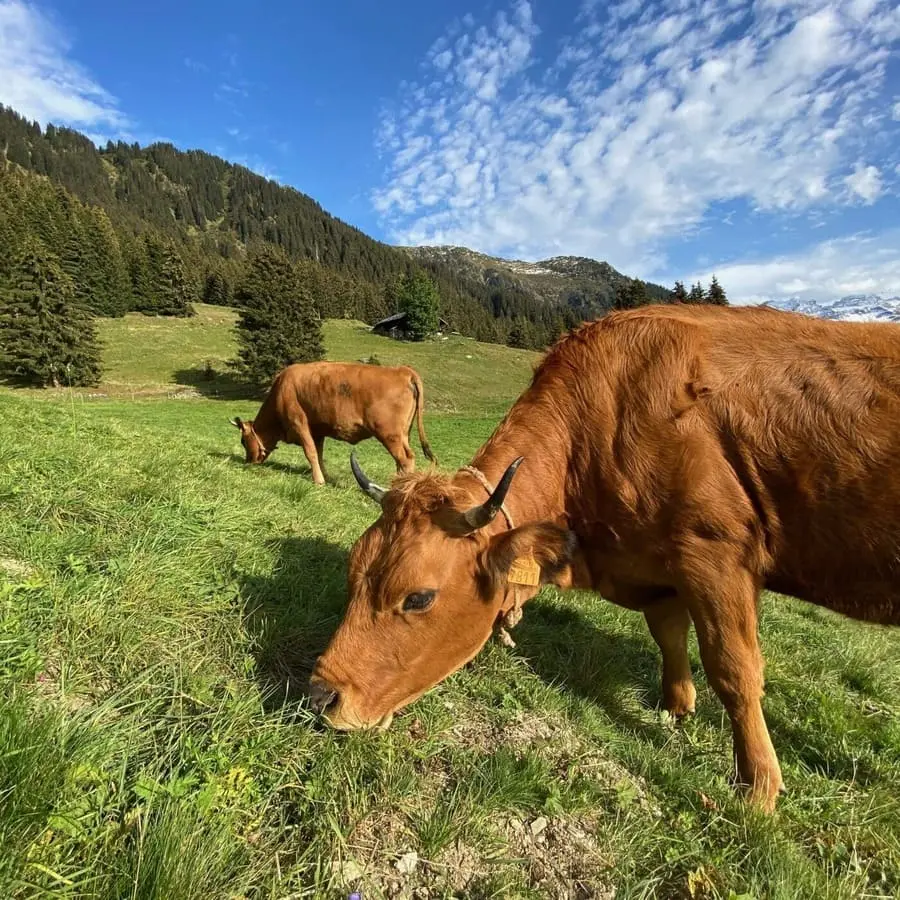
Ideally, whey should come from cows raised on pasture, in extensive and/or organic farming, with genuine, factual quality specifications. Its traceability must be impeccable. We recommend avoiding formulas with long lists of ingredients or those containing any additives. A whey with proven values, such as that offered by Protéalpes, provides all the desired benefits without unnecessary additives.
| Typology | Description |
|---|---|
| 🥛 Whey "native | Extracted directly from whole milk, without prior casein coagulation. |
| 🔍 Whey isolate | Advanced filtration for >80/85% protein in raw product, derived from whey after separation of casein by coagulation during cheese production for "non-native" whey. |
| 🤔 Key differences | Native = moment of extraction vs. isolate = degree of purification. Whey can be both isolate and native. |
| 🏭 Manufacturing | Highly influenced by milk quality. The term "native" has nothing to do with the initial quality of the milk. The filtration and drying phases are identical for both isolates, whether native or not. The term "native" is also linked to cheese production. |
| 🏋️ Choice according to objectives | Isolate recommended for lactose intolerants, offering good value for money. |
| 🍶 Consumption | 20/25 g of protein per intake, adaptable in shakes, pancakes, etc. Important at various times of the day. |
| 💡 Quality | Prioritize high-quality whey from pasture-raised cows, with full traceability and no additives. Native ≠ guaranteed quality. |
| 🌿 Purchasing advice | Seek manufacturer transparency on the origin and quality of raw materials. |
| 📚 S earch | No scientifically proven superiority of native whey over isolate in terms of muscular efficiency. |
| 🎯 Marketing vs. science | “Native” is often used as a marketing argument without any proven benefits; choose based on intrinsic quality criteria and personal objectives. |
Conclusion
There are many different names for whey protein. It is essential to distinguish between marketing claims and real selection criteria. The confusion between native whey and whey isolate is based on a common misconception. The terms do not describe the same thing.Native refers tothe origin and time of extraction. Isolate indicates a higher degree of filtration , with a high protein content and low lactose content.
To date, there is no scientific evidence to show that native whey is superior to high-quality whey isolate with an equivalent protein content. Isolate therefore offers the best value for money, good digestive tolerance, and real effectiveness for muscle synthesis.
When choosing whey, it is the primary quality of the milk that counts. Along with this, the manufacturing processes, composition, and transparency of the brands guarantee a good product, unlike the accumulation of qualifiers on the label.