





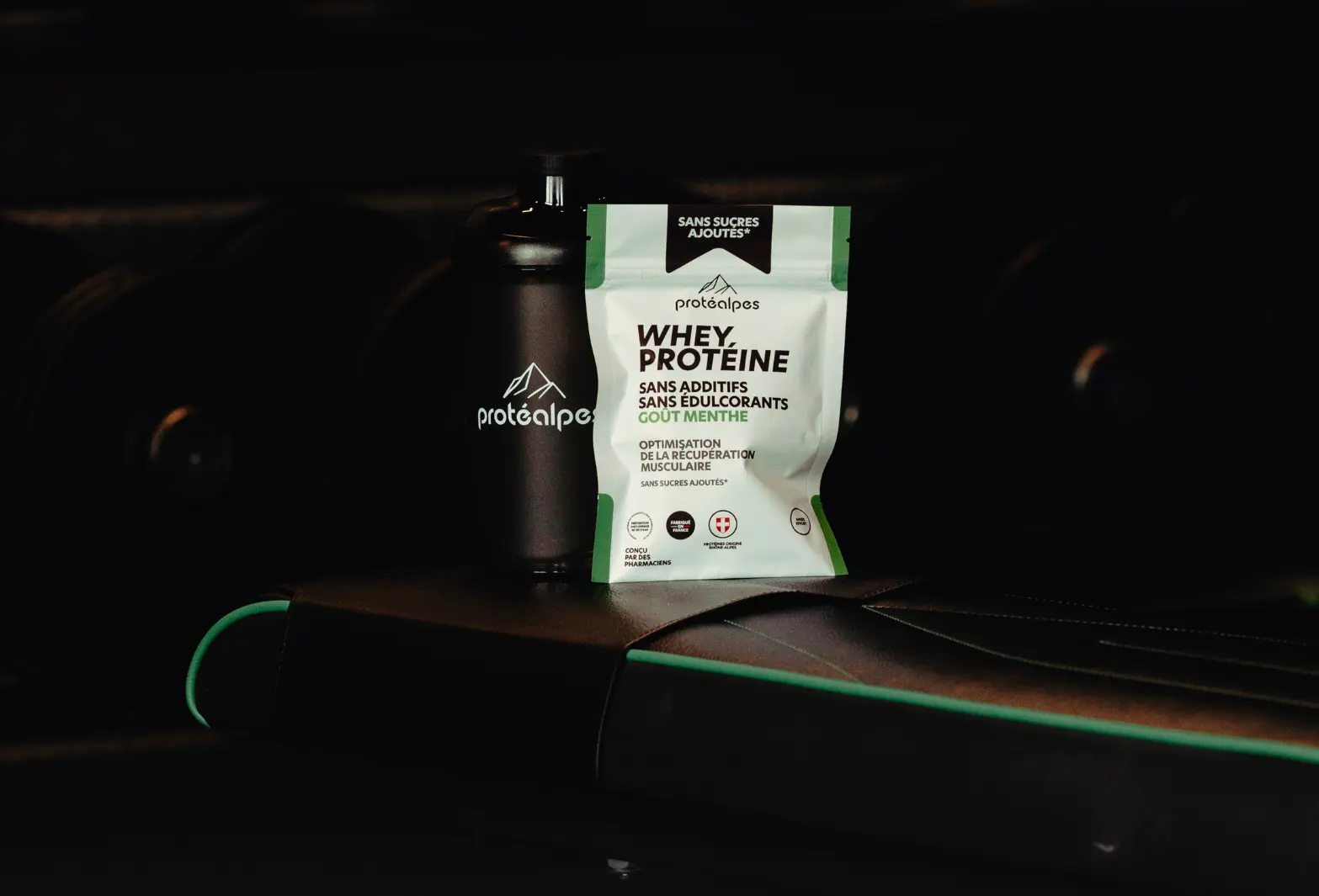
What should you mix your protein powder with to get the most out of it? Most athletes dilute a serving of whey in water, shake it up, and drink it to increase their protein intake. However, the choice of liquid and the amount of carbohydrates or fats added influences the metabolic response. If athletes choose to include milk in their preparation, then the type of milk and whether it is plant-based or animal-based also impacts digestion, amino acid absorption, and muscle recovery.
Whey protein
- Manufactured in-house by Protéalpes
- No additives, no sweeteners
- Protein isolate from Rhône-Alpes

These professional clubs put their trust in us:












A protein shake is lighter when made with water, or richer and creamier when made with milk, and even more so when made with Greek yogurt, for example. Depending on your goal, whether it's weight gain or weight loss, the choice of ingredients can have an impact. Oats, bananas, cocoa powder, or peanut butter—each product affects the calories, texture, and taste.
To optimize your sports nutrition, you need to understand the logic behind each culinary creation. This article provides you with the information you need to establish a clear strategy and choose the best combination available.
In a nutshell
- The choice of liquid makes all the difference: water for rapid absorption, milk for protein and a creamy texture, plant-based drinks to limit lactose and aid digestion.
- The mix depends on the goal: muscle gain, weight loss, or post-workout recovery require different combinations (carbohydrates, lipids, whey isolate, casein, etc.).
- Adding strategic ingredients optimizes your protein shake: oats for energy, Greek yogurt for protein density, creatine for performance depending on the type of exercise.
- The amount and timing of consumption influence the results: dose in grams, total calories, amino acid absorption rate, and overall nutritional balance.
- When used correctly, protein powder can be a tool for progress: better muscle recovery, improved body composition, and optimized nutrient intake.
Contents
- Choosing the right liquid depending on the desired effect
- Adapt your blend to your goal
- Weight loss
- Recovery
Choosing the right liquid depending on the desired effect
The 150 to 200 ml of liquid needed to measure out yourwhey proteinshould be chosen according to the desired effect.
Water offers rapid absorption with zero additional calories. The drink is light and ideal for people looking for hydration, for example after a workout. Conversely,measuring your wheywith milk results in a more caloric and creamier drink. It is also an additional source of protein and other macronutrients.
Finally, milk-based drinks have some nutritional differences depending on their origin, as illustrated in the table below.
The following average values apply to 100 ml (+/-100 g) of liquid:
| Type/origin of milk | Calories (kcal) | Protein (g) | Carbohydrates (g) | Fat (g) |
|---|---|---|---|---|
| Cow (whole milk) | 64 | 3,3 | 4,7 | 3,6 |
| Goat (whole milk) | 67 | 3,3 | 4,5 | 4,1 |
| Sheep (whole milk) | 103 | 5,3 | 5,1 | 7,0 |
| Soybeans | 40 | 3,3 | 2,5 | 1,9 |
| Almond | 24 | 0,5 | 2,5 | 1,1 |
| Rice | 50 | 0,3 | 9,7 | 1,0 |
| Oats | 47 | 1 | 6,5 | 1,5 |
| Coconut water | 19 | 0,2 | 2,8 | 1,3 |
Adapt your blend to your goal
Muscle gain
In bodybuilding, it is common to mixprotein powder with cottage cheese. These two sources of protein complement each other:
- Whey is a protein derived from whey that is quickly absorbed.
- Cottage cheese is rich in casein, a protein that is absorbed more slowly.
You can add oatmeal and honey, or fresh fruit, for a delicious and creamy recipe.
Another benefit of fromage blanc is that it provides carbohydrates, particularly in the form of lactose. It is also a source of calcium, which is essential for bones, and vitamins (B2, B12).
Weight loss
When aiming to build muscle, it is best tomix wheywith water. This mixture is the lowest-calorie and most effective option. It provides a high dose of protein without adding calories.
The goal of dieting is to promote satiety and preserve muscle mass while maintaining a calorie/energy deficit. To do this, adding fiber (such as psyllium or plant fiber) slows down digestion and prolongs the feeling of fullness, thus limiting the onset of cravings.
Recovery
To optimize recovery, the focus is on the quality of amino acids, particularly leucine. Leucine is necessary for the activation of muscle protein synthesis. In addition to leucine, protein synthesis depends on a complete supply of essential amino acids (approximately 40% of the total). Any deficiency becomes a limiting factor in muscle building¹.
The carbohydrate +protein powder combo mentioned above tends to optimize recovery. It stimulates muscle protein synthesis, supports the associated energy expenditure, and activates insulin secretion. The result: it promotes the entry of amino acids into the muscle and the replenishment of glycogen stores.
There's nothing likea good banana-blueberry shakeor othertasty shake recipesto help you recover and recharge your batteries.
Take into account the kinetics of absorption
Absorption kinetics correspond to the rate at which amino acids are assimilated into the bloodstream. They alter the way in which protein powder blends support athletic performance. The goal is therefore to combine absorption profiles to meet immediate post-exercise needs and longer-term requirements.
Gastric drainage
This is the speed at which stomach contents pass into the intestine. It depends on the amount ingested, the calorie density, and also the presence of fats or fiber.
A shake made with whey and water is emptied faster than a whey smoothie with almond butter and oatmeal, for example.
The faster the emptying, the higher the peak concentration of amino acids in the blood.
Digestion
Lipids slow down gastric emptying by stimulating digestive hormones. Fiber, on the other hand, slows down passage through the intestine. As a result, the peak in amino acids occurs later and the absorption curve is more spread out.
Physiologically, this translates into a longer feeling of satiety .
Adding oilseeds or whole milk changes the kinetics of protein absorption.
The amino acid spike
Consuming whey and water causes a rapid spike in amino acids in the blood. Protein synthesis is activated strongly but temporarily, which is beneficial around training time (0 to 2 hours after). Whey, when mixed with carbohydrates, maximizes muscle protein synthesis.
By adding lipids, fiber, or milk, the peak is more gradual. This activation diffuses and maintains a constant flow of amino acids , which is beneficial for snacks or in the evening. Slow-release proteins will then reduce nighttime catabolism.
Whey Protein
- Manufactured in-house by Protéalpes
- No additives, no sweeteners
- Protein isolate from Rhône-Alpes
These professional clubs put their trust in us:







FAQ for strategic blends
Can whey be taken for breakfast?
Yes! You can have whey for breakfast, for example ina delicious shake with honey.
This natural sugar has an interesting nutritional profile that promotes protein absorption. Honey is a source of energy that provides the body with beneficial micronutrients.
Can whey be heated?
Whey can be heated, as it is used, for example, in deliciouschocolate protein muffinsor other sweet recipes.
Although technically denatured by the changes caused by cooking, it does not lose its nutritional properties. However, it is preferable to mix whey with wet ingredients (eggs, compote, etc.) before mixing them with other dry ingredients and before cooking. This prevents the taste of the food from changing due to the coagulation of proteins when heated.
It is essential to avoid heating whey containing additives. Certain components can become highly toxic when heated.
That's why we recommend choosingwhey without sweeteners or additives.
Can whey replace a meal?
There is a wide variety ofwhey-based recipesthat help improve athletic performance. Although whey is rich in protein and amino acids, it is still not recommended as a meal replacement.
It lacks micronutrients and fiber that are essential for a varied diet. It remains a dietary supplement which, as its name suggests, should be used to supplement a healthy, varied, and balanced diet.
Conclusion
Usingprotein powderand knowing how to combine it with the right nutrients to make an effective protein drink can have a significant impact on athletic performance. Consuming them with water, milk, a plant-based drink, or oats does not provide the same benefits. Each food bowl influences the absorption of amino acids, their digestion, the amount of calories, and thereforethe effectiveness of the proteinshake.
Depending on the goal (muscle gain, recovery, weight loss), the mixture to be created will be different. The best or most useful shake is not just a question of flavor. It is the one that will serve your athletic strategy.
Beyond the protein supplement itself, it is the consistency between the dose, the timing of intake, and the nature of the mixture that explains the result. Each shake must serve the practice and fulfill the intention of helping the body progress.
Scientific references and sources
To find out more :