





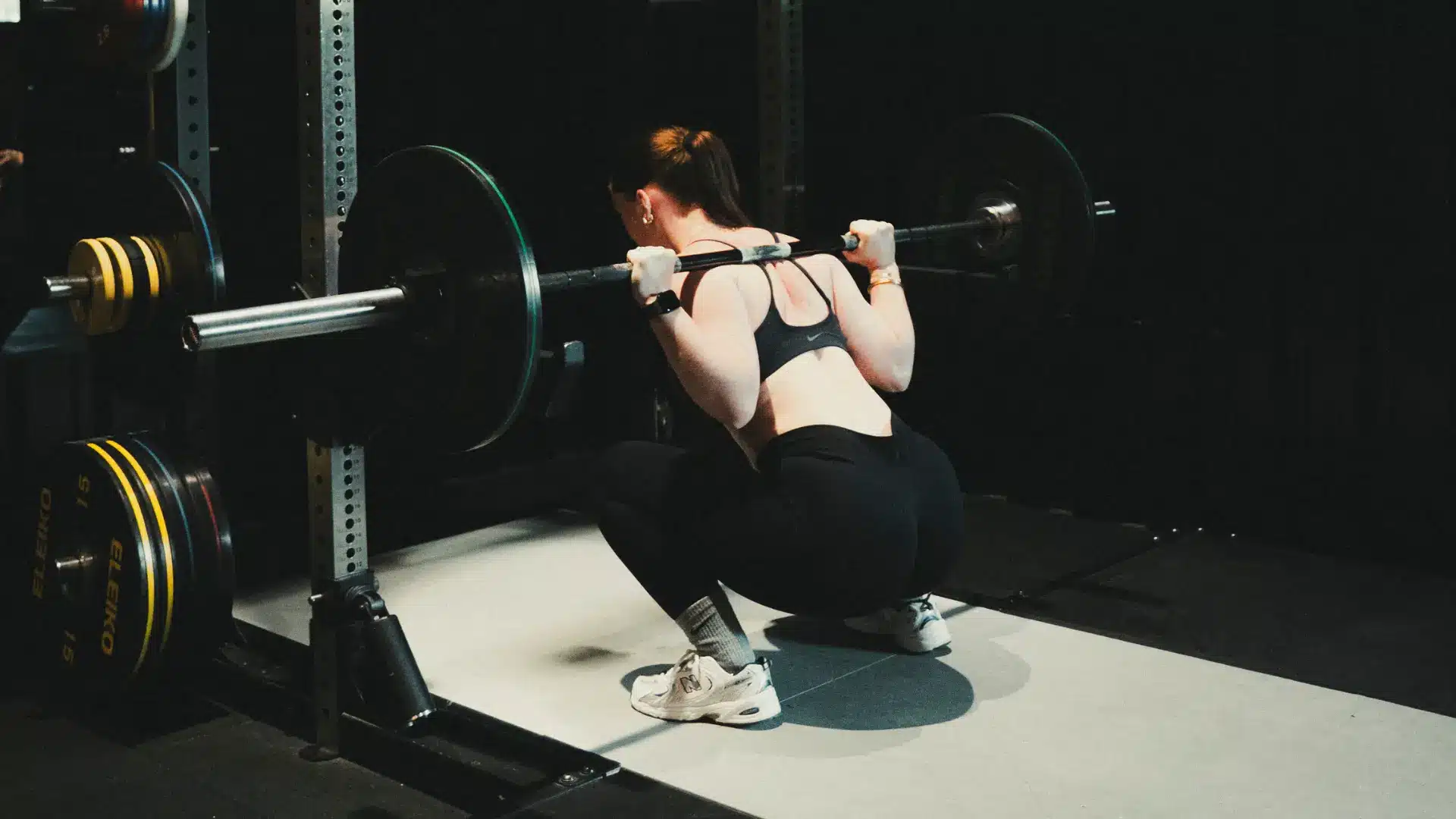
The squat is a high-intensity exercise that simultaneously engages the quadriceps, glutes, hamstrings, and core.
This is a fundamental exercise in both weight training and fitness, and it ranks among the most effective bodyweight exercises for burning calories. On average, a bodyweight squat burns about 0.50 kcal per repetition, or approximately 50 kcal for 100 squats.
This estimate is based on the work of Nakagata et al., the most accurate scientific reference available on the energy cost of a squat per repetition.
The Protéalpes calculator uses this data, supplemented by the MET values from the 2024 Compendium of Physical Activities, to estimate your energy expenditure in three ways: per session, per number of repetitions, or per calorie goal.
| Duration | Calories (range) |
|---|---|
| 5 min | 12–16 kcal |
| 10 min | 25–32 kcal |
| 15 min | 37–47 kcal |
| 20 min | 50–63 kcal |
| 25 min | 62–79 kcal |
| 30 min | 74–95 kcal |
| 35 min | 87–110 kcal |
| 40 min | 99–126 kcal |
| 45 min | 112–142 kcal |
| 50 min | 124–158 kcal |
| 55 min | 136–174 kcal |
| 60 min | 149–189 kcal |
| Calories | Duration (range) |
|---|---|
| 50 kcal | 16–20 min |
| 100 kcal | 32–40 min |
| 150 calories | 48–60 min |
| 200 kcal | 63–81 min |
| 250 calories | 79–101 min |
| 300 calories | 95–121 min |
| 350 calories | 111–141 min |
| 400 calories | 127–161 min |
| 450 calories | 143–181 min |
| 500 kcal | 158–202 min |
| Squats | Calories (range) |
|---|---|
| 10 squats | 4–6 kcal |
| 20 squats | 8–12 kcal |
| 30 squats | 13–17 kcal |
| 40 squats | 17–23 kcal |
| 50 squats | 21–29 kcal |
| 60 squats | 25–35 kcal |
| 70 squats | 29–41 kcal |
| 80 squats | 34–46 kcal |
| 90 squats | 38–52 kcal |
| 100 squats | 42–58 kcal |
| 150 squats | 63–87 kcal |
| 200 squats | 84–116 kcal |
| 300 squats | 126–174 kcal |
| 400 squats | 168–232 kcal |
| 500 squats | 210–290 kcal |
| 600 squats | 252–348 kcal |
| 700 squats | 294–406 kcal |
| 800 squats | 336–464 kcal |
| 900 squats | 378–522 kcal |
| 1,000 squats | 420–580 kcal |
How many calories do you burn when doing squats?
The energy expenditure during a squat session depends on three factors:
- body weight;
- the intensity of the exercise;
- the selected calculation method (duration or repetitions).
How does the iterative estimation method work?
The study by Nakagata et al. (2022) measured an energy cost of 0.50 ± 0.14 kcal per bodyweight squat, with a 95% confidence interval ranging from 0.42 to 0.58 kcal per squat. This protocol involved slow, controlled squats performed by young men in good physical condition.
The formula is simple:
Calories = number of squats × 0.50
Here are a few concrete examples:
- 50 squats ≈ 25 kcal (range: 21–29 kcal);
- 100 squats ≈ 50 kcal (range: 42–58 kcal);
- 200 squats ≈ 100 kcal (range: 84–116 kcal).
Note: This repetition-based method is more accurate than the MET estimates arbitrarily converted to “calories per squat” found on many online calculators. It is based on a direct measurement of oxygen consumption during exercise.
How does the session duration-based estimate work?
When you know the duration of your workout rather than the exact number of repetitions, the calculator switches to the ACSM formula based on MET values:
kcal = MET × 3.5 × weight (kg) ÷ 200 × duration (min)
The 2024 Compendium of Physical Activities provides the following reference values:
| Type of squat | MET | kcal/min (70 kg) | Workload profile |
|---|---|---|---|
| Body weight, gentle pace | 3,0 | ≈ 3,7 | General, Warm-up, Beginner |
| Bodyweight, slow and controlled (≈ 10 reps/min) | 5,4 | ≈ 6,6 | Controlled pace, strength training |
| Body weight, intense / continuous | 6,0 | ≈ 7,4 | HIIT, circuit training, CrossFit |
| Weighted squats (back squat, goblet squat) | 10.0 to 19.0* | 12.3 – 23.3 | Varies depending on the 1RM percentage and the protocol |
*Studies by Robergs et al. (2007) and Reis et al. (2017) show that the caloric expenditure during weighted squats can range from 10 to 19 kcal/min, depending on the relative load, time under tension, and rest intervals.
Warning: For weighted squats (back squat, goblet squat, kettlebell squat), the estimates are significantly less reliable. The energy expenditure depends on the %1RM, range of motion, tempo, and rest periods. The calculator therefore provides intensity scenarios (light, moderate, heavy) rather than a single value.
Whey protein
- Manufactured in-house by Protéalpes
- No additives, no sweeteners
- Protein isolate from Rhône-Alpes

These professional clubs put their trust in us:












How many squats does it take to burn 100, 200, or 500 calories?
The calculator also allows you to work backward: start with a calorie expenditure goal and estimate the number of squats needed to reach it.
The inverse formula is:
Number of squats = target calories ÷ 0.50
| Objective | Central estimate | Low–high range |
|---|---|---|
| 50 kcal | ≈ 100 squats | 86–119 squats |
| 100 kcal | ≈ 200 squats | 172–238 squats |
| 200 kcal | ≈ 400 squats | 345–476 squats |
| 500 kcal | ≈ 1,000 squats | 862–1,190 squats |
These figures apply to the standard bodyweight squat. Explosive variations, such as the jump squat, increase energy expenditure per repetition, while a half-squat with a reduced range of motion decreases it.
Additional information: Burning 500 calories through squats alone requires a significant amount of effort. In practice, combining squats with other exercises (lunges, mountain climbers, burpees) in a HIIT circuit helps distribute the effort across the entire body and reduce localized fatigue in the legs.
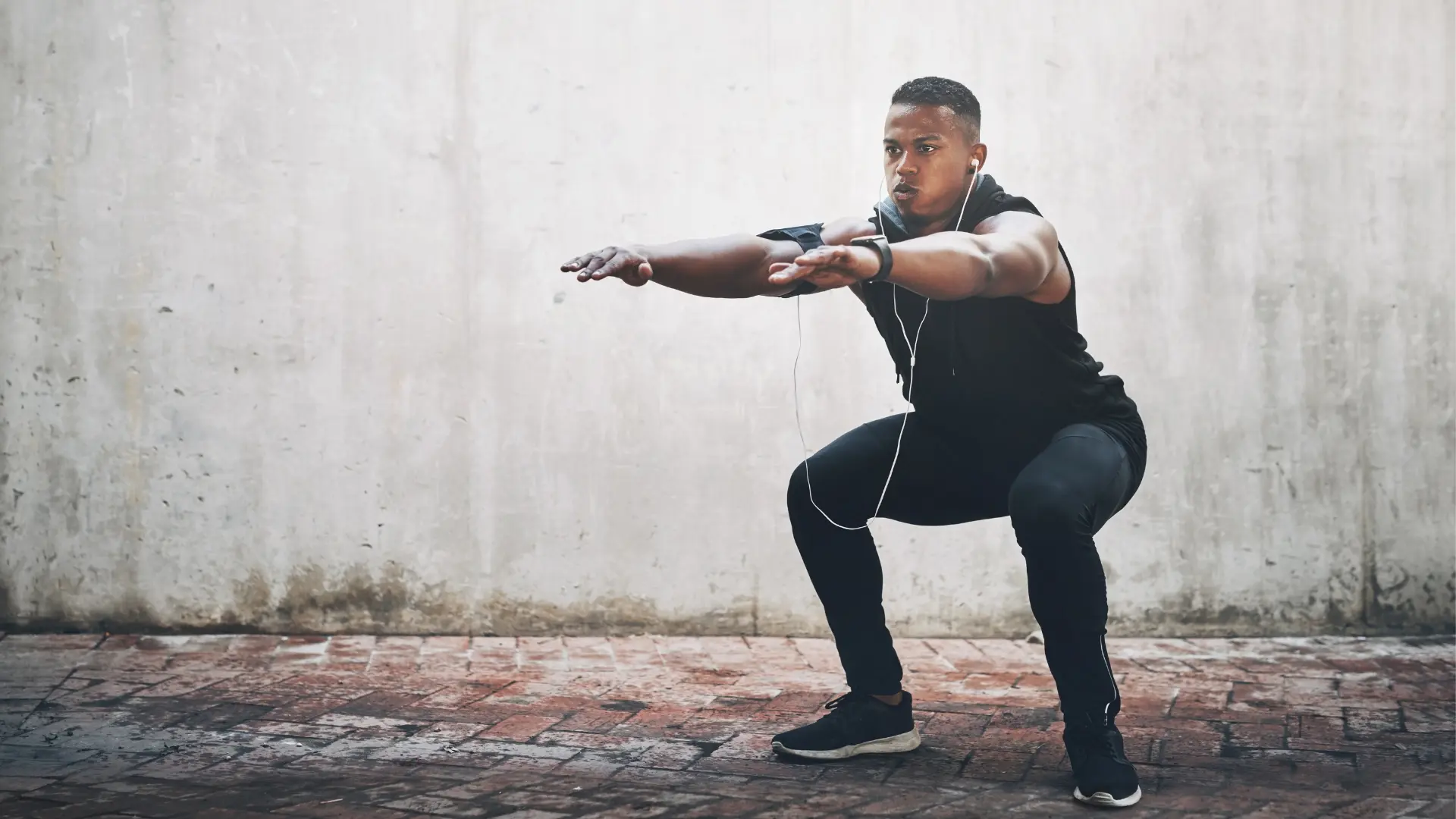
Are squats effective for weight loss?
Squats don't burn as many calories per minute as a brisk run or a set of burpees.
For a 70-kg person, a high-intensity bodyweight squat burns about 7.4 kcal/min, compared to 12 to 14 kcal/min for brisk jogging or HIIT burpees.
On the other hand, the squat offers two key benefits for promoting fat loss in the long term:
- Building lower-body muscle (quadriceps, glutes) boosts your basal metabolic rate. The more muscle mass you have, the more calories your body burns at rest, day after day.
- The EPOC (excess post-exercise oxygen consumption) effect of strength training sessions keeps calorie expenditure high for several hours after exercise, especially when squats are performed with heavy weights or at high intensity.
Squats are therefore part of a comprehensive strategy that combines strength training, cardio, and a balanced diet to create a sustainable calorie deficit.
Key takeaway: The number of calories burned during squats tells only part of the story. The most powerful effect of squats on weight loss comes from building muscle mass, increasing your resting metabolic rate, and boosting thermogenesis —all benefits that accumulate week after week with regular practice.
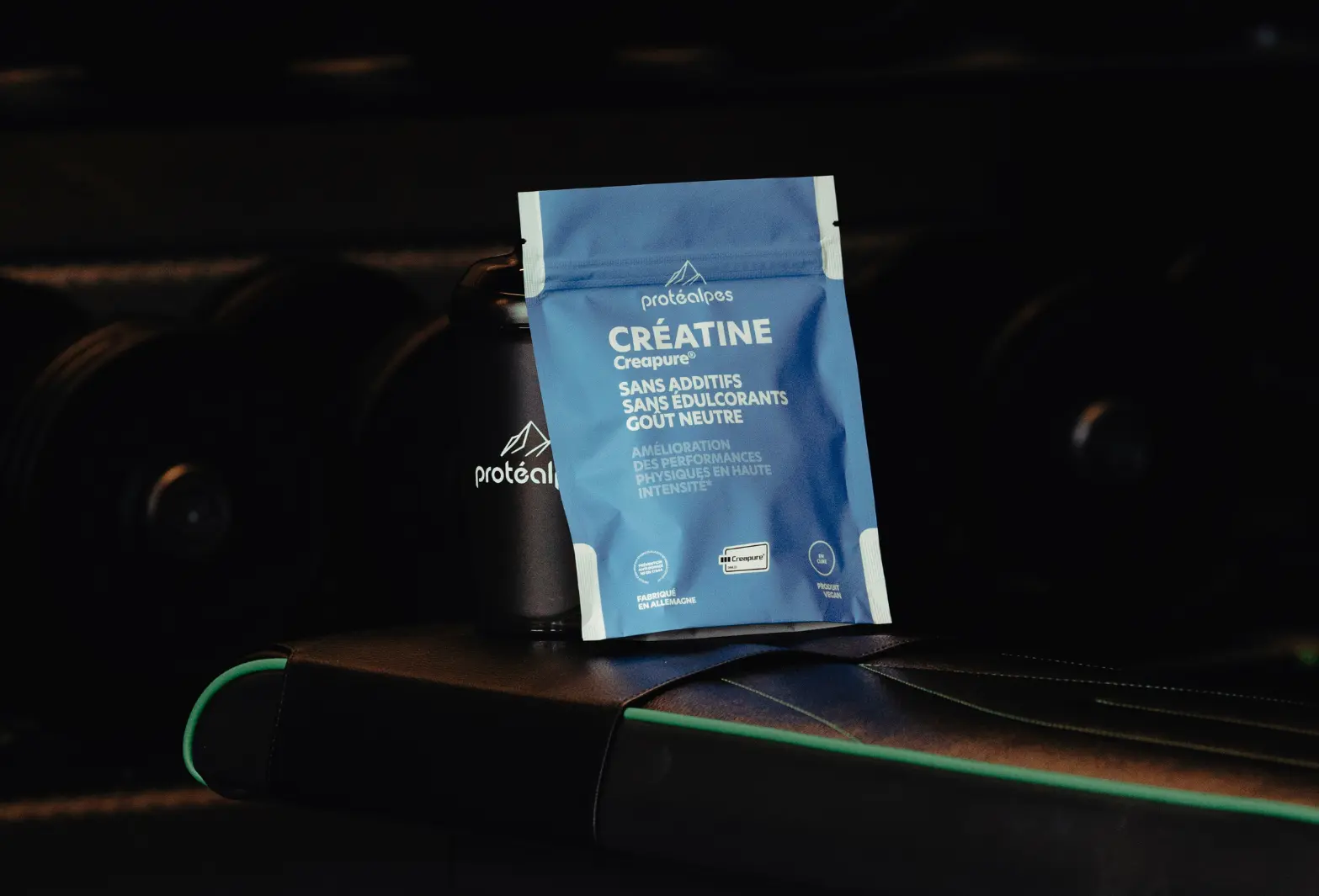
Creatine Creapure®
- Standardised without doping substances
- No additives, no sweeteners
- Made in Germany, packaged by Protéalpes in Albertville
- The best for maximizing muscle power in a healthy way and optimizing intensive performance
Scientific references and sources
Our other calculators

How many calories does a sauna burn?
Road biking, mountain biking, or indoor cycling: how many calories are burned?

Energy expenditure during running based on pace and weight
Burpees and Calorie Burn: Calculator
Calories burned while walking, based on weight and duration
Calories Burned While Swimming: Calculator
Step-to-Calories Converter
Jumping jacks: Calorie burn based on pace and weight
How many calories does jumping rope burn?

How many calories do push-ups burn?